Today’s guest post comes from Steven Elliott, a PhD candidate in American Military History at Temple University. Elliott (@EastJerseySteve) is writing a dissertation about the American War of Independence, tentatively titled “The Highlands War: Soldiers, Civilians, and Landscapes in Revolutionary New Jersey.” He has worked for seven years as a historical interpreter at Morristown National Historical Park in Morristown, New Jersey, which is the subject of this guest post.
“The chief aim of interpretation is not instruction, but provocation,” Freeman Tilden, NPS
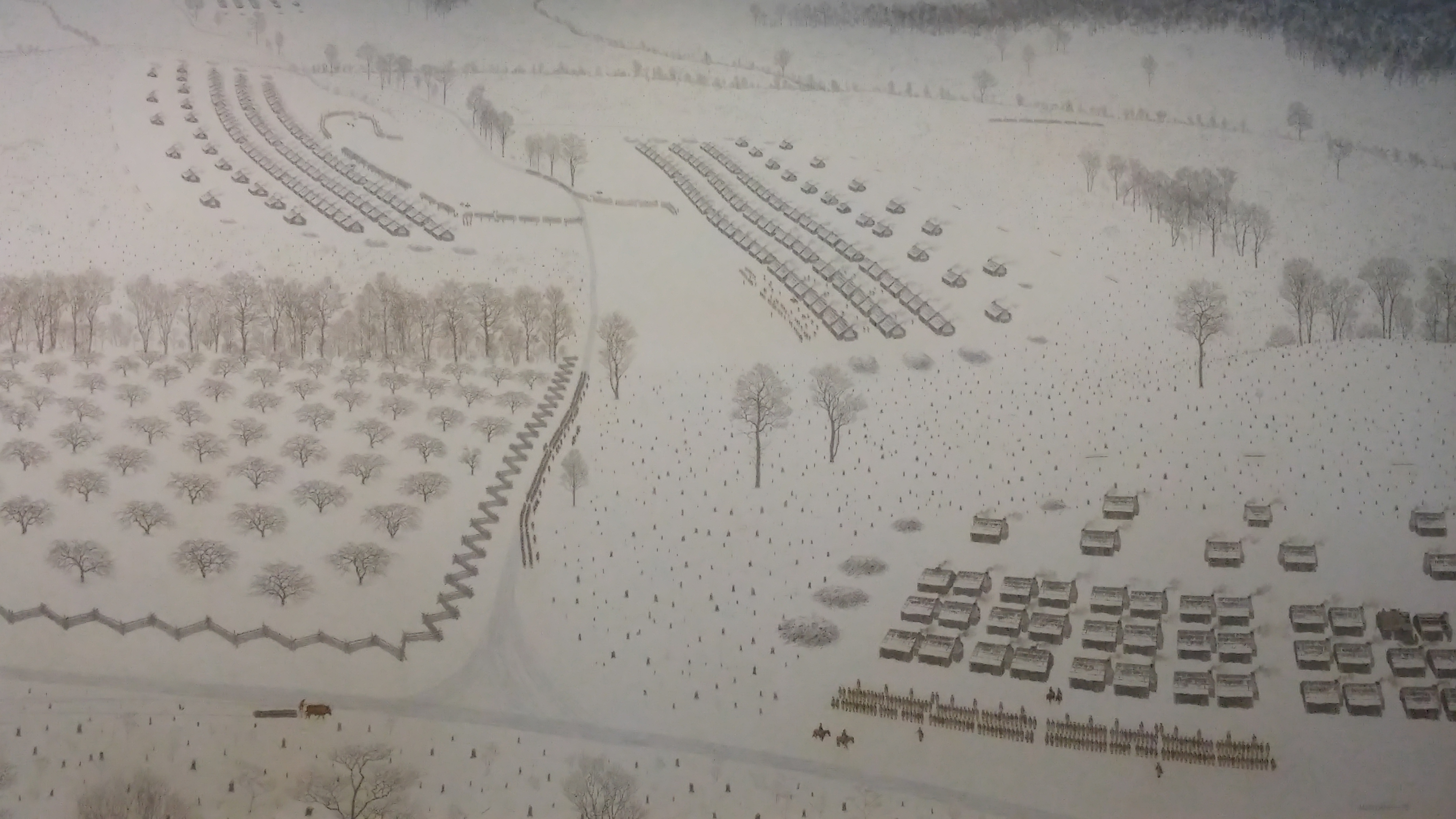
A depiction of the 1780 winter encampment at Morristown, courtesy of Morristown National Historical Park Collection.
Despite Tilden’s call to action, provocative interpretation at many National Parks remains a challenge, especially for Revolution-era sites. As many Americans learn (or re-learn) their history at public history venues, rather than through books or schooling, the Park Service can play an important role in bringing challenging interpretations to popular audiences. Yet, this can be difficult for Revolutionary-era sites, many of which were created to focus on “heroic narratives” emphasizing military campaigns and political leaders. In this post, I reflect on my personal experiences in attempting to challenge visitors’ assumptions about the Revolution, as a seasonal park guide at Morristown National Historical Park in Morristown, NJ. Continue reading
 Well, we’ve made it. March is almost over basketball is winding down, midterms have come and gone, and JUNTO MARCH MADNESS MARCHES ON!!!!
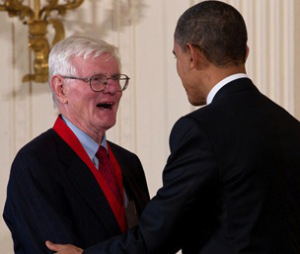 Gordon Wood riled up the #twitterstorians with a
 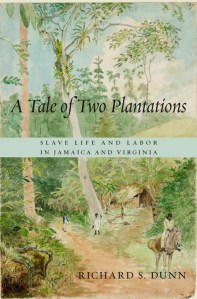 Richard Dunn has written a big book. Normally, big books like Dunn’s are primarily meant for fellow academics, grad students who need to pad their comps list, and the super-interested general public. (That category still exists, right? Right?) For academics, these types of books influence two aspects of our scholarly life: our own academic projects and our classroom instruction. The previous participants in the roundtable have focused on A Tale of Two Plantations’s contribution to the former category, while I would like to focus my remarks on the latter. So I am going to skip the basic parameters of a book review—namely, identifying the key arguments and weaknesses of the volume—and focus on how this book can work with undergraduate students.
  The Junto
