I acknowledge the generous help of Michael Hattem in gathering all the statistics and relevant information for this post. And just as he is the real puppeteer behind the curtain of the post, he serves a similar function for the entire blog in general; appreciation is herein expressed, once again, to him.
 Two years ago today, The Junto announced its entrance into the academic blogging world. When I originally conceived of the idea for the blog and pitched it to three fellow grad students (Michael Blaakman, Katy Lasdow, and Eric Herschthal) in an uptown Manhattan coffee shop in September(ish) 2012, I merely wanted to come up with a small community that could alleviate my alone-ness of studying American history while living in the UK. A few months later, the blog was born; two years later, our empire expands. It is becoming fairly common to meet people at an academic conference and, after I share my name, the person replies, “Oh, you’re Ben Park from The Junto?” It makes me smile every. single. time. I could have hardly conceived of where the blog has gone since our humble beginnings. Yet here we are. What follows is a general report of what has taken place since we last celebrated our blog’s birthday. Continue reading →
 Well, we’ve made it. March is almost over basketball is winding down, midterms have come and gone, and JUNTO MARCH MADNESS MARCHES ON!!!!
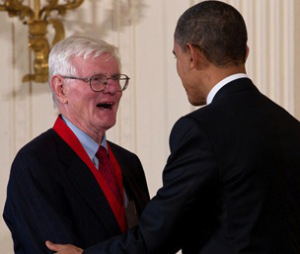 Gordon Wood riled up the #twitterstorians with a
 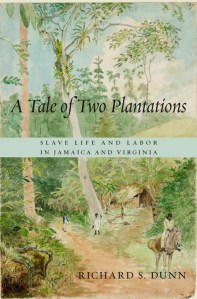 Richard Dunn has written a big book. Normally, big books like Dunn’s are primarily meant for fellow academics, grad students who need to pad their comps list, and the super-interested general public. (That category still exists, right? Right?) For academics, these types of books influence two aspects of our scholarly life: our own academic projects and our classroom instruction. The previous participants in the roundtable have focused on A Tale of Two Plantations’s contribution to the former category, while I would like to focus my remarks on the latter. So I am going to skip the basic parameters of a book review—namely, identifying the key arguments and weaknesses of the volume—and focus on how this book can work with undergraduate students.