 Maryland’s religious history is unique in colonial British North America. We largely remember Maryland as the Catholic colony that embraced religious toleration and religious freedom, in contrast to New England’s stodgily Puritan establishment or Virginia’s scattered Anglican church. Scholars and commentators looking for sources or influences on the First Amendment are consistently drawn to the colony’s justifiably famous 1649 “Act concerning Religion.” This act made it a crime to “declare call or denominate any pson or psons whatsoever inhabiting” Maryland “an heritick, Scismatick, Idolater, puritan, Independant, Prespiterian popish prest, Jesuite, Jesuited papist, Lutheran, Calvenist, Anabaptist, Brownist, Antinomian, Barro-wist, Roundhead, Sepatist, or any other name or terme in a reproachfull manner relating to matter of Religion.” “[T]he free exercise” of Christian religion was explicitly protected by the act, with repeat violators of their fellow colonialists’ conscience were to be “severely punished by publick whipping & imprisonmt.”[1] The “Act concerning Religion” places Maryland next to Rhode Island and Pennsylvania as one of the colonial regimes committed, for European Christians at least, to religious freedom in the seventeenth century.
The problem, and what makes the colony unique, is that Maryland’s experiment in religious freedom failed.
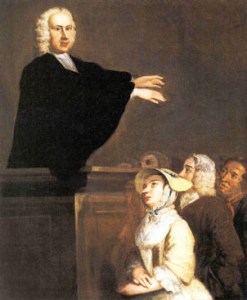 Those familiar with the first great awakening will undoubtedly recognize George Whitefield as a key figure of eighteenth century evangelical culture in Britain and its American colonies. Like many associated with the Methodist movement in Whitefield’s time, the prolific preacher and publisher saw himself as an Anglican in discussion with the Church of England about reform and an allowance for a broader religious experience. However, his theology, the new birth doctrine, the gathered church, etc., all alienated Whitefield from the Anglican hierarchy within the first few years of his missionary career.
 One of the central characteristics of the new history of capitalism has been its tendency to defer the question of just what “capitalism” is. The project’s enquiry starts with the question, not with a predetermined answer. But in order to know where to look, historians have to start with some idea about what makes a place and a time capitalist. As Tim Shenk points out in

 It was a scene that has been repeated in several American cities. In 2003, during an infrastructure project, 13 coffins containing unidentified human remains were found in Portsmouth, NH. Eight of the remains were exhumed for examination and confirmed as being of African descent, and later as part of a 1705 African Burying Ground, once on the city’s outskirts. As Portsmouth expanded, burying ground was built over and largely forgotten. Five additional sets of remains were found in 2008 during an archaeological dig on the site. Experts believe that 200 or more burials could have taken place in this 1705 African Burying Ground.[1]
 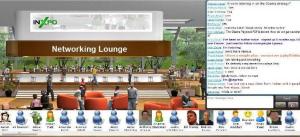 Last night, I had a dream about waking up at some indeterminate time in the future, not too distant but not very close either. It was one of those kinds of dreams where you find yourself in a world that is so clearly different from your own, yet at the same time seems strikingly familiar. I was still my same-old early Americanist self. But where was I? Well, that was part of the beauty of it. It didn’t matter. I found myself in an early Americanist digital universe of the future. Not just a blogosphere. Not just various social media platforms. Not just online magazines. But an integrated digital universe, one in which access and participation in all the appurtenances of the institutional life of the profession—conferences, working groups, publishing—had been prioritized and maximized and the restraints of distance and resources minimized. And here’s what it looked like…
 The Junto