 Last week, The JuntoCasters—aka Ken Owen, Roy Rogers, and myself— appeared on the new, fast-growing podcast hosted by Liz Covart called Ben Franklin’s World, an interview-based early American history podcast that launched in October 2014. Already, the podcast has a catalogue of twenty-four episodes and a rapidly growing audience. Most episodes feature Liz interviewing a historian/author about a recent book and some of her past guests have included such notable historians as Alan Taylor, François Furstenberg, Claudio Saunt, Joyce Chaplin, and James Green, as well as The Junto’s own Sara Georgini for an episode about John and Abigail Adams and the Adams Papers. Continue reading
Category Archives: Special Features
Guest Post: Why Shoes?
Kimberly Alexander is an Adjunct Professor in the History Department at UNH, Durham, where she teaches courses in museum studies and material culture. She earned her Ph.D. in Art & Architectural History from Boston University and was a founding Curator of Architecture and Design at the MIT Museum. She’s also served as Curator of Architecture and Design at the Peabody Essex Museum and Chief Curator of Strawbery Banke Museum in Portsmouth, NH. Dr. Alexander has published several books and essays, and has recently had papers presented at history of fashion conferences in London and Florence. Her current catalog and exhibition project is titled “Cosmopolitan Consumption: Georgian Shoe Stories From the Long 18th Century.”
 How does one select a sampling of dozens of pairs of eighteenth-century shoes and translate the assemblage into a coherent museum exhibit housed in one charming, but tiny gallery? How does one translate a five-year study of eighteenth-century consumption patterns, cultural diffusion, and gentility in the Atlantic shoe trade into a show that will excite the imaginations of early Atlantic scholars yet appeal to the general public? How does present a material culture and fashion history exhibition in a refined Athenaeum situated in a corner of New Hampshire? Continue reading
Guest Post: Bastard out of Nevis: Lin-Manuel Miranda’s “Hamilton”
We are pleased to feature a guest post from Benjamin Carp (@bencarp), the Daniel M. Lyons Professor of American History at Brooklyn College, CUNY. Carp is the author of both Defiance of the Patriots: The Boston Tea Party and the Making of America and Rebels Rising: Cities and the American Revolution.
“I want the historians to respect this.” –Lin-Manuel Miranda, according to Ron Chernow

In the lobby of the Public Theater, two statues flanked the doorway—the likenesses of Alexander Hamilton and Aaron Burr stretched out their arms and aimed their dueling pistols at one another, and it was hard not to feel as if I was standing in the middle. Lin-Manuel Miranda, the son of Puerto Rican immigrants, wrote the musical Hamilton and stars in the title role. He portrays the first Secretary of the Treasury as a “bastard, orphan, son of a whore and a Scotsman” and an immigrant striver made good; throughout his career, Hamilton is arrogant about his talents but perpetually insecure about his place. As told by Miranda, Hamilton is both self-made and self-unmade, wry and seductive and yet constantly raging against anyone who might hold him back. Continue reading
Q&A with Stephen R. Berry, Author of A Path in the Mighty Waters
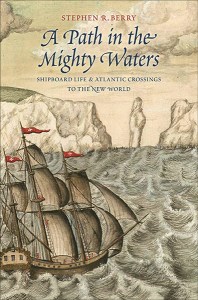 The following is an interview with Stephen R. Berry, an Associate Professor of History at Simmons College. My review of Berry’s recently-released book, A Path in the Mighty Waters: Shipboard Life and Atlantic Crossings to the New World (New Haven: Yale University Press, 2015) appeared on the blog yesterday. Today, he agreed to answer some follow-up questions about his book and his future research plans. Continue reading
Tempests and Tedium in the Transatlantic: Shipboard Life in the 18th Century
Stephen R. Berry, A Path in the Mighty Waters: Shipboard Life in Atlantic Crossings to the New World. New Haven: Yale University Press, 2015.
When colonial Georgia was founded in 1732, it carved out a brand new space in the New World. The founders’ intentions were in part for it to serve as a charitable colony, where Britons from overcrowded debtor’s prisons could start anew. It also carved out an English space to serve as a geographic barrier between wealthy South Carolina and rival Spanish Florida. But, as Stephen R. Berry demonstrates in this highly original new study, colonies were not the only spaces that were created and negotiated as the Atlantic World expanded. The ocean, and indeed the ships that carried passengers to and from the New World should also be viewed as spaces in their own right.
Guest Post: Will the Real Paul Cuffe Please Stand Up?
Today’s guest poster, Jeffrey A. Fortin, is an Assistant Professor of History at Emmanuel College, Boston. He is currently finishing up a book on Paul Cuffe, an African-American Quaker and merchant in the early republic.
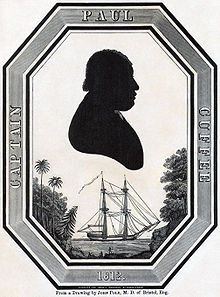 Credit cards, electronic banking, online shopping, and a host of other modern forms of commerce did not exist at the turn of the nineteenth century. Merchants throughout the Atlantic relied on reputation and good character when determining a customer’s credit worthiness. Not exactly a foolproof way to do business but seemingly less risky than our fully electronic world of money and banking in twenty-first century America. Yet, identity theft and fraud were still a part of doing business.
Retelling “A Tale”: An Interview with Richard S. Dunn
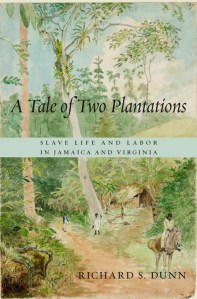 Wrapping up our roundtable review of A Tale of Two Plantations, The Junto chats with Richard S. Dunn about microhistory as a “healthy antidote to top-down history,” and the archival surprises that reshaped his work. If you are near Harvard University on February 5th, come and hear more about the project. Continue reading
A Tale of the Classroom: Introducing Richard Dunn’s Book to Undergraduates
Richard Dunn has written a big book. Normally, big books like Dunn’s are primarily meant for fellow academics, grad students who need to pad their comps list, and the super-interested general public. (That category still exists, right? Right?) For academics, these types of books influence two aspects of our scholarly life: our own academic projects and our classroom instruction. The previous participants in the roundtable have focused on A Tale of Two Plantations’s contribution to the former category, while I would like to focus my remarks on the latter. So I am going to skip the basic parameters of a book review—namely, identifying the key arguments and weaknesses of the volume—and focus on how this book can work with undergraduate students. Continue reading
In Media Res
The most interesting thing about Richard Dunn’s “intergenerational study” of slave life in Mount Airy and Mesopotamia plantations of Virginia and Jamaica is its incompleteness. As Dunn notes, A Tale of Two Plantations is a narrative without “a proper opening or a proper conclusion.”[1] His source base begins relatively arbitrarily with a pair of masters who sought to improve their record keeping and ends with the institution of slavery itself. This is tragic, of course, for our knowledge of the lives of the enslaved persons of Mesopotamia and Mount Airy are circumscribed by the ability of whites to track them. In Jamaica, that proves troubling in freedom while in Virginia and Alabama, thanks to better census taking, the lives of the families of Mount Airy are much easier to recover. These sources, of course, mirror the experience of slavery itself.
Archives, Representativeness, and the Inner Life of Slaves
When Walter Johnson published Soul by Soul in 2001, he unleashed a critical analysis of the inner life of slavery.[1] More than just an exploration of the plantation complex, or even the indignities and tragedies of slavery, Johnson elucidated how the buying and selling of black bodies affected (in Johnson’s argument, corrupted) the participants in slavery. Johnson had identified a critical hole in the historiography. And now, Richard S. Dunn’s newest contribution to the scholarly discourse, A Tale of Two Plantations, compares life at two plantations—Mt. Airy (MD) and Mesopotamia (Jamaica)—to understand how slavery affected these two plantations, and conversely, how conditions on these plantations affected the enslaved.
 The Junto