 Ed Morgan changed the way historians understood the American Revolution. Over a period of about ten years, from 1948 to 1957, he published three important research articles, a monograph, an essay aimed at a general audience, and a historiographical article, all having to do with the coming of the Revolution. It was an amazing burst of work that elevated Morgan to the upper echelons of American historians. Of course, Morgan had previously worked on Puritanism and would go on to do groundbreaking work on colonial Virginia and slavery. But he made his bones with the American Revolution. Continue reading
Category Archives: Roundtables
Puritan Family Ties
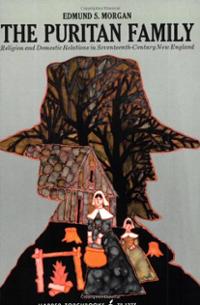 Family pictures can be the hardest to frame, and Puritans make for appealingly restless subjects. In tackling the early American narrative, scholars must confront the thorny task of portraying the Puritan family with equal parts theological dexterity and sociological skill, a problem that seventeenth-century artists and modern historians alike have sought to refine. Scholars who take on the Puritans must address sin, salvation, and community-building in a way that does not make American democracy feel inevitable; further, they must seize onto the seventeenth-century peculiarities of transatlantic intellectual life in which the Puritans flourished and fell. Wrapped in New England lore and either exalted or disowned by their descendants, the cultural memory of Puritan contributions to the project of nation-building has inspired a broad spectrum of historiographical views. In the early 1940s, then-Harvard doctoral student Edmund S. Morgan and his colleagues would have encountered a popular narrative of Puritanism, one seemingly destined to smother any effort at new work: America’s Puritan “tribe” had briefly inhabited a tau(gh)t sphere, bounded by covenant theology and laden with impossible ethics, peopled by censorious prudes who excelled at capitalist rhetoric and balked at the sinful frivolity of a stray dance. Or… did they? Continue reading
Roundtable: The Legacy of Edmund S. Morgan
This is a very special week at The Junto. Following last month’s sad news of the passing of one of our field’s true giants, Edmund S. Morgan, we all agreed that a weeklong retrospective on his remarkable career was in order. Hence, this week, each day will be given over to a specific work or theme to which Morgan made important contributions during his four-decades long academic career. We hope that this roundtable, being written by graduate students and junior faculty, will provide a snapshot of Morgan’s continuing relevance to new generations of early Americanists almost three decades after his retirement from Yale University.
E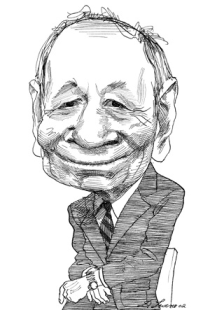 dmund Sears Morgan was born on January 17, 1916 in Minneapolis, Minnesota.[1] His father, Edmund Morris Morgan, was a Professor of Law at the Minnesota Law School, Yale University, Harvard University, and Vanderbilt University. Ed the Younger attended Belmont Hill School from which he graduated in 1933. From there, he left to do his undergraduate work at Harvard. In his second year, he took a course taught by F.O. Mathiessen, his senior tutor, and Perry Miller, whom Morgan called “simply the most exciting lecturer” he had encountered. The experience turned a budding English major into an American history and literature major. Upon graduation, Morgan spent a year at the London School of Economics studying with Harold Laski. Continue reading
Science, Meet Slavery: “River of Dark Dreams” and the Future of Slavery Scholarship
 I bet few graduate students these days haven’t read, or at least seen referenced, Walter Johnson’s essay “On Agency.” Published a decade ago, the essay was prompted by what had become hackneyed trope in slavery scholarship. Everyone seemed to ascribe slaves a role in shaping their lives—“agency”—despite the power asymmetries inherent in the slave-master relationship. Johnson famously called for an end to this kind of writing. But one of his subtler points may have been lost amid his overarching argument. It wasn’t that slave agency was unimportant, but that it had lost its contemporary relevance. Finding agency mattered in the Civil Rights Era, the years in which the scholarship flourished, because it bolstered African Americans’ claims on the nation’s past, and thus its future. Continue reading
At River’s End

Last week, the Mississippi River surged against the levees, finally shattering restraints near St. Louis. Up and down the waterway, authorities hurried to secure hometowns, farmlands, and highways against the potential breach. “It could be anytime,” the Rivers Pointe fire chief told The St. Louis Post-Dispatch. “The hope is to keep Highway 94 open.” Even now, watching the water flow higher and faster still, it is worth thinking about how or why Americans have chosen to embrace life along the river: the shifting networks of politics and profit, the deep imprint of slavery on the region’s past, and the legacy of a South that may or may not have grown closer to the world, in the many ways that the Confederates or others have intended over time. This conscious construction of a river culture—as it was made and understood by the region’s black and white nineteenth-century predecessors, men and women who were also sensitive to sudden danger, but eager to maintain the dense traffic of the cotton trade—permeates Walter Johnson’s River of Dark Dreams and guides his expert analysis through their winding stories. Continue reading
A View from Beyond the Valley
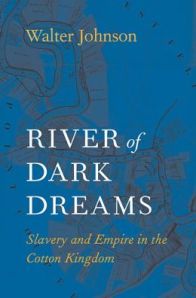 Ben, Mandy, Matt, and Roy have done a marvelous job so far this week summarizing the arguments, the strengths, and a few of the (few) weaknesses of River of Dark Dreams. I therefore want to confine myself to just a few general thoughts, and then focus in on the area where my expertise lies: what this book means for the non-expert in slavery studies. Continue reading
Intersections upon a Dark River
Walter Johnson’s River of Dark Dreams is the best big book on slavery I have ever encountered. This is not faint praise; there is some about the subject that causes its best historians—Eugene Genovese, Winthrop Jordan, Kenneth Stampp and more—to write in at bullet-stopping length. Johnson’s volume stands out due to his ability to seamlessly place the history of antebellum slavery at the intersection of three of the nineteenth century’s key themes—imperialism, capitalism, and technological development. He does this, as other contributors to this roundtable have noted, at the sweeping level of the very geography of Mississippi River Valley and at the much more intimate level of the lived experience of enslaved laborers. Continue reading
To See The World In A Bale of Cotton
 The promise of a tie between the local and the global—a thread to join the dense fiber of individual life to the vast patterns of human interaction—has long lingered at the edge of the historian’s vision. “The hours should be instructed by the ages, and the ages explained by the hours,” wrote Emerson in “History.” “Each new fact in . . . private experience flashes a light on what great bodies of men have done.” Even the less Transcendental among us are lured by a link between the intimate and the infinite: every globalist, no matter how ambitious, must find their ground-level characters and illustrative anecdotes; the best microhistorians train their lenses to reveal not just cell particles but a whole cosmos. Few recent works in early American history, however, are so explicit in their equal pursuit of the local and the global, the hours and the ages, as Walter Johnson’s River of Dark Dreams (Cambridge: Belknap Press of Harvard University Press, 2013). Continue reading
Walter Johnson’s “River of Dark Dreams”

Walter Johnson’s River of Dark Dreams is a meditation on the making of the Cotton Kingdom in the nineteenth century American South. The book is rich with the intimacies and delicacies of detail—details that describe the fundamental material circumstances in which enslaved men, women, and children forcibly transformed Native America into cultivated grids of mono-crop culture at the behest of “Manifest Destiny”; details that are gut-wrenching in their vivid depictions of the social relations of white supremacy—the torture, the hunger, the bleeding, and the raping of the enslaved—the malignant, violent underbelly that made and forcibly maintained the Cotton Kingdom; details that connect the smallest common denominators of plantation life, whether measured in lashes (upon flesh), or pounds (of cotton), or any other metric of rule—to the global economy, which itself connected slaveholders and merchant capitalists from the fields and riverbanks of New Orleans to the factories of Manchester and Liverpool. Continue reading
Roundtable Review: Walter Johnson, River of Dark Dreams (Introduction)
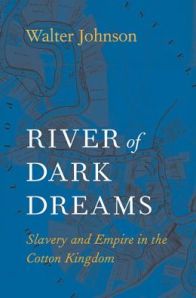 This week at The Junto, we are pleased to offer a roundtable review on Walter Johnson’s recent River of Dark Dreams: Slavery and Empire in the Cotton Kingdom (Cambridge: Belknap Press of Harvard University Press, 2013). Johnson, whose Soul by Soul: Life Inside the Antebellum Trade Market (Cambridge: Harvard University Press, 1999) went far in this year’s Junto March Madness, is the Winthrop Professor of History and Professor of African and African American Studies at Harvard University. River of Dark Dreams is a dense, learned, and sophisticated account of cotton culture, slave society, and global capitalism as experienced in pre-Civil War Mississippi Valley. It has somthing for everyone: race, slavery, capitalism, technology, regionalism, and globalism. As such, this week’s roundtable will offer five reviews from five different authors giving their take on what promises to be a classic text. After my brief overview and introduction, we will post one review each day from Mandy Izadi (today), Matt Karp (Tuesday), Joe Adelman (Wednesday), Roy Rogers (Thursday), Sara Georgini (Friday), and Eric Herschthal (Saturday). We hope that these various reviews will spark discussion and debate. Continue reading
 The Junto