 In his recent review of Kevin Phillips’s 1775: A Good Year for Revolution, Jack Rakove argues that in tackling the causes of independence, “Phillips deals with political loyalties more fundamental than the mere matter of party allegiance.” The inference is clear—deciding to be a member or an activist for a political party is one thing; but your nationality is something that defines you in perpetuity. Once revolutionaries chose to take on the label ‘American’, there was no turning back. It was who they were; while that American identity might be complex and multifaceted, there is something about “national character” that stands above the rough and tumble of party politics. Continue reading
The Week in Early American History
 Welcome back for week two! Things will be going quiet around the Junto for the next few days over Christmas, and on behalf of the entire Junto, we want to wish you a happy holiday. In the meantime we have a few links to tide you over when you need a few minutes to browse the internet.
“Anonymous and Cacophonous Pleasures”
Jared Gardner, The Rise and Fall of Early American Magazine Culture. Urbana, Chicago, and Springfield: University of Illinois Press, 2012.
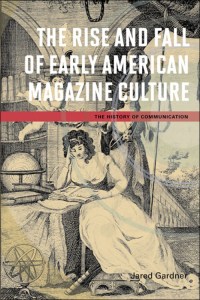 Almost by definition, studying communications media means examining the nature of rationality and the meaning of citizenship. So literary historians generally see the novel, which privileges dialogue and individual subjectivity, as helping to constitute a liberal social order, while political historians see newspapers as essential to various expressions of republicanism and democracy. In The Rise and Fall of Early American Magazine Culture, Jared Gardner contributes to the history of American citizenship by arguing that early-national American literary intellectuals mostly had their minds on a different print medium – and that they embraced a neglected model of rational public discourse.
Enough Already! Or, Do We Really Need More Haitian Scholarship?
My apologies for my first Junto post being a bit of shameless self-promotion. But here it is: a piece I just wrote for The New York Times on Haiti’s role in the Civil War. In short, it’s about how a small but significant portion of black Americans saw Haiti as a better option than the United States during the conflict. As Matt Karp wrote on his Junto post today, the most groundbreaking Haiti-related scholarship today deals with what happened after the Haitian Revolution, that is, post-1804. Continue reading
Journal Articles in 2012: A Retrospective
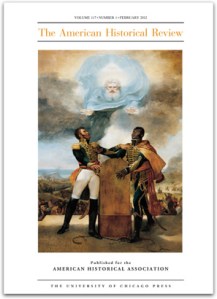
BuzzFeed would point out that God is totally portrait-bombing Pétion and Dessalines here.
“The list,” says Umberto Eco, “is the origin of culture… What does culture want? To make infinity comprehensible.” This impossible project has inspired dauntless gallants from Homer to BuzzFeed, and even in our own brief existence, The Junto has already made a valuable contribution to that noblest of list genres, the year-in-review inventory.
Today I’ll attempt to advance the cause of culture with a few notes on the particular infinity of early American history articles published in 2012. Unfortunately I can’t apologize for my own personal and intellectual biases, which lean toward international politics, slavery and abolition, and historiography, all of it within the nineteenth century. A successful list is usually just private prejudice, artfully compressed and shrewdly disguised—Homer, after all, chose to focus on the Achaeans’ black ships and famous spearmen rather than their haircuts or favorite foods; the BuzzFeed guy sems to have a thing for marine mammals. But you should know where I’m coming from before we proceed. Continue reading
The Agonies of “Christian Republicans”
This is not, sadly, a post about the troubled relationship between the modern Republican Party and politicized Christianity. I’d like to discuss, rather, a powerful and provocative synthesis of American political, theological, and religious history published a decade ago – Mark Noll’s America’s God. Noll’s magisterial tome brings together over a generation of scholarship on the relationship between American politics and religion (the “democratization thesis”), civic humanism (the “republican thesis”), and Scottish commonsense philosophy in the early national and antebellum United States.[1] America’s God is in many ways a capstone to Noll’s truly outstanding career as a great historian and public intellectual. Continue reading
Interviews with Historians: Edwin G. Burrows

Note: This post initiates one of our first special features, “Interviews with Historians.” The series is meant to give established historians a chance to discuss their work and share their thoughts on a range of topics with the next generation of early Americanists. The Junto would especially like to thank Ted Burrows for agreeing to be the subject of the series’ first interview.
Edwin G. Burrows is the Pulitzer-Prize winning co-author of Gotham: A History of New York City to 1898, a narrative history covering the city’s founding by the Dutch through consolidation. After receiving his BA from the University of Michigan in 1964, Burrows received his PhD from Columbia University in 1972, where he worked with Eric McKitrick. Soon thereafter, he took a position in the History Department at Brooklyn College, where he has remained for the last forty years. Over the course of two decades, he co-wrote Gotham: A History of New York City to 1898 with fellow Columbia PhD, Mike Wallace, which won them the Pulitzer Prize in History in 1999. In 2008, his second book, Forgotten Patriots: The Untold Story of American Prisoners During the Revolutionary War, was published by Basic Books and won the 2009 Fraunces Tavern Museum Book Award for the best book written each year on the American Revolution. In the interest of full disclosure, Ted served as my “faculty mentor” in the CUNY Baccalaureate Program for Unique and Interdisciplinary Studies. Continue reading
The Founders, the Tea Party, and the Historical Wing of the “Conservative Entertainment Complex”
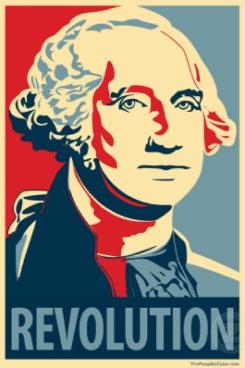
Following the recent election, much has been made of the alternative reality created by the “conservative entertainment complex.” However, conservative media has not only created its own contemporary reality; it has also created its own historical reality, through what one might call the historical wing of the conservative entertainment complex.
In recent years, men like David Barton, Bill O’Reilly, and Glenn Beck, among numerous others, have written a number of books on eighteenth-century figures and events. But though they claim to be getting their principles directly from “the founders,” what they are really doing is giving their principles to the founders and the eighteenth century, more generally. This revisionism, promoted by conservative think tanks, was lapped up by hardcore conservatives and perhaps no group of people has been a more receptive audience than those who identify themselves as supporters of the Tea Party. Continue reading
Jay Gitlin’s French Frontier
Jay Gitlin, The Bourgeois Frontier: French Towns, French Traders, and American Expansion. The Lamar Series in Western History. New Haven: Yale University Press, 2010.
Jay Gitlin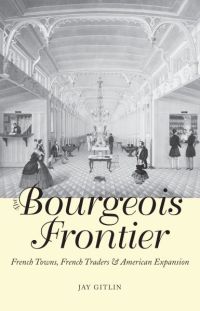 begins this history of the francophone West with geologist William Keating, on an 1823 scientific expedition to the United States’s western frontier, marveling at the number of French speakers he encountered in the Mississippi basin. Who were these people? And why were so many of them still around, six decades after the Seven Years’ War had supposedly terminated the French presence in North America? The Bourgeois Frontier aims to answer these questions, and to explain why—two centuries later—Americans remain as ignorant of these people as Keating had been. The result is a compelling account of the francophone towns that formed a crescent-shaped constellation along the western fringe of the early American republic. In eight chapters of buoyant prose chronicling the 1760s through the Civil War, Gitlin shows how the French Creoles who inhabited these towns adjusted and adapted as American expansion changed their world. Continue reading
The Week in Early American History
Welcome to our first weekly round-up, where we hope each Sunday to bring you a collection of great reads, news, and links from elsewhere around the web (at least the subset that deals with early America). This post will be a joint effort of the entire Junto, with me serving as compiler and presenter—and thereby channeling my research subjects, the colonial and revolutionary era American newspaper printers.
With that, let’s get to this week’s links… Continue reading

