Today’s guest post comes from Jordan Fansler, who received his Ph.D. from the University of New Hampshire at Durham in May 2015. The following is based on his dissertation, “A Serious and Jealous Eye: Federal Union in New England, 1775 – 1821.”
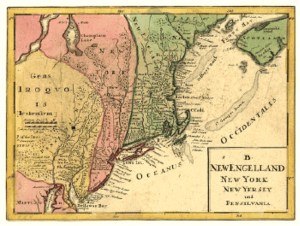 States’ rights looms large in discussions of both historical and contemporary American politics and its federal union. For good reason, the ante-bellum states’ rights movement of the South is often the first to come to mind, but such a narrow focus does not do justice to the topic as a dynamic historical phenomenon, nor does it provide adequate context for the more modern manifestations of states’ rights movements. In the early republic, New Englanders promoted their own brand of states’ rights, to protect a type of near-sovereignty they attributed to their legislatures, as the best way to promote their interests and shield individuals from distant oppression.


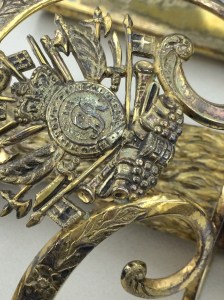 Paper soldiers on the march, and tin men tilting at swordpoint: these were the first battle ranks that
  Two weeks ago, 175 historians descended upon the Massachusetts Historical Society (MHS) in Boston for a three-day conference that considered the political, social, economic, and global parameters of the American Revolution. The conference consisted of eight panels (with pre-circulated papers), two keynotes, and some special presentations on digital projects. The conference proceedings were live-tweeted under #RevReborn2, and fellow Juntoist Joseph Adelman provided some
  Here’s our seasonal roundup of new and forthcoming titles. Share your finds below!
  Welcome to another edition of This Week in Early American History! We wish a safe and healthy holiday to those
  How does one select a sampling of dozens of pairs of eighteenth-century shoes and translate the assemblage into a coherent museum exhibit housed in one charming, but tiny gallery? How does one translate a five-year study of eighteenth-century consumption patterns, cultural diffusion, and gentility in the Atlantic shoe trade into a show that will excite the imaginations of early Atlantic scholars yet appeal to the general public? How does present a material culture and fashion history exhibition in a refined Athenaeum situated in a corner of New Hampshire?
  At the beginning of February, Wake Forest University
 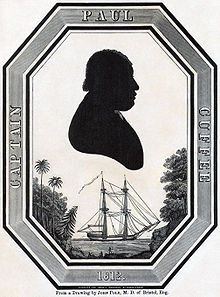 Credit cards, electronic banking, online shopping, and a host of other modern forms of commerce did not exist at the turn of the nineteenth century. Merchants throughout the Atlantic relied on reputation and good character when determining a customer’s credit worthiness. Not exactly a foolproof way to do business but seemingly less risky than our fully electronic world of money and banking in twenty-first century America. Yet, identity theft and fraud were still a part of doing business.
 The Junto