The Language Question

LanguagesWhat is the current state of early American language training, what is its future, and why aren’t we more concerned?

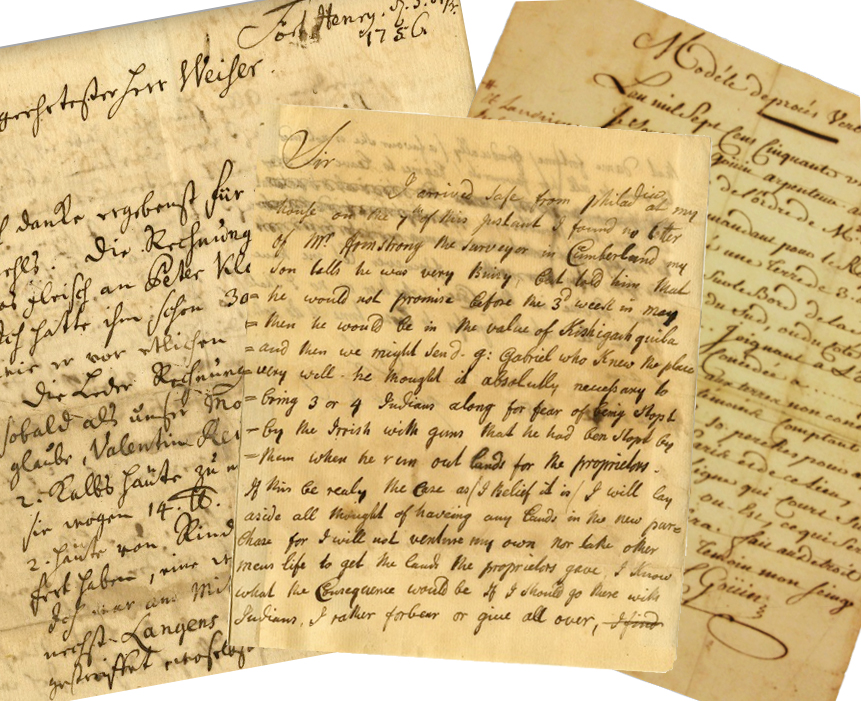
A quick survey of more than a dozen graduate programs (all known for their strengths in colonial and early American history) reveals that three quarters of these departments require only one foreign language for early Americanists. To put this into context, the guidelines for European historians at all but one of these same institutions—guidelines often broken down by Early Modern, Western, and British subfields—require at least two foreign languages (yes, even in British history). Yet the issue is not simply the number of languages required of Americanists, but rather what constitutes proficiency. While language guidelines surely vary some from school to school, if the “proficiency” exams and reading courses across History programs even vaguely resemble ones that I’ve encountered, then even these lenient requirements themselves mean very little.

I suspect the numbers and realities of language training surprise very few. But even if we’re not surprised, maybe we should be a little worried. Continue reading

The Week in Early American History

TWEAHHappy Summer to all of our readers. Another week has come and gone, and we’re back with the latest installment of This Week in Early American History. Feel free to weigh in on posted links or share any interesting stories and newsworthy items we might’ve missed. Let’s jump right into it:
Continue reading

The JuntoCast is Here!

The JuntoCastToday, The Junto is happy to present the first episode of “The JuntoCast,” our new monthly podcast featuring Juntoists discussing issues related to early American history, academia, pedagogy, and public history. As we embark on this venture, the first few episodes will be experimental as we try to find the best method for recording a podcast with 3 or 4 participants literally thousands of miles apart. The podcast will appear once per calendar month and the length of the podcast will likely vary anywhere from fifteen to forty-five minutes. As always, any feedback will be greatly appreciated, including suggesting future topics to be covered. Continue reading

An Alt Canon of Early American Primary Texts?

davidwalkersappeal-uncdocsouthWe hear a lot about the “canon wars” of the 1980s and 1990s, when conservative (and neoconservative, and Straussian anti-anti-liberal, and pre-New-Left liberal) critics raised the hue and cry against relativizing multiculturalism, which was replacing War and Peace and The Scarlet Letter on college reading lists with just any random thing that wasn’t written by a wealthy straight white man. Or, if you prefer, when left-wing critics advanced the radical notion that women, homosexuals, minorities, and the poor are conscious human beings too. Or when cynical politicians and self-important idealists conspired together to undermine public confidence in higher education and the humanities. Or whatever.

Continue reading

The Week in Early American History

TWEAHIt’s that time of the week and it’s my turn to do the roundup, so let’s just get started with some links from the past week or soContinue reading

The Week in Early American History

TWEAHI’d like to start this week’s roundup by reminding everyone that the Junto March Madness begins tomorrow. In case you live under a rock (or—shudder at the thought—have a life outside books and blogs), we here at The Junto are combining two of our favorite things: basketball and historiography. On Thursday, we asked readers to nominate five books each to help fill out NCAA tournament-style brackets. One three-hour Google Hangout later and the brackets were set. Check here for a full explanation of Junto March Madness  and here to download the brackets. Voting in Brackets 1 & 2 begin tomorrow and will continue through subsequent rounds into next week (see John Fea’s predictions here).  I cannot stress enough that this should not be taken too seriously (particularly the “seedings”). The primary purpose of it—unlike the actual NCAA tournament—is not to find a winner; it is to spark discussion between the blog members and our readers.

Continue reading

With Malice Toward None: An Academic Blogging Manifesto

Jefferson-Providential-TwittectionOne of the reasons I am so enthusiastic about being a member of The Junto is that I have long thought blogging provides an excellent opportunity for the development of academic writing. While the typical forms of academic writing are highly formal, blogging (and other forms of digital media) provide a semi-formal arena in which historians can discuss and develop their ideas, taking advantage of an extended virtual community whilst simultaneously providing some structure and order to their thoughts.

Of course, it’s scarcely original to ponder the virtues and values of digital media within the academy. Nor would I want to be prescriptive about what sorts of blogging work and don’t work. After all, even in our own field of early American history, we have a variety of examples of how to blog—from John Fea’s diary-keeping style, to Historiann’s more political content, to J.L. Bell’s treasure trove of research notes. Indeed, it’s the informality and immediacy of blogging that provide the greatest opportunities for enterprising historians. Continue reading

The Historian’s Appetite

Hello, world.

I am slowly becoming accustomed to the feeling of having defended my dissertation, and reacquainting myself with the idea that it’s okay to take a day off here and there. Earlier this week I prepped and served pho, a Vietnamese noodle soup that takes two days to prepare.

I spent time earlier this month exploring a new cookbook, The Smitten Kitchen Cookbook, by Deb Perelman, of Smitten Kitchen blogosphere fame.

I came to the field of food history in part because I love food—cooking it, eating it, and sharing it with others—a love which has, at times, demanded that I stretch my knife skills, my ability to multitask, and my willingness to fail. Continue reading

Where Have You Gone, Gordon Wood?

Gordon S. WoodWood and Obama is perhaps the most prominent of the many Bernard Bailyn-trained historians to emerge from Harvard in the 1960s and 1970s, including Richard Bushman, Michael Kammen, Michael Zuckerman, Lois Carr, James Henretta, Pauline Maier, Mary Beth Norton, and many others. In the late 1960s, Wood’s dissertation-turned-first-book, The Creation of the American Republic, 1776-1787, had arguably as large an impact on the field as his mentor’s Ideological Origins of the American Revolution did a few years before, both helping to usher in the heady days of the “republican synthesis.” This is all to say that Wood had earned himself a prominent spot in the field of early American history from pretty much the very start of his career. However, subsequent generations of early Americanists have grown increasingly hostile to not only Wood’s work but to the man himself. This leads to the question: Why is it acceptable (or even praiseworthy) behavior among early Americanists to treat one of the most important historians in the field in the last century disrespectfully? In this piece, I’d like to talk about Gordon Wood’s career trajectory, suggest that other historians’ reactions to him reflect not only Wood but on historians themselves, and ask whether that might give us even a fleeting insight into generational differences between early Americanists. Continue reading