 I’ve admired Alfred Young’s wonderful, if unwieldy, Masquerade: The Life and Times of Deborah Sampson, Continental Soldier (New York: Knopf, 2004) since I first encountered the book in an undergraduate classroom a decade ago. Young’s biography of Sampson, which covers the life, career, and memory of this remarkable woman who “passed” as a man in the Continental Army for seventeen months, shares much in common with its intellectual sibling, The Shoemaker and the Tea Party—the detective-like level of historical research, the concern with the constantly shifting nature of memory, the drive to capture the life of a common person who left an uncommon historical legacy. New concerns, such as the performative and unstable nature of gender, emerge in Masquerade as well. My most striking impression from this latest reread, however, is just how much the book is about the limits of the American Revolution. Continue reading
Tag Archives: American Revolution
George Robert Twelves Hewes and the Politics of Historical Pedagogy
How does an ordinary person win a place in history?
 Such is the line that Alfred Young opened his classic The Shoemaker and the Tea Party: Memory and the American Revolution (Boston: Beacon Press, 1999). In a way, the phrase captures much of his overall scholarship. Other contributions to this roundtable have/will cover(ed) how he did this in his influential books, essays, and edited collection. In my post, I want to focus on how he translated his approach into a work that is probably read more than any of his other books. Indeed, Shoemaker and the Tea Party is a popular book in the classroom, both undergrad and graduate, since it tells a fascinating tale with an important message. Continue reading
Decoding Diplomacy
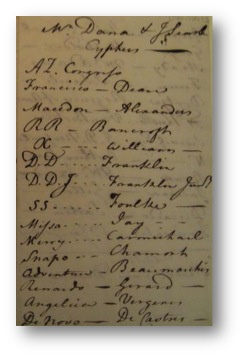
John Adams, Codename: “Steady”
Ciphers, codes, and keys—plus reflections on how to encrypt sensitive developments in early American diplomacy—run through the papers of two generations in the Adams family’s saga of public service. So how did they use secrecy in statecraft? Continue reading
The JuntoCast, Episode 12: Bailyn’s Ideological Origins of the American Revolution
 After our summer hiatus, “The JuntoCast” is back with a new type of episode. Continue reading
Making the Adams Papers
 Nearly a quarter of a million manuscript pages, and almost fifty volumes to show for it: As we mark the 60th anniversary of production at the Adams Papers editorial project, here’s an inside look at our process, from manuscript to volume. Continue reading
Edinburgh’s Early Americans
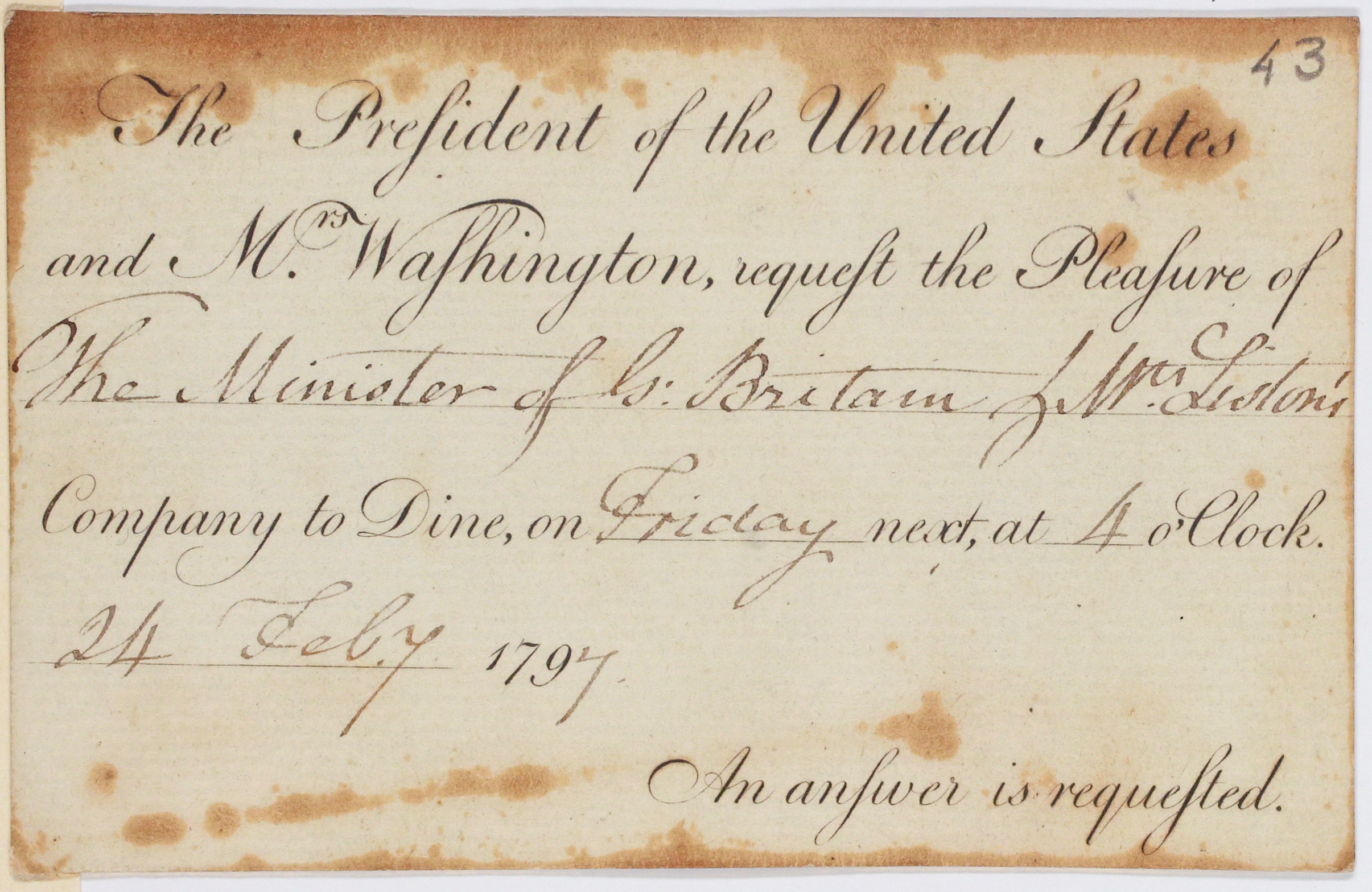
Invitation from the President of the United States to Robert and Henrietta Liston, 1797 (NLS shelfmark: MS.5590 f. 43)
With all eyes on Scotland this week, The Junto chats with Dora Petherbridge, International Collections Curator (U.S. & Commonwealth) at the National Library of Scotland. To learn about George Washington’s Edinburgh connection, and how NLS is “collecting the Referendum” for history, read on. Continue reading
Guest Post: American and Scottish Independence: Hearts and Minds
Simon Newman is Sir Denis Brogan Professor of American History at the University of Glasgow. His most recent book, A New World of Labor: The Development of Plantation Slavery in the British Atlantic, was published by the University of Pennsylvania Press in 2013. In this guest post, Newman draws parallels between the American campaign for independence in the 1770s, and the current campaign for Scottish independence.
 On September 18th millions of voters in Scotland will head to the polls to answer a simple question: “Should Scotland be an independent country?” As an historian of the American Revolution living and working in Scotland I am struck by the parallels not just between the two movements for independence, but more significantly between the ways in which the British government in the eighteenth century and the UK government in the twenty-first century have challenged those who sought and seek independence. Continue reading
Autumn Reads
 Here’s our fall preview of new titles—share your finds in the comments! Continue reading
Interview: Andrew Jackson O’Shaughnessy
 Andrew O’Shaughnessy is the Saunders Director of the Robert H. Smith International Center for Jefferson Studies at Monticello, and a Professor of History at the University of Virginia. His recent book, The Men Who Lost America: British Leadership, the American Revolution, and the Fate of the Empire, won this year’s George Washington Book Prize and several other awards. Tom Cutterham spoke to him for The Junto.
Continue reading
The Week in Early American History
 We hope you will forgive the spottiness of TWEAH recently, but it is likely to be a regular occurrence during the summer months. Nevertheless, here are some links for you this Independence Day holiday weekend… Continue reading
 The Junto