 This post is part of an ongoing exploration of the edges of capitalism that I’ve been conducting in the pages of the Junto, most recently here. One element of that exploration, and something that’s been highly visible in the discussion lately—especially with things like the furore over The Economist‘s review of Ed Baptist’s book, The Half Has Never Been Told (we posted our own review)—is the relationship between slavery and capitalism. Today I want to focus on just one element of that relationship: the distinction between commodifying labour and commodifying people. Continue reading
Tag Archives: capitalism
The Week in Early American History
 The past week has brought a number of fascinating developments in the world of academe and early America. But I think by far the most exciting has been the arrival in mailboxes around the country of the Fall 2014 issue of Early American Studies—a special edition dedicated to “Critical Approaches to Sex and Gender in Early America.” The articles are rich, creative, and surprising; I haven’t been able to put the issue down. If you’ve not gotten around to reading it yet, head on over to Project Muse and enjoy. In case you have already savored the new EAS issue, though, here’s your weekly roundup of noteworthy online happenings to bide you through a crisp fall Sunday. Continue reading
Is the History of Capitalism the History of Everything?
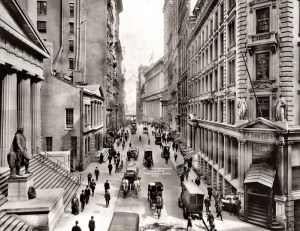 Seth Rockman begins and ends his recent essay on the “new history of capitalism” by describing capitalism as an economic system; but one of the features of the movement he describes is that it rightly treats capitalism as much more than that. As Rockman admits, “it is difficult to say what exactly it excludes.”[1] What’s most provocative and powerful about the new history of capitalism is precisely the fact that it recognizes and tries to historicize the pervasiveness of capitalism as a system that touches every aspect of our lives—everyone’s lives. Capitalism isn’t just in the workplace and the marketplace; as Jeffrey Sklansky has suggested, it’s in our very ways of being, seeing, and believing. But if the history of capitalism is an empire with no borders, just what kind of claims can it be making?[2] Continue reading
Another Kind of Blood: Edward Baptist on America’s Slaver Capitalism
Edward E. Baptist. The Half Has Never Been Told: Slavery and the Making of American Capitalism. New York: Basic Books, 2014.
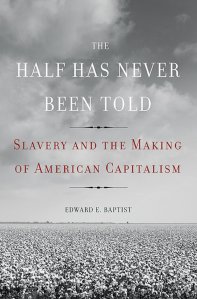 The Half Has Never Been Told attempts a difficult feat: to analyze slavery’s place in the history of American capitalism, but also describe it as a lived experience. This is a story about commodities, bonds, and blood.
To join the abstract and the concrete, Edward Baptist relies on extended metaphors. His narrative traces the form of a human body: the ten chapters move from “Feet, 1783-1810” through “Tongues, 1819-1824” to “Arms, 1850-1861.” Overall, the narrative book follows an image, adapted from a Ralph Ellison essay, of “slavery’s giant body,” stretched across the territory of the United States, serving as the stage on which the drama of American history is acted.[1]
Guest Post: The Decline of Barbers? Or, the Risks and Rewards of Quantitative Analysis
Today’s guest post is authored by Sean Trainor, a historian of the early American republic with an interest in the intersection of labor, popular culture, and the body. He is a PhD candidate in History and Women’s Studies and Pennsylvania State University, where his dissertation examines the history of men’s grooming in the urban United States between the turn of the nineteenth century and the American Civil War.
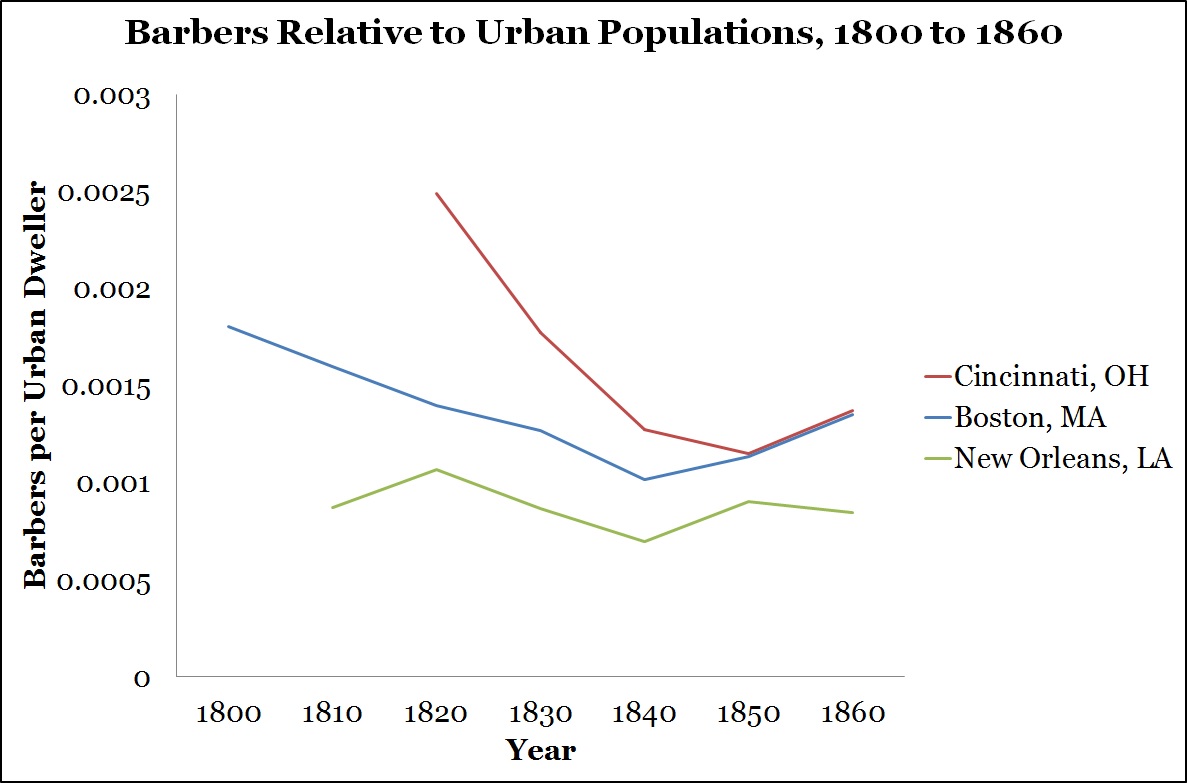 A few weeks ago, I finished compiling a database, long in the works, containing the names and addresses of all of the barbers in the cities of Boston, Cincinnati, and New Orleans between 1800 and 1860. Thrilling, I know, but the project has broader implications for historians interested in the intersection of quantitative and cultural history which, if you’ll bear with a brief exposition, I’ll discuss below.
The Trouble with Global: Early Thoughts from an Early Americanist
 This week, I’m wrapping up my survey course on modern global history (1500 to the present). It’s the first time I’ve taught this course. So I have opinions.
Let me just put this right out there: I had long been skeptical about global history as a standard survey course. It seemed too unwieldy, too shallow or spotty in coverage, and way too vulnerable to political ax-grinding. I assumed this course would reinforce old stereotypes: that history is an endless parade of random facts and dates and battles and names of elite men. Or else it would turn into pure theory, and thus an exercise in polemic. Either way, it would have little of the texture of lived experience, which is what I reckon makes history compelling to ordinary powerless students.
Wood & Holton on the Constitution
 Was the purpose of the constitution to protect democracy from being ruined by the people or to protect commerce from being ruined by democracy? This was one of the questions put to Gordon Wood and Woody Holton in a debate held a few weeks ago at the University of South Carolina. A full video of the event has just been released on YouTube, and is embedded below. For anyone familiar with the work of these two historians, the debate will constitute a useful recap of the distinction between their two interpretations of the origins of the federal constitution. And for others, I hope it might be a kind of teaser for their excellent books! Continue reading
Everyday Connections of Colonial Economies: Conference Recap
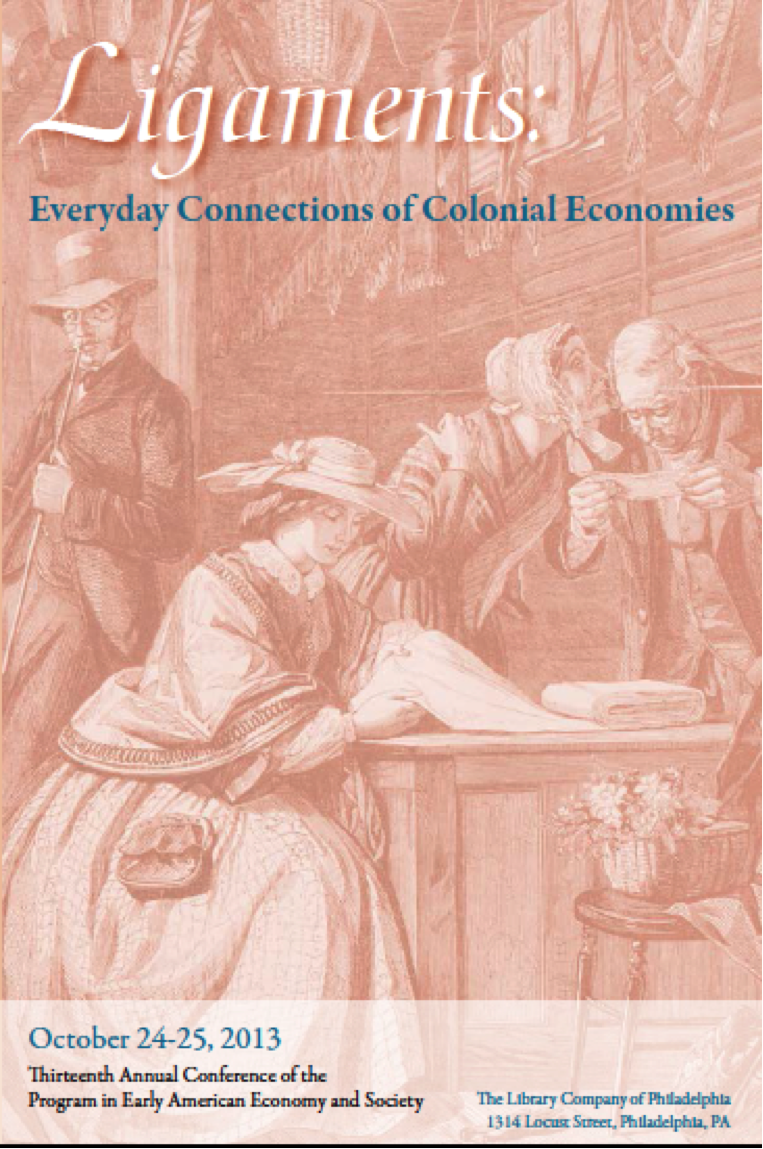 In our writing and teaching, we often refer broadly to “the early American economy,” suggesting that various systems of production, consumption, and exchange formed a collective whole. But what were connections that bound together this early American economy? Fifteen presenters—and a large and engaged audience—considered this question at the Program in Early American Economy and Society’s annual conference at the Library Company of Philadelphia on October 24th and 25th.
The conference title, “Ligaments,” referenced the connections and linkages that gave shape to the early modern economy. As PEAES director Cathy Matson explained in her introduction, the conference assembled some of the many scholars who are currently examining “ordinary, pragmatic economic connections” and using their investigation of these seemingly mundane topics to shed light on “big ideas” and longstanding questions. Continue reading
“Barbarities, Extortions and Monopolies”
 American colonists’ protest against the 1773 Tea Act involved more than just the Boston Tea Party; and it was provoked by more than just a tax. What sharpened the edge of colonial frustration was the short shrift given to American business interests in the balancing-act of imperial administration—and the triumph, by contrast, of the East India Company. American merchants and smugglers were the big losers in a larger effort to bail out the struggling corporation. As John Dickinson put it in his second “Letter from the Country,” the British policy aimed “not only to enforce the Revenue Act but to establish a monopoly for the East India Company, who have espoused the cause of the ministry; and hope to repair their broken fortunes by the ruin of American freedom and liberty!”[1] Continue reading
The Week in Early American History
 It’s not every Sunday that we get to begin this recap with a genuinely fresh proslavery argument. But this week the International Herald Tribune ran a brief column by Humayan Dar, a self-described “Islamic economist” with a PhD from Cambridge. Under the headline, “Modern slavery: how bad is bonded labour,” the essay decried “the negative perception of slavery and bonded labour,” and suggested that a legal forced-labor regime in Pakistan would “work for the mutual benefit of the parties, the employer and the worker and their families.”
 The Junto