Digital Pedagogy Roundtable, Part 4: Funeral Trains and Social Media

This week, The Junto features a roundtable on digital pedagogy, in which we discuss our different approaches to using digital sources in the classroom. Today, Ken Owen shares his experience of an MA class’s project using social media for public history uses. You can also read Part 1 by Rachel Herrmann on source accesibility, Part 2 by Jessica Parr on teaching digital history to non-majors, and Part 3 by Joseph Adelman about working with students on technical knowledge.

Back in April, I had a rather surreal teaching experience. A class project, focusing on tweeting the assassination and funeral train of Abraham Lincoln, attracted a good deal of media attention in central Illinois. My class ended up appearancing in local newspapers, radio, and even with a featured spot on the local news channel. I even had a waiter in a local restaurant recognize me as the ‘Lincoln and twitter professor’. Continue reading
Digital Pedagogy Roundtable, Part 3: Technical Knowledge

This week, The Junto features a roundtable on digital pedagogy, in which we discuss our different approaches to using digital sources in the classroom. Today, Joseph Adelman talks about working with students on technical knowledge. You can also read Part 1 by Rachel Herrmann on source accesibility, and Part 2 by Jessica Parr on teaching digital history to non-majors.

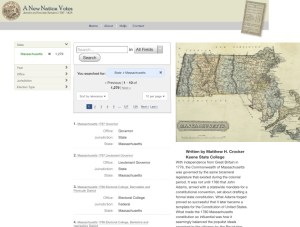
newnationvotesI’m always both impressed and intimidated when I see a digital history project pop up in my social media channels. Faculty are doing some amazing work getting students to create work using sophisticated software, apps, and other programs. They create websites, run statistical analyses, markup text using TEI … and I have no idea how to replicate it in my classroom either for myself or my students. To be fair, I have not yet taught a course on digital history specifically (nor do I plan to in the near future). So I’d like to focus instead on some practical thoughts about integrated digital history methods into the classroom in topical upper-level courses.

Continue reading

Digital Pedagogy Roundtable, Part 2: Pitching Courses for Non-Majors

This week, The Junto features a roundtable on digital pedagogy, in which we discuss our different approaches to using digital sources in the classroom. Today, Joseph Adelman talks about working with students on technical knowledge. You can also read Part 1 by Rachel Herrmann on source accesibility, and Part 3 by Joseph Adelman on the role of technical knowledge in digital pedagogy.

morIn her kick off of this week’s roundtable on Digital Pedagogy, Rachel talked about the shades of Digital History, noting Lincoln Mullen’s 2010 post “Digital Humanities Spectrum;  or, We’re all Digital Humanists Now.” I have written on spatial humanities approaches to religious history, and I do have some experience with text mining and coding. (XML, CSS, as well as some rudimentary Perl and Python.) By virtue of my library science background, I also have some training and experience in digitization, metadata, and digital stewardship. I am not a coder in the sense that true digital scholars like Mullen are, but I can speak techie and navigate that world with relative ease. Continue reading

The Week in Early American History

TWEAHWelcome to another edition of This Week in American History. It has been a busy, yet troubling two weeks.
We would like to begin by offering our condolences to the family, friends, and colleagues of Christopher Schmidt-Nowara, of Tufts University. Dr. Schmidt-Nowara died suddenly in Paris on June 27th. Continue reading

The Week in Early American History

TWEAHWelcome to another addition of The Week in Early American History! Continue reading

Recap: “So Sudden an Alteration” Conference (9-11 April 2015)

Two weeks ago, 175 historians descended upon the Massachusetts Historical Society (MHS) in Boston for a three-day conference that considered the political, social, economic, and global parameters of the American Revolution. The conference consisted of eight panels (with pre-circulated papers), two keynotes, and some special presentations on digital projects. The conference proceedings were live-tweeted under #RevReborn2, and fellow Juntoist Joseph Adelman provided some live coverage on the blog. The Junto has also had some post-conference commentaries, including “You Say You Want a Revolution” by Joseph Adelman and “The Suddenness of the Alteration: Some Afterthoughts on #RevReborn2” by Michael Hattem.

Continue reading

Interview: Liz Covart of Ben Franklin’s World

ben_franklins_worldLast week, The JuntoCasters—aka Ken Owen, Roy Rogers, and myself— appeared on the new, fast-growing podcast hosted by Liz Covart called Ben Franklin’s World, an interview-based early American history podcast that launched in October 2014. Already, the podcast has a catalogue of twenty-four episodes and a rapidly growing audience. Most episodes feature Liz interviewing a historian/author about a recent book and some of her past guests have included such notable historians as Alan Taylor, François Furstenberg, Claudio Saunt, Joyce Chaplin, and James Green, as well as The Junto’s own Sara Georgini for an episode about John and Abigail Adams and the Adams Papers. Continue reading

Retelling “A Tale”: An Interview with Richard S. Dunn

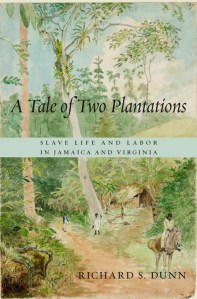
Dunn Roundtable CoverWrapping up our roundtable review of A Tale of Two PlantationsThe Junto chats with Richard S. Dunn about microhistory as a “healthy antidote to top-down history,” and the archival surprises that reshaped his work. If you are near Harvard University on February 5th, come and hear more about the project. Continue reading

A Tale of the Classroom: Introducing Richard Dunn’s Book to Undergraduates

Dunn Roundtable CoverRichard Dunn has written a big book. Normally, big books like Dunn’s are primarily meant for fellow academics, grad students who need to pad their comps list, and the super-interested general public. (That category still exists, right? Right?) For academics, these types of books influence two aspects of our scholarly life: our own academic projects and our classroom instruction. The previous participants in the roundtable have focused on A Tale of Two Plantations’s contribution to the former category, while I would like to focus my remarks on the latter. So I am going to skip the basic parameters of a book review—namely, identifying the key arguments and weaknesses of the volume—and focus on how this book can work with undergraduate students.  Continue reading