![Holly+Headshot_2bw[2]](https://earlyamericanists.com/wp-content/uploads/2018/09/hollyheadshot_2bw2.jpg?w=204&h=219) Today’s guest post comes from Holly N.S. White (Ph.D., College of William & Mary) who is an assistant editor of Publications and Digital Projects at the Omohundro Institute of Early American History and Culture and an assistant producer of Ben Franklin’s World: A Podcast about Early American History. She specializes in the history of age, childhood, and youth as well as the histories of gender, family, and law in the early America. Her research focuses on the definition and negotiability of age in early American law and society, which is the subject of her forthcoming first book, Negotiating American Youth: Age, Law, and Culture in the Early Nineteenth Century.
Today’s guest post comes from Holly N.S. White (Ph.D., College of William & Mary) who is an assistant editor of Publications and Digital Projects at the Omohundro Institute of Early American History and Culture and an assistant producer of Ben Franklin’s World: A Podcast about Early American History. She specializes in the history of age, childhood, and youth as well as the histories of gender, family, and law in the early America. Her research focuses on the definition and negotiability of age in early American law and society, which is the subject of her forthcoming first book, Negotiating American Youth: Age, Law, and Culture in the Early Nineteenth Century.
Children and adolescents are regularly described as big for their age, small for their age, or mature for their age– but what purpose does it serve to judge a person’s age against their appearance? Today, with birth certificates to prove our age it doesn’t actually mean much. But in early America, where no such formalized, institutionally supported forms of record keeping existed, appearing young or old relative to one’s age could have significant ramifications on a person’s life. Continue reading
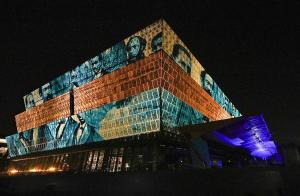 arly on a cold, frigid morning in Washington, D.C., my husband and I stood at the tail end of a long, winding line to get into the Museum of African American History and Culture. It was too cold to walk around to view the architecture so we hustled over to the entry line as soon as we exited the cab. As we waited, clutching our prized full-page sized passes, we watched a line of yellow school buses deposit kids from elementary, middle, and high schools into the bright frigid air. Their peals of laughter and rambunctious playfulness resisted the cold air. Their faces, hues of browns and tans bundled in colorful puff jackets, were filled with excitement. In line, a group of about six or seven women of African descent stood behind us. This group was from Los Angeles, California and had centered their annual get together around the visit to the Museum. They also were uncomfortably cold yet visibly excited about being here, particularly at this moment of our political lives. I wanted to find out more about them, but because it was so cold or the line was already so long at 10:00 a.m., the Museum staff diverted half of our line to another entryway. We lost contact with them and the children as we sped down the plaza to a much shorter line and before we knew it we were inside the Museum.
 On May 21, 1796, as George and Martha Washington ate their supper in the Philadelphia Executive Mansion, their twenty-two year old house slave, Ona Judge, walked out of the house and into freedom. With the help of the free black community in Philadelphia, Judge made her way to Portsmouth, New Hampshire where the free black community and white supporters provided refuge.
 In Antebellum America, Southern municipalities generated revenue by confiscating and reselling illicit slaves through public auctions.[1] In 1807, Congress prohibited the international slave trade, a year later, Louisiana followed suite, but this did not stop the trade. An illicit trade from Africa across the Atlantic continued to supply the America South with slaves. Illegal slaves were forfeited to the state. The Sheriff’s department placed these slaves in prison to await resale to the public. These findings raise questions about the role of the state in the slave trade, property laws, municipal revenues, and contributions of the sale of slaves at “property auctions” to modern city infrastructures.
 Calling all contributors!
 When I began watching episode one of HBO’s new show Westworld, I was prepared for something in the Western genre. I had seen a trailer that included horses, Indians, and a stereotypical Old West landscape. I was pleasantly surprised. Not only is Westworld in the mold of previously-successful HBO projects, it also forced me to think about the prospects of living history. “Living history” simulates and interprets the past. Attractions assert history-as-entertainment. In that vein, successful museums must constantly keep exhibits fresh, introduce new initiatives, storylines, and characters, and generally give visitors a reason to return. The same problem faces the Westworld theme park, as technicians and writers strive to provide an ever-more entertaining and realistic experience. The show raises a perplexing question: how “real” should we get?
  As the new history of capitalism reminds us of the immense wealth that traveled through antebellum cotton ports, an old analytical problem remains—why didn’t Southern merchants invest in their communities, in the manner of the Boston Associates? Historians have traditionally explained that this lack of investment was caused by Southern culture: the Southern commitment to slavery, shared by its mercantile class, mandated a conservative approach to economic investment and a fear of change. For example, Scott P. Marler’s recent book on merchants in New Orleans claimed that “in the context of the slave society in which they were deeply implicated, their peculiar market culture discouraged the investments necessary for the city to modernize its economic base,” such as manufacturing and railroad-building.[1]
 I thought going to Worcester for the OIEAHC
  The annual British Group of Early Americanists Conference was held from September 3-6 at the University of Sheffield in Sheffield, England and drew a wide variety of scholars from the United Kingdom, the United States and France. In keeping with BGEAH traditions, there were many excellent papers, a key note address on Thursday night, a book club discussion on Friday and a conference dinner on Saturday, while newer traditions were started with some panels providing pre-circulated papers.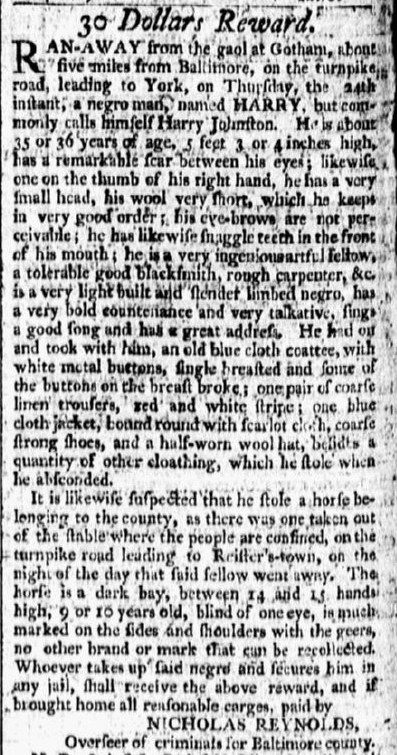
 The Junto