This is the final post in our series on Teaching Amid Political Tension (read Part I, Part II, Part III). Today’s post is by Sean Trainor, who teaches history, writing, and professional communication at the University of Florida. His writing has appeared in The Atlantic, TIME, Salon, The Chronicle of Higher Education, The Junto, Early American Studies, and elsewhere. He co-hosts the weekly podcast Impolitic.
To be perfectly honest, the current age of turmoil has had a minimal impact on the content of my courses. Long before Donald Trump emerged as a presidential contender or Pepe the Frog became an absurd, menacing presence in Americans’ collective consciousness, I had been teaching a politically engaged curriculum that focused on the intersection of racism, sexism, inequality, imperialism, and jingoistic excess in American history. I had designed these courses as a kind of rebuttal to what I saw as the defining sins of American life, and insofar as Donald Trump gleefully embodies these sins, my courses have aged well in the era of his presidency.
 I’m teaching two sections of the first half of the U.S. survey this semester (which goes to 1877 here at BYU). I taught two sections of the same last semester. After nearly a five-year break from the classroom as I researched and wrote a dissertation, it was fun to be back in the classroom: to work with students, take a step back from the specifics of my own research, reflect on the broader themes and developments of early American history, and to update my lecture/discussion notes and outlines with the vast amounts of excellent scholarship produced over the course of that five-year period.

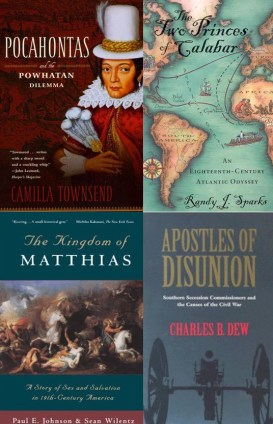
 I am fortunate that in graduate school, I had quite a bit of guidance in writing across the curriculum pedagogy. I have since taught approximately a dozen designated writing-intensive courses. Most history courses are writing-intensive by default, and many history faculty do find themselves teaching writing and research techniques. Here, I am focusing primarily on the strategies I use in survey courses, with a short list of monographs that I have found work well for this purpose.
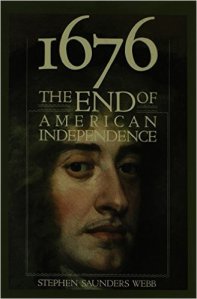 It took me a few days to realise my mistake. Around the third week of the semester, in this my first year teaching the “Foundations of American History” survey course here at Birmingham, I slipped up in a way I’d never have imagined. I was lecturing about Bacon’s Rebellion, and about Stephen Saunders Webb’s provocative, half-mad 1676: The End of American Independence. I found it odd that my students didn’t seem to see what was so funny, or at least glib, about Webb’s title. Those blank looks spooked me. So I said, “well, you know guys, because, 1776, right? That’s… when the Americans declared independence? Remember?”

 This week, I’m wrapping up my survey course on modern global history (1500 to the present). It’s the first time I’ve taught this course. So I have opinions.
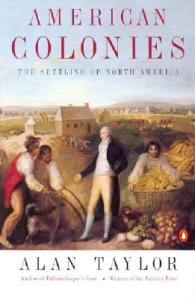 Teaching the first half of the American history survey has become a more complicated job over the last few decades. The reason is quite simple—the purview of early American historians has broadened significantly in the same period. A narrative from Jamestown to Independence to Civil War is now a narrative that begins with (or even before) the Columbian Exchange. A geographical focus that formerly considered the “thirteen colonies” almost in isolation now extends northwards to Canada, westwards to the Mississippi, southwards to the Caribbean, and across the ocean to Europe and Africa. A predominantly white, male, Protestant cast of characters has welcomed women, people of color, Native Americans, and others to its merry band.
 The Junto