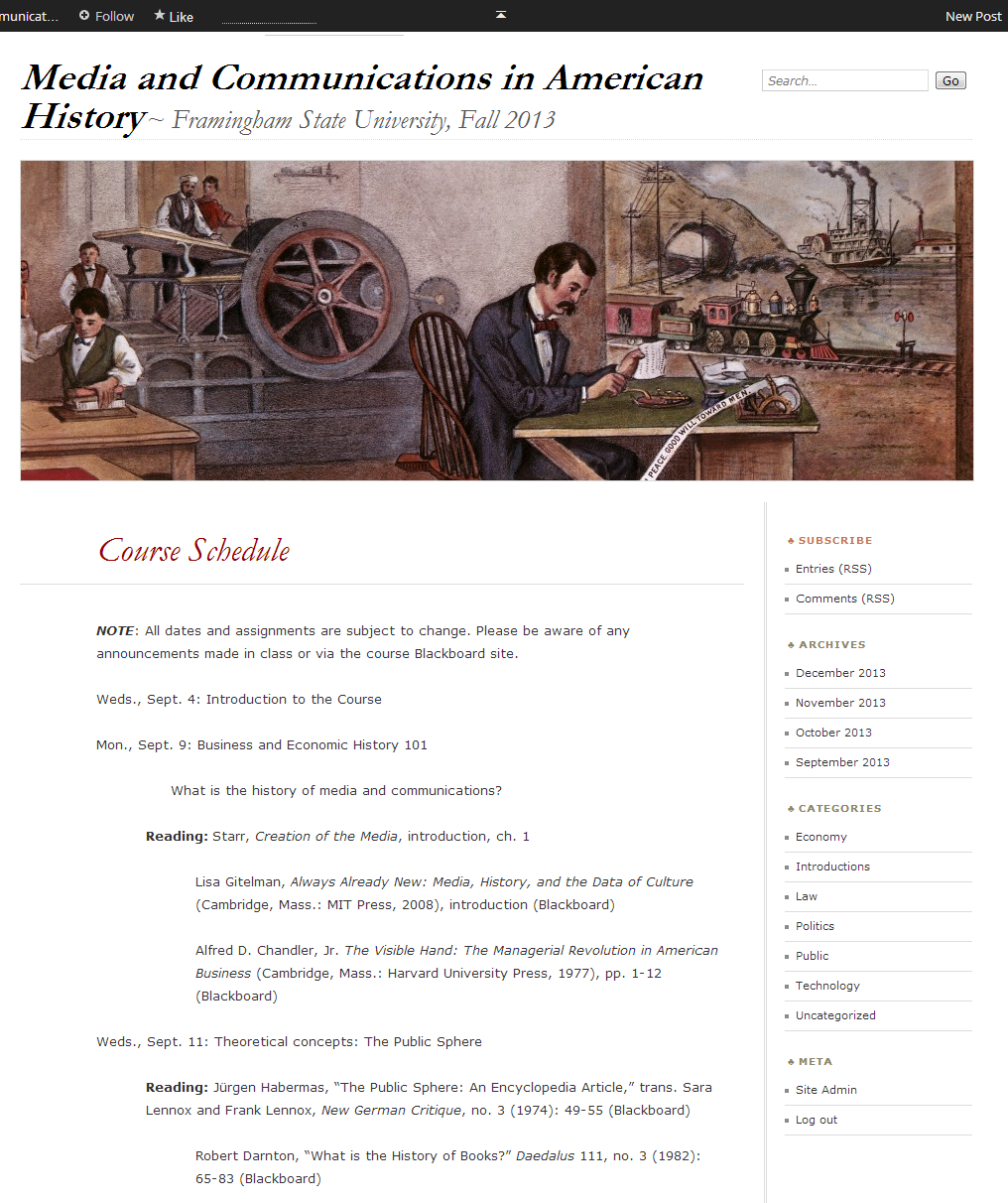
 This week Framingham State University held its annual faculty professional development day (known on campus by its chronological moniker, January Day). As part of the day, I and a colleague in the English department put together a session on using social media in the classroom. What follows is an approximation of my half of the discussion, which focused on using blogs in a classroom setting. With the semester looming for almost everyone (though not, apparently, Rachel), it’s a good time to think about course syllabi, readings, and assignments. These sessions are aimed broadly at generating discussion among the faculty across disciplines about pedagogy, so I tried less to talk about how innovative I am (in some ways, not in others) but rather to provide a narrative of my experiences and raise a few questions.
Tag Archives: teaching
Preparing for Final Exams…Wait, What?
 I am still learning how things work in England. Prime example: a couple of months back, I referred to the place where one purchases delicious, delicious beer-battered cod and fries as a “fish and chippery” before a kind(?) soul on Twitter alerted me to the fact that it’s called a “chippy,” here. So perhaps it’s understandable that I still find it a little weird that my students are about to take their final exams. Continue reading
The Week in Early American History

Happy New Year, dear readers! Hope you had a merry Christmas. Did you watch the ball drop in Times Square? The technology dates back to the early 19th Century, when the Royal Navy ruled the waves and captains needed a way to periodically recalibrate their ships’ chronometers. In the New Netherlands, Dutch colonists spent New Year’s Day going over to each other’s houses for nieuwjaarskoeken. We here at The Junto, meanwhile, have been busy collecting all the links of note you may have missed over the holidays. Continue reading
Whither the 18th Century?
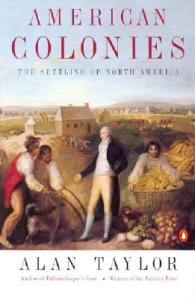 Teaching the first half of the American history survey has become a more complicated job over the last few decades. The reason is quite simple—the purview of early American historians has broadened significantly in the same period. A narrative from Jamestown to Independence to Civil War is now a narrative that begins with (or even before) the Columbian Exchange. A geographical focus that formerly considered the “thirteen colonies” almost in isolation now extends northwards to Canada, westwards to the Mississippi, southwards to the Caribbean, and across the ocean to Europe and Africa. A predominantly white, male, Protestant cast of characters has welcomed women, people of color, Native Americans, and others to its merry band.
All of this is a good thing. But it runs up against a critical problem—the amount of time in a semester has not extended at all. To take account of newer historical approaches therefore requires critical editing of syllabi and a rethinking of approaches. That means there will be, for want of a better term, “winners” and “losers” in terms of the material covered in the survey course. My contention is that the 18th century is the main loser from these changes—and I wonder, at times, what the implication is for our students’ understanding of key currents of American history. Continue reading
My Lecturing Disjunction
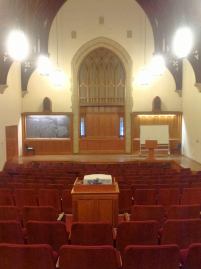 As I near the end of a somewhat unusual semester, I wanted to reflect a bit on my experiences as a Teaching Fellow for a course on the American Revolution. This semester I was fortunate enough to have the opportunity to deliver a number of lectures. And it has gotten me thinking about the lecture as both a piece of writing and a pedagogical tool. The purpose of this post is mostly to throw out some things that have occurred to me throughout the semester but to also get thoughts from those of you with experience giving lecture courses. Continue reading
Some Reflections of a First Time TA
Or, How I Stopped Hating Finance and Learned to Love the Business Major[1]
Settling in to my first semester as a TA this fall, I was stoked. Yes, stoked. Unbelievably enthusiastic about my teaching assignment: Early American Maritime Culture. I thought about all the port cities we would study, the trade routes we would map, and maybe for good measure we’d throw in an impressment or two. This first-time TA was assigned to a course in her field. Huzzah!
But a week into the semester I received an email stating, “We write to inform you that your teaching assignment has been changed to The History of Finance.”[2] Continue reading
Mid-Semester Evaluations . . . Of You!
 We’re barreling toward the end of the semester, which always feels closer once Thanksgiving’s over. As the Brits don’t celebrate Thanksgiving here, I’m in the midst of doing mid-semester evaluations with students this week A) To remind them that the semester really is more than half over and B) To try to suss out what is and isn’t working in our class.
Today at The Junto, we’d like to ask you, our readers, to reflect on your teaching so far this semester, and to encourage people to use the comments to share ideas and troubleshoot.
Teaching the Declension Narrative
This semester I’m teaching Revolutionary America, a class which has allowed me to ease into teaching because my dissertation (ahem: book manuscript) focused on the more narrow topic of Native and enslaved foodways during and after the war.
I’ve framed the class around the question of how ordinary people experienced the Revolution. Lately I’ve been talking with students about the declension narrative pervasive in Native American history, because it’s one of the things I’m contemplating as I begin to think about revisions.[1] Continue reading
Guest Post: Introducing “The American Yawp”
Today’s guest post comes from Ben Wright, a doctoral candidate at Rice University, who focuses on religious conversion and early American antislavery. He is the co-editor of Apocalypse and the Millennium in the Era of the American Civil War (LSU, 2013), the editor of the Teaching United States History blog, and co-editor of The American Yawp.
 Like many of you, I find myself teaching the first half of the U.S. history survey this fall. The first few times through the course, I used a textbook and appreciated the clear organizational structure and built-in pacing. Teaching with a textbook felt like teaching with training wheels, and I certainly needed them for my first few laps. But as my confidence grew, so did my desire to assign primary sources, articles, monographs, museum catalogs, and other readings. While I am impressed with the quality of many texts – Eric Foner’s Give Me Liberty, and Kevin Schultz’s HIST are among my favorites – I cannot justify assigning an (often outrageously) expensive textbook if it is not going to be the cornerstone of my course. But my course evaluations often include requests for textbooks, particularly among athletes or other students with serial absences. I have tried placing a textbook on reserve, but in the three semesters of doing so, no one has ever checked out the book. It seems like our discipline could use an affordable, synthetic safety net for students who would like one. Continue reading
Sounds of Silence: Managing Student Preparation
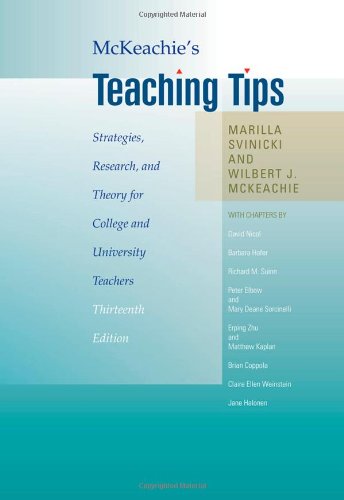 In all the teaching orientations and training manuals I’ve encountered, they all advise instructors not to be afraid of silence. The average student, they say, takes up to 8 seconds to mentally prepare an answer to an analytical query. But what happens when the silence isn’t because students are choosing which of their brilliant thoughts to share with the class but because most of them failed to do the reading? I suspect every college teacher has had a class session in which most questions were met with complete silence. What can we, as the instructors, do in such situations? And how can we better incentivize students to take their assigned reading seriously? Continue reading
 The Junto