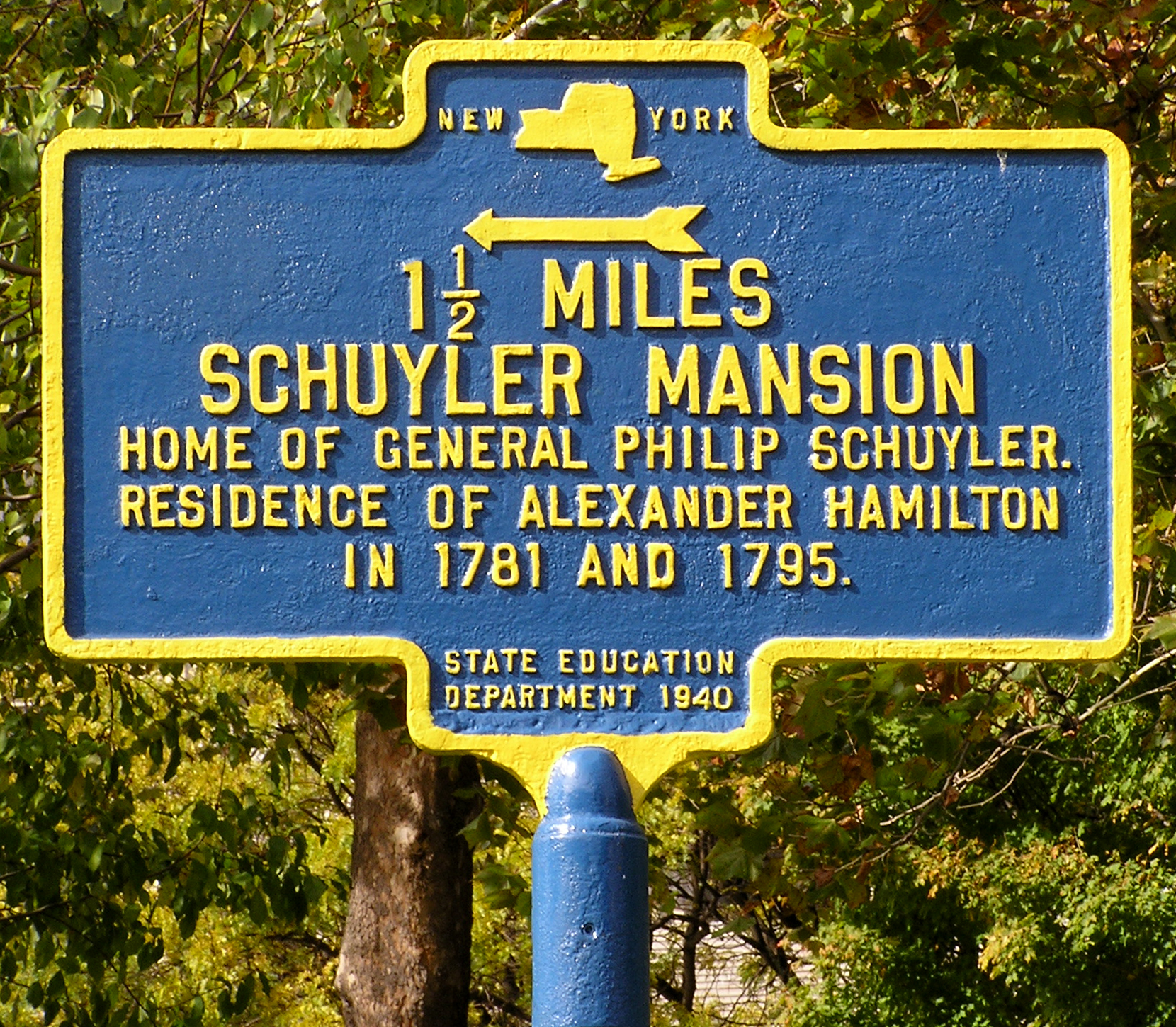
Three things happened in the last couple weeks to put Hamilton back on my mind: 1) the Victoria Palace Theatre in London announced that tickets for the show would finally (finally!) go on sale in January, 2) I started re-reading some of my research notes for this round of book edits, and 3) police arrested and pepper-sprayed peaceful Native Americans—Standing Rock Sioux, along with 90 additional nations and tribes—who were protesting the construction of the Dakota Access Pipeline.[1] I find that being a historian is a job of intellectual mood swings. I read my sources telling me about the horrible things some of the people I study did in the past, and then I have to pull back and contextualize their actions within an eighteenth-century milieu in which many people were terrible people most of the time by 2016’s standards (and people, our standards these days are low). All this is a longish way of saying that I, like many historians, love Hamilton while recognizing that its treatment of Early Republic history misrepresents and sometimes leaves out some of the topics that matter most to me as a historian. And so today I want to talk about Hamilton, settler colonialism, and Native American history—in particular, about land battles and the relationship between Indians, federal governments, and state entities. Continue reading

Author Archives: Rachel Herrmann
Making Students Lead Discussion: Three Methods

Image credit: legogradstudent.tumblr.com
I wrote lots of recommendation letters for students this summer, probably because last year was the first year that I taught students in their final undergraduate year, and many of them are looking for or have recently found jobs. I always die a little inside when I read or hear the word “employability,” because I think it’s a jargony term that seems to reiterate the point that a university sells a degree to its customers, the students. I do not think that education should be viewed as such a service, but neither do I think that it’s responsible to entirely eschew discussions of marketable skills that students can mention in their pre- and post-graduate job searches. Not all of them will become professional historians, and given the state of the academic job market, that’s okay! I spend time at the start of each term, in class and in my syllabi, explaining why I think it’s important for students to participate in class discussion. One of my key points is that a student’s class contributions are something that I can and do mention in my recommendation letters. Having spent the summer writing letters for recent graduates I know that I’ve mentioned their contributions in every single letter I’ve written. Lately, my feelings have gone beyond believing that students should participate: I think students should lead discussion. Continue reading
Seeking Sabbatical Advice
It’s a fun time for me to be a Juntoist. I joined the blog while I was ABD, on the brink of defending my dissertation. I had thoughts about research and writing, many untested theories about teaching, and opinions about where historians needed to eat when visiting archives in different cities. This was a blog for junior early Americanists, and I didn’t think too much about how the blog would grow and evolve over the next several (!) years. Definitions of junior scholars (“early career researchers” here in the United Kingdom) vary across the UK. The Arts and Humanities Research Council’s definition is someone within eight years of the PhD or within six years of their first academic appointment. Within my faculty, ECRs include “level 4” staff within four years of being hired or recently hired. Thus when I passed my probation, was promoted to level 5, and became a permanent member of staff, I became a non-ECR by my faculty’s definition but still eligible to apply for AHRC ECR funding and funding from other schemes.[1] All this is a long way of saying that I’m a Not So Early Early Career Researcher™ about to embark on her first sabbatical, and would like your advice about how to approach this period of leave. Continue reading
Why the Exeter Chiefs Should Rebrand Themselves
This blog post originally appeared at the Imperial and Global Forum in June. It’s reposted with slight edits here for reasons I’ll go into below.
On any given weekend, you might find yourself on a train platform, surrounded by sports fans wearing “Native American” headdresses and “war paint,” and waving inflatable tomahawks. They’ll be wearing apparel purchased from the team’s online store (the “Trading Post”), where you can also buy a “Little Big Chief” mascot. During the event, supporters will chant the Tomahawk Chop to get into the spirit of things, and afterward, perhaps they’ll rehash the game on the team’s message boards (“the tribe”). But this isn’t the Atlanta Braves. It’s not the Washington Redskins. This is a rugby match for Great Britain’s Exeter Chiefs, and it’s a problem that evokes Britain’s imperial American past.
Q&A with Alejandra Dubcovsky
Today at The Junto, we’re featuring an interview with Alejandra Dubcovsky about her new book, Informed Power: Communication in the Early American South, which Jessica Parr reviewed yesterday. Alejandra Dubcovsky is an Assistant Professor of History at Yale (and soon an Assistant Professor of history at UC Riverside). She earned her BA and PhD from UC Berkeley. She also has a Masters in Library and Information Sciences from San Jose State. She was born and raised in Buenos Aires, Argentina. Her work has appeared in Ethnohistory, The William and Mary Quarterly, and Native South. Continue reading
Teaching with Databases: An Early American Atlanticist’s Conundrum
During my three years of teaching in England, it’s become apparent that students in my American history classes spend a lot of time worrying about access to primary sources. As an undergraduate myself, I knew that upper-level assessment turns on the ability to find and analyze primary sources—that stipulation is no different in this country. What’s clear, however, is that whereas as an undergraduate I could go to the stacks and wander around until I had a pile of travel narratives, diaries, and monograph reproductions related to early American Atlantic history, that’s not necessarily the case here for students taking classes on early American history, Native American history, the Atlantic world, slavery, trade, and colonization. The costs of a Readex subscription, just for example, are too expensive for the library to justify when most students aren’t going to research early American newspapers. As a result, I’ve had to think hard about how to ease students’ worries about locating sources. Continue reading
March Madness 2016: Presenting your Champion
The polls have closed, and the votes are in! With nearly 1,000 votes cast in all the rounds, competition was fierce, but, we finally have a winner in this year’s March Madness tournament. Continue reading
Junto March Madness Semi-Final Results and Finals Voting
After a little bit of fun on Friday, it’s back to our regularly-scheduled March (er, April) postings, and the last week of March Madness. Over 150 of you voted to choose finalists in our semi-final; read on to find out who goes head-to-head in the last round! Continue reading
Junto March Madness Elite Eight Results and Final Four Voting
Almost 150 of you voted in this last round of March Madness. Results and final four match-ups are available after the jump! Continue reading
Junto March Madness Elite Eight Voting
Happy Wednesday! Runoff results are in, and it’s time for Elite Eight Voting to begin! Onward! Continue reading