François Furstenberg. When the United States Spoke French: Five Refugees Who Shaped a Nation. New York: Penguin, 2014.
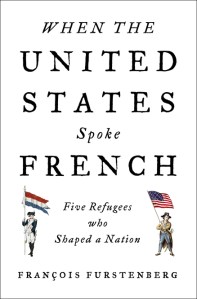 On the Fourth of July, 1794, two former members of France’s Constituent Assembly gazed from a window across New York’s Bowling Green. Both had arrived in the United States just that year. Back in 1789, they had helped to launch a revolutionary movement for liberal and constitutional reforms. But as the Revolution grew ever more violent and threatened to destroy them, they fled France. The United States, they thought, would be a suitable refuge: the republican spawn of the British government whose constitution they so admired, the new nation whose Enlightenment principles would guard them from the threats of the Parisian mob. They must have been unnerved to see “a host of pro-French radicals” marching towards them that day, the rabble-rousing Girondin ambassador Edmond-Charles Genet at the fore, “singing the Marseillaise and other republican songs,” and hurling insults up to the windows where the émigrés stood watching (80). Continue reading

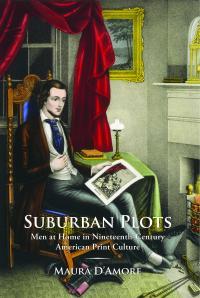 The world was a strange and startling place for Rip Van Winkle when he awoke from a twenty-year nap in New York’s Catskill Mountains. He had ventured to the woods to find a moment’s peace from “the labour of the farm and the clamour of his wife.”

 Earlier this year, the Journal of American History
 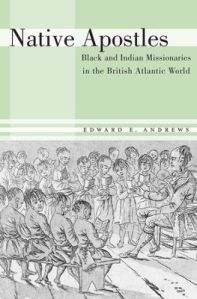 On the eve of the American Revolution, an unlikely band of ministers and benefactors devised a plan to send John Quamine, a free black man, and Bristol Yamma, a slave, as missionaries to Africa. The project was conceived by the two would-be missionaries themselves, and supported by controversial Congregationalist minister Samuel Hopkins and his more moderate colleague Ezra Stiles. In 1774, Stiles and Hopkins arranged for the duo to be sent to the College of New Jersey, where Presbyterian minister (and president of the College) John Witherspoon would train them. Their proposed mission gained some notoriety, and a diverse lot of supporters championed their cause, including Quaker abolitionist Anthony Benezet, New Jersey lawyer and politician Elias Boudinot, Scottish theologian John Erskine the noted black poet Phyllis Wheatley, Eleazar Wheelock and his Mohegan pupil-turned-preacher Samson Occum, and black Anglican missionary to Africa Phillip Quaque (though his endorsement came with serious reservations). The outbreak of war in 1775 and the subsequent death of Quamine in 1779 ultimately thwarted the planned mission. In spite of its failure, though, it remains an important but oft-ignored episode in what Edward E. Andrews calls “the tangled history of cultural encounter between Europe, Africa, and the Americas” (188).
  George Wythe represented the best of the Revolutionary-era Virginia gentry. Wythe, as a law professor, instructed and inspired many of the leading lights of the Patriot movement, including Thomas Jefferson. Wythe was also a racial liberal. After his wife’s death he freed the family’s slaves and even went as far as to adopt and pay for the education of one of their number, a young man named Michael Brown. By the opening years of the nineteenth century Wythe served as chancellor of Virginia’s court of equity where he handed down a monumental decision in the case of Wright v. Hudgins, which held that the burden of proof in cases of runaway slaves rested with the enslaver – not the accused runaway.
 The Junto