 Back in December, the Dean of Undergraduate Education at Harvard was quoted from a meeting of the Faculty of Arts & Sciences saying, “The median grade in Harvard College is indeed an A-. The most frequently awarded grade in Harvard College is actually a straight A.” This statistic was highly shocking to the general public (or at least the general media). Yale itself moved last year to address the problem when it turned out that 62% of grades given to undergraduates in a two-year period were A-minuses. Just a few weeks ago, the Teaching Center at Yale hosted a day-long seminar entitled, “Are All Yale Students ‘A’ Students? A Forum on Grading.” Most recently, Rebecca Schuman published a piece on grading at Slate entitled, “Confessions of a Grade Inflator.” However, rather than only seeing what has happened as the inflation of individual students’ grades, we should also see it—from the instructor’s perspective—as a compressing of the grading scale itself. Doing so reveals multiple repercussions for both students and faculty that the individualized, student-centered notion of “grade inflation” misses. We need to keep in mind that grade inflation or compression does not just benefit unworthy students; it actually has negative effects on both students and faculty, which should be the real causes for wanting to address the problem.
Category Archives: Pedagogy
History All Around Us
 The ongoing discussion about whether the humanities in general, and history in particular, are relevant to today’s students can often get deeply abstract (enough so to be off-putting even to many of us invested in the question). But the debate and discussion also has a practical element. In my classes, and in particular in my survey courses (which most students are taking for general education credit), I encourage them literally to see the history that lies right outside their doorsteps.[1]
On Assigning Undergraduate Reading
 During my first year as a Teaching Fellow, I’ve done a number of pedagogy-related posts, covering student preparation, undergraduate writing, and lecturing. Having finished that first year, I have found myself thinking about different approaches I’ve witnessed to assigning readings. The question I have is: What is the best approach to assigning undergraduate reading? Continue reading
The Trouble with Global: Early Thoughts from an Early Americanist
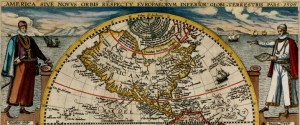 This week, I’m wrapping up my survey course on modern global history (1500 to the present). It’s the first time I’ve taught this course. So I have opinions.
Let me just put this right out there: I had long been skeptical about global history as a standard survey course. It seemed too unwieldy, too shallow or spotty in coverage, and way too vulnerable to political ax-grinding. I assumed this course would reinforce old stereotypes: that history is an endless parade of random facts and dates and battles and names of elite men. Or else it would turn into pure theory, and thus an exercise in polemic. Either way, it would have little of the texture of lived experience, which is what I reckon makes history compelling to ordinary powerless students.
A MOOC Confession
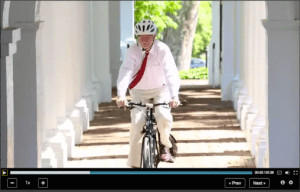 I have a confession to make: I have been watching MOOCs. I feel guilty about it, honestly, I do—not so much about the fact that I have been watching them, but more about the fact that I have also been enjoying them.
Introducing JuntoX: A New MOOC
 Since it was founded back in December of 2012, The Junto has had a powerfully transformative—indeed, a creatively disruptive—effect on the early American blogosphere. But lately, we’ve started to wonder, why stop there? Continue reading
Throw John Smith Off Ship
Spring is in the air in Southern California! Well, to be fair, this isn’t usual: it always smells like flowers in Los Angeles (when it doesn’t smell like poisonous smog or wildfire smoke), but recent much needed rain has definitely made the city seem more verdant. My students are sunken-eyed and groggy from midterms, but spring break is just around the corner. What better time to take stock of how a new course is going?
The Great Writing and Editing Extravaganza of 2013
 That moment in the semester had arrived. You know the one: the point at which, having received their grades from the first assignment of the term, students were beginning to panic about their final writing tasks. Even though I, as a historian, write quite a bit, I sometimes find it hard to teach writing because it’s difficult to articulate the rules I inherently know. I also think that it can be tricky to teach in an engaging way. Because I can be a competitive person, I decided to teach my first-year students about writing through a contest of sorts. Continue reading
On Undergraduate Writing
 I am currently in the midst of grading midterms and the process, as well as a recent piece by Marc Bousquet at CHE, has gotten me thinking about undergraduate writing and the debate of its value kicked off by Rebecca Schuman’s piece, “The End of the College Essay,” in Slate back in December. I want to use my post today to lay out some thoughts I have been having about undergraduate writing in lieu of the debate these articles have occasioned. Continue reading
Learning While Distracted
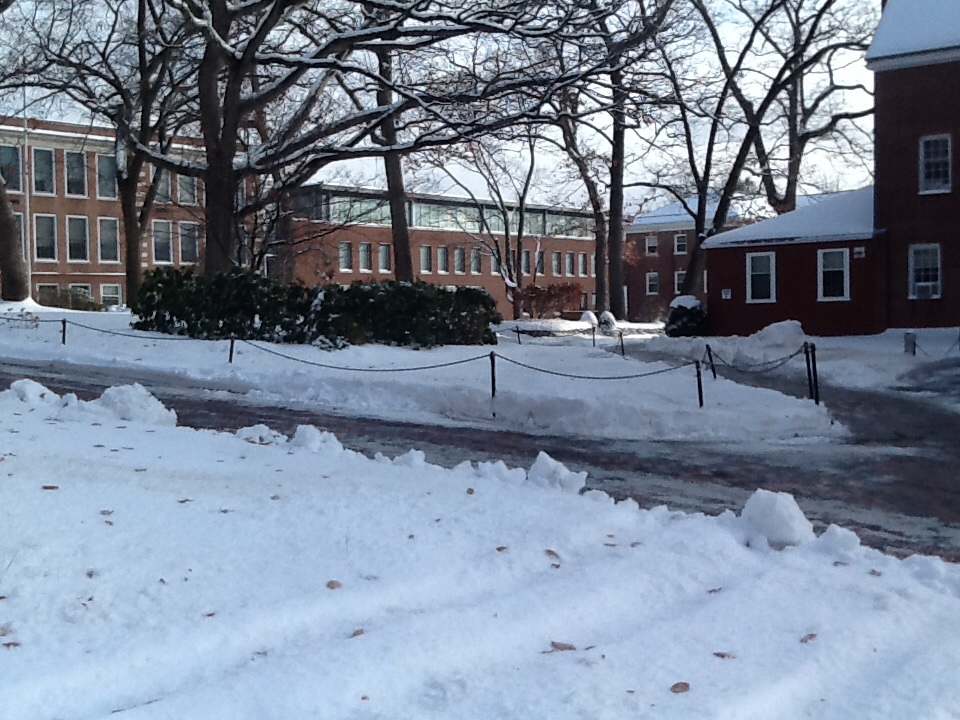
I don’t know about you, but my Twitter and Facebook feeds are overflowing with updates on how many schools, universities, and day care centers are closed today as the latest round of winter weather works its way up the East Coast. But some are open, with professors in the classroom trying to make headway on syllabi that are rapidly becoming useless as guides.
 The Junto