Co-organized by Glenda Goodman (University of Pennsylvania) and Rhae Lynn Barnes (Princeton University)
Oct. 11-12, 2019 at the University of Pennsylvania
Racial ideology is baked into the cultural and music history of early America. Native peoples and colonists heard each other’s music as indicators of difference, friendliness, or danger. The regulation of song and dance was integral to the subjugation of enslaved people. And, in the United States, a vested interest in forming a nation of white citizens was underpinned by pious and genteel repertoire. This workshop seeks to provide a space for the cultivation of new areas of inquiry into the intersection of race, music, and American cultural history. While the interrelated relationship between race, modernity, and American music is of enduring interest to scholars–especially those focused on the twentieth century to today–this workshop is dedicated to tracing these long-term themes in the earlier period from colonial encounter to the Civil War.
We encourage papers from scholars at all career stages. We especially welcome those using a wide variety of sources, including archival and/or ethnographic work, material artifacts like historical instruments, sheet music, theatrical ephemera, photography, journals, and all forms of print media. Participants will be asked to pre-circulate their 20-page paper and respond to another presenter’s work in this intensive two-day workshop. Bonnie Gordon (University of Virginia) is scheduled to give a lecture for participants on Friday.
Submit a 300-word abstract of a proposed paper by April 15: EarlyAmericanMusicAndRace@Gmail.com.
Questions may be directed to organizers Glenda Goodman and Rhae Lynn Barnes: EarlyAmericanMusicAndRace@Gmail.com
Support for travel and lodging will be provided for accepted participants.
Sponsored by the McNeil Center for Early American Studies; the University of Pennsylvania Department of Music; the Kislak Center for Special Collections, Rare Books, and Manuscripts; the University of Pennsylvania Office of the Vice Provost; and School of Arts and Sciences.
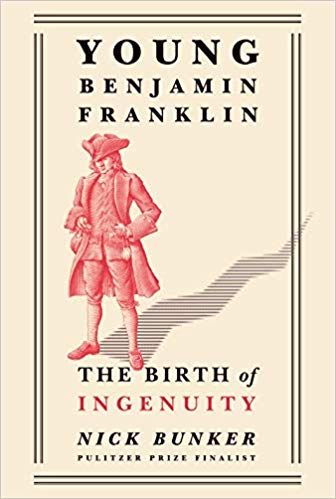 Starting with his own autobiography, there have been many treatments of Benjamin Franklin’s life. How did you approach the project when you were aware of this vast literature, and how did you attempt to carve out your own space?
 If you missed previous posts in our new roundtable series on the history of childhood and youth, click
  The history of childhood and youth in vast early America is a nascent but burgeoning field of inquiry that brings together historians of politics, society, slavery, race, and gender. Over the next three weeks, The Junto will feature a roundtable series with some of the most prominent historians of childhood and youth around the Atlantic as well as emerging scholars in the field. We’ll discuss the challenges and realities of researching and teaching childhood and youth across vast early America.
 Dear Junto readers, Thank you for joining us for two weeks of all-new scholarship tracing the historical patterns of #ColonialCouture! Read the whole roundtable

![Holly+Headshot_2bw[2]](https://earlyamericanists.com/wp-content/uploads/2018/09/hollyheadshot_2bw2.jpg?w=204&h=219) Today’s guest post comes from
Today’s guest post comes from 
