 Today is our final post in the roundtable series on the History of Childhood & Youth. If you missed previous posts click here. Thank you to each of our invited scholars for generously sharing tidbits of their research and their perspectives on this growing and dynamic field.
Dr. Anna Mae Duane, cited by several of our roundtable participants, rounds up this series. She is Associate Professor of English at the University of Connecticut, Storrs. Her scholarship focuses on children and race in a variety of constellations, including children as both victims and political actors in Puritan trial proceedings, antebellum literature, pre-and post-emancipation slave narratives, contemporary children’s literature, modern anti-slavery materials, and adult popular culture. Her current project, Educated for Freedom: Two Black Schoolmates who Changed a Slave Nation (forthcoming, NYU) focuses on the role of childhood—their own and others—shaped the political imagination of two of antebellum America’s most influential Black abolitionists. She is the author of Suffering Childhood in Early America: Violence, Race, and the Making of the Child Victim (UGeorgia, 2010) and editor of The Children’s Table: Childhood Studies in the Humanities (UGeorgia, 2013), and Child Slavery Before and After Emancipation: An Argument for Child-Centered Slavery Studies (Cambridge, 2017). She is co-editor, with Kate Capshaw, of Who Writes for Black Children? African American Children’s Literature before 1900. (UMinnesota, 2017). Her work has been published in several scholarly journals, as well as public forums including Slate, Salon and Avidly.
 If you missed previous posts in our new roundtable series on the history of childhood and youth, click
  If you missed previous posts in our new roundtable series on the history of childhood and youth, click
 ![Holly+Headshot_2bw[2]](https://earlyamericanists.com/wp-content/uploads/2018/09/hollyheadshot_2bw2.jpg?w=286&h=307) If you missed previous posts in our new roundtable series on the history of childhood and youth, click
If you missed previous posts in our new roundtable series on the history of childhood and youth, click  If you missed our first post on Friday in our new roundtable series on the history of childhood and youth with Bianca Premo, click
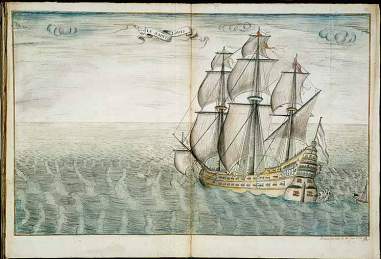
  Working on material culture, my research has taken me to some interesting, if unexpected places. Last summer, it involved waiting outside Saint John’s Church in Portsmouth, New Hampshire, founded in 1732 as the Anglican Queen’s Chapel. I quickly ran inside to snap some pictures of a baptismal font between back-to-back Sunday services. The Saint John’s font is an impressive fixture, carved from marble in a Continental European baroque style. As a ritual object used in the sacrament of baptism, the font is hardly unusual, but its story is.
  As we continue to learn more about the seizure and internment of migrant infants and children, both along the U.S.-Mexico border and in ICE raids throughout the nation, historians have asked us to wrestle with our
  In August 2017, I virtually attended and
  “My friends and I might still be 11, and we might still be in elementary school, but we know . . . that we have seven short years until we too have the right to vote.”
 The Junto