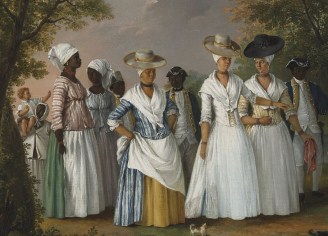
 In the past 10 years, we have seen an embarrassment of riches in scholarship that considers race in Early America (broadly understood). The list below is not exhaustive, but highlights some of the recent scholarship. Feel free to add your own favorite recent scholarship in the comments, and keep your eyes out next month, for our CFP for a roundtable on race in Early America.
My Favorite Books from 2016; or, a Christmas Book List for Your Early American History Nerd Friends
2016 sucked in a lot of ways. Future historians will likely give lots of attention to this year and its events, and not with a positive assessment. But while we cope with this new reality, we at least can console ourselves with the fact that it was an excellent year in historical scholarship, especially in the field of early America. This post is a sequel to my Christmas Book List I posted last year, and may very well become an annual tradition. Below you’ll find some of my favorite books from the past twelve months.
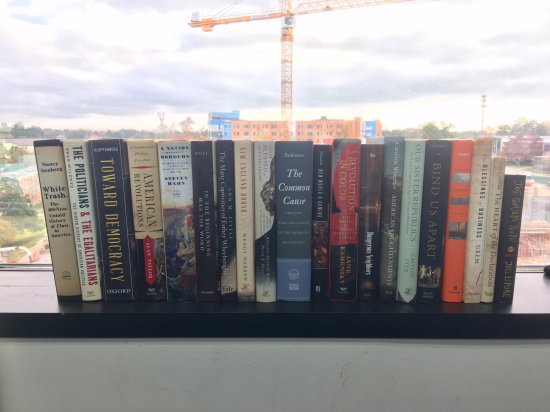
Just a few of my favorite books from the past year.
However, I should quickly add, these were far from the only excellent volumes to be released. (Like I said: it was a very strong year.) These books reflect my own interests and background. I hope others will share their favorite books, whether mentioned or not, in the comments. Continue reading
Guest Post: Echoes of Revolution: Resistance, Hip Hop, and the Black Atlantic
This is the fifth and final post in The Junto’s roundtable on the Black Atlantic. The first was by Marley-Vincent Lindsey, the second was by Mark J. Dixon, the third was by Kristin O’Brassill-Kulfan, and the fourth was by D. S. Battistoli. Ryan Reft is a Historian of Modern America in the Manuscript Division at the Library of Congress. He also writes for KCET in Los Angeles. His work has appeared in journals such as Souls, Southern California Quarterly, California History, and the Journal of Urban History, and the anthologies, Barack Obama and African American Empowerment and Asian American Sporting Culture.
 When A Tribe Called Quest (ATCQ) dropped its final album We Got It From Here . . . Thanks 4 Your Service, for a generation of Americans who attended college in the 1990s, it hearkened back to Clintonian multiculturalism, Afrocentric rap groups of the Native Tongues movement (De La Soul, Black Sheep, Jungle Brothers, and ATCQ), and hazy apartment parties carried by the rhythms of hip hop and its variants. Though a thoroughly modern creation, hip hop like that of ATCQ results from the accretion of political, social, and cultural forms arising from the Black Atlantic; the transnational culture created by the intersection of European empires, slavery, and colonization from the 1600s forward. Birthed and nurtured by the Black Atlantic, hip hop is our countermemory to American exceptionalism and chauvinistic nationalism. Continue reading
Guest Post: Resistance and Adjustment in Suriname: A Durable Eighteenth-Century Cultural Schism
This is the fourth post in The Junto’s roundtable on the Black Atlantic. The first was by Marley-Vincent Lindsey, the second was by Mark J. Dixon, and the third was by Kristin O’Brassill-Kulfan. D. S. Battistoli is a rural development practitioner, working in West Africa and the Caribbean. He holds a B.A. in English literature from Binghamton University, and, since 2011, has more than a thousand days’ field experience among the Saamaka Maroons of Suriname, first as a Peace Corps Volunteer, and later independently.
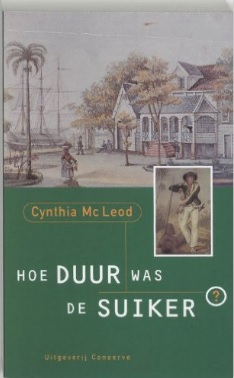 Cynthia McLeod’s Hoe Duur Was De Suiker, published in 1987 in the middle of Suriname’s Interior War, was the country’s first bestselling novel and a sort of foundational myth for the Creole population of the country.[1] The book takes its name from Voltaire’s famous rejoinder from Candide, “C’est à ce prix que vous mangez du sucre en Europe.”[2] The plantation colonies of the Caribbean took turns being the richest, and also the most violent and exploitative toward the blacks who produced the wealth; for much of the eighteenth century, the distinction belonged to Suriname. Continue reading
Guest Post: Historical Narratives, Contemporary Tools
This is the third post in The Junto’s roundtable on the Black Atlantic. The first was by Marley-Vincent Lindsey, and the second was by Mark J. Dixon. Kristin O’Brassill-Kulfan holds a PhD in early American history from the University of Leicester and is Coordinator and Instructor of Public History at Rutgers University. She is currently completing a manuscript on vagrancy and indigent transiency in the early nineteenth century US.
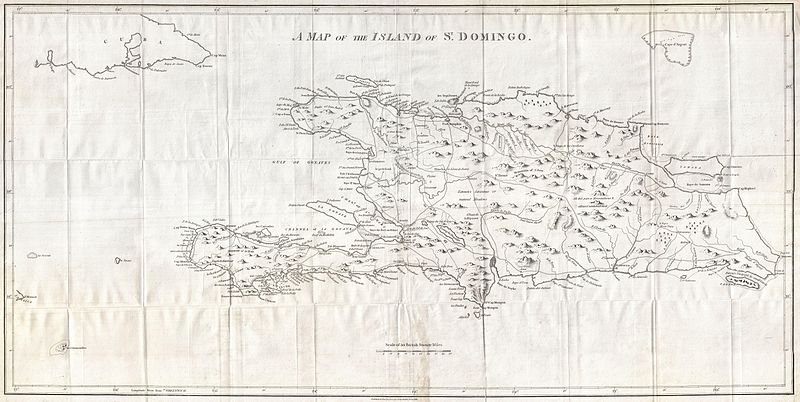 The early modern Atlantic Ocean was traversed by countless seafarers with varying degrees of maritime experience, in varying degrees of (un)freedom. People used mobility, including travel by sea, to negotiate new identities for themselves, however precarious. Continue reading
Guest Post: German Pietism and the Black Atlantic
This is the second post in The Junto’s roundtable on the Black Atlantic. The first was by Marley-Vincent Lindsey. Mark Dixon is a PhD candidate in Church History at Princeton Theological Seminary writing a dissertation on the interaction and exchange between German Pietists and enslaved Africans in colonial South Carolina. He spent the past year (2015-16) as a Fulbright Graduate Fellow researching in Pietist archives in Halle and Herrnhut, Germany. He produces Church History Chat, a podcast featuring interviews with historians of Christianity, which will begin publishing episodes in February 2017.
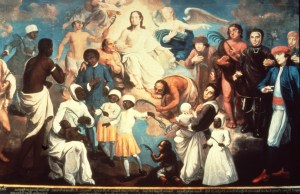
A painting depicting the first Moravian converts. Johann Valentin Haidt, “First Fruits” (1747). Source.
If it sounds strange to speak of a German Atlantic in the first place, it must sound even stranger in a conversation dedicated to new scholarship and understandings of the Black Atlantic. After all, Germany was not an Atlantic colonial power, and German speakers were not as deeply involved in the slave trade as their British, Dutch, Portuguese, or Spanish neighbors. Indeed, Aaron Fogleman’s 2015 keynote lecture, “A German Atlantic, or Germans in the Atlantic?” delivered at the McNeil Center’s spring workshop, questioned the label’s usefulness for historians.[1] I want simply to assert the reality of the German Atlantic, and more importantly speak to its surprising utility for scholars interested in the experiences of Africans and people of African descent in the eighteenth-century Atlantic. In particular, the activities of German Pietists (and their surviving sources) can enrich Black Atlantic studies. Continue reading
Guest Post: A View from the Past: The Contingencies of Racialization in 15th- and 16th-Century Iberia
When Paul Gilroy wrote his now-classic critique of cultural nationalism in 1995, he conceived a Black Atlantic that was a geo-political amalgamation of Africa, America, the Caribbean, and Europe. Gilroy was particularly interested in the construction of a modern, post-colonial cultural space in which slavery remained a part of modern black consciousness. His book is particularly noted for the introduction of race as a critical consideration in exploring the Black Atlantic.
It is fitting then, that we kick off our week-long discussion of the Black Atlantic with a post by Marley-Vincent Lindsey, which explores considerations of race in the Iberian Atlantic. Subsequent posts will consider Black responses to freedom (and unfreedom), historical narrative, race, and of course, power. Marley-Vincent Lindsey is a PhD student at Brown University. He is interested in writing the history of a Medieval Atlantic, tracing connections of land and labor grants between fourteenth-century Iberia and sixteenth-century New Spain. He also writes about history and the web with Cyborgology, and can sometimes be found tweeting @MarleyVincentL.
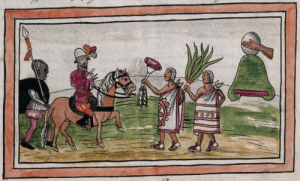
An early image of an African conquistador during Cortes’s invasion of Tenochtitlan. While the associated text makes no specific mention of Juan Garrido, historians have often associated this image with Garrido, one of the few known early black conquistadors. Fray Diego Duran, Historia de las Indias de Nueva Espana e Islas de la Tierra Firme (1581), 413. Image credit: People of Color in European Art History.
Juan Garrido was a typical conquistador: arriving in Hispaniola by 1508, Garrido accompanied Juan Ponce de León in his invasion of Puerto Rico, and was later found with Hernan Cortés in Mexico City. Yet his proofs of service, a portion of which was printed by Francisco Icaza in a collection of autobiographies by the conquistadors and settlers of New Spain, made a unique note: de color negro, or “of Black color.”[1] Continue reading
Call for Papers for the British Group of Early American Historians’ next conference
BGEAH 2017: “Land and Water: Port Towns, maritime connections, and oceanic spaces of the early modern Atlantic World.” Call for Papers
The British Group of Early American Historians will hold its annual conference at the University of Portsmouth, 31 August – 3 September 2017.
Drawing on Portsmouth’s historic significance as a port town this year’s conference theme is: “Land and Water: Port Towns, maritime connections, and oceanic spaces of the early modern Atlantic World.” Portsmouth was a site of embarkation for those who shaped (or attempted to shape) the political, social, and demographic contours of the Atlantic World: the Roanoke colonists departed from the town in 1587; as did Admiral Nelson for the Battle of Trafalgar in 1805. It was a hub of imperial force in the form of the Royal Navy and intimately connected with the imperial conflicts across the globe, and also of the protection and then prevention of the transatlantic slave trade. Yet, as with all port towns, the social space between water and land was a space for contestation and conflict; a space for opportunity and escape. Continue reading
Q&A: Ibram Kendi, Stamped From the Beginning
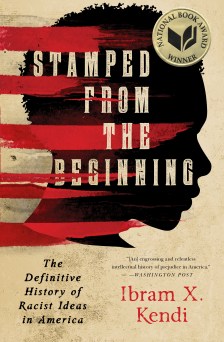 Today, we are pleased to offer an interview with Dr. Ibram Kendi on his National Book Award winner, Stamped from the Beginning: the Definitive History of Racist Ideas. Kendi is an Assistant Professor of African-American History at the University of Florida, and Associate Editor of the African-American Intellectual History Society blog. You can find his blog posts here. Continue reading
Guest Post: Dr. Strangehonor, Or: How I Learned to Stop Worrying and Love Snapchat
Today’s guest post is by Honor Sachs, an assistant professor of history at Western Carolina University and author of Home Rule: Households, Manhood, and National Expansion on the Eighteenth-Century Kentucky Frontier.
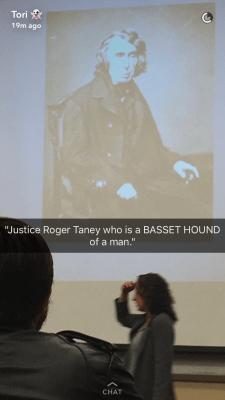 Several years ago, I attended a seminar on digital pedagogy. I thought it might be worthwhile to explore new opportunities out there for social media in the classroom. It was indeed an eye-opening experience, though not in the way I had hoped. Seminar leaders regaled us with software package after software package filled with whistles, bells, alerts, gimmicks, everything, they claimed, one would need to connect with this generation of “digital natives” (their term, not mine.) Students these days spend so much time on social media, they claimed, that faculty need to learn to connect with them online in order to really engage. “Here’s a program that allows you to text your students!” “Here’s another that allows you to collect data on how much time your students spend on homework!” “Here’s a program where you can instant message your student and remind them to study!” Continue reading

