Steve Pincus, The Heart of the Declaration: The Founders’ Case for an Activist Government (New Haven: Yale University Press, 2016).
 At a time when political events seem to place the very meaning of American democracy under the microscope, it is perhaps unsurprising that so many recent works have looked to re-evaluate the American Founding. Books focusing on the mid-1770s in general have included Kevin Philips’s 1775, Richard Beeman’s Our Lives, Our Fortunes, & Our Sacred Honor, and Joseph Ellis’s American Quartet. Recent books that have looked more specifically at the Declaration of Independence itself include Danielle Allen’s Our Declaration. Robert Parkinson’s The Common Cause, too, has called for a re-evaluation of what motivated those who fought for Independence, though his work calls for a much less celebratory conclusion. Such a list demonstrates the importance of the mid-1770s to America’s national identity. With The Heart of the Declaration, Steven Pincus throws his hat into the ring, too.
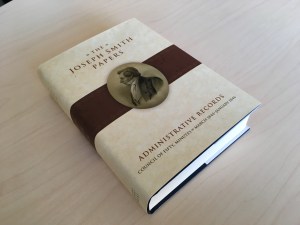
 Today at The Junto, Michael Blaakman interviews
  A silk worm begins wrapping itself round in a cocoon, encasing itself in its fiber. Faceless hands unravel the cocoon, turning it into a single linear thread, the thread then woven together with other linear threads unraveled by other faceless hands until all the threads, warped and wefted, form a connected fabric. Finally, completing the circle, a woman poses for a portrait, wrapped up in yard upon yard of silk, another body encased and shrouded.
 Many historians of race and slavery in early America were very excited when the wide release of Nate Parker’s new film on the Nat Turner rebellion was announced following its rave reviews at last year’s Sundance Film Festival. With the recent surge in Hollywood depictions of slavery (12 Years a Slave, WGN’s series Underground, and even Django Unchained), films have become an important part of teaching African American history. The best of these films and tv series give students an understanding of the psychological impact of slavery on both enslaved and free African Americans, illustrating many of the tactics of control and exploitation discussed in textbooks and classrooms. I had the opportunity to see the pre-release version of the film in April 2016 when Parker’s production company held screenings for HBCU faculty in several cities around the country. Several colleagues and I attended the screening and got our first glimpse at Parker’s version of a history that is both local and national. After the screening, production assistants recorded our reactions to the film, and took detailed notes on our critiques of the film both as a work of popular entertainment and its historical inaccuracies and misrepresentations, of which there were many. My own feelings on the film and its usefulness in the classroom are complicated and have changed significantly since my first viewing of the film in April. (In full disclosure, I have seen the film twice, both times at events put on by Parker’s production company).

 We’re pleased to feature this interview with Dr. Ian McKay, the director of the
 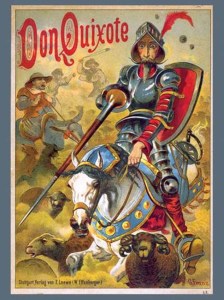 In a certain village of vast early America, whose name I do not recall, a book fell open. Then another. And another. By 1860, many generations’ worth of American readers had imbibed the two-volume work of Spain’s early modern master, Miguel de

 The Junto