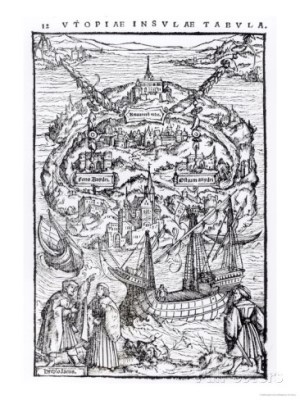
 This year I’m overhauling my early American survey course. Not only do I need to make it fit the schedule at my new institution, but because I’m planning to be teaching here for quite a while, I also want to build a course that carries my own signature, and where I can work out some of my own questions and ideas. Survey courses that I’ve taught before—like the one designed by Sarah Pearsall for Oxford Brookes University—have been themed around the violence of empire and slavery. Obviously, those continue to be both central concerns in teaching and the foci of cutting-edge scholarship. But in my search for something different, and for something that might capture the imaginations of my first-year students, I’ve chosen a different path: utopia. Continue reading
Making a Webpage for a Conference Paper

 I recently had to cancel a trip to a conference. My panel is continuing without me; the chair has graciously offered to read my paper in my place. Partly because of this, I am doing something I haven’t done before: putting together a companion webpage for the presentation.
Making companion webpages does not seem to be a widespread practice yet at history conferences, but I do know historians who have done it. For other people who are interested in the idea, I thought I would talk through what I am doing, keeping in mind that many presenters may not have extensive experience making webpages.
The Continental Toehold Dilemma
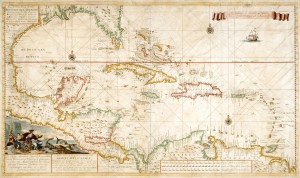
“The heart of the English Empire in the seventeenth-century Americas was Barbados,” according to Justin Roberts in his recent William and Mary Quarterly article.[1] That claim is perhaps not surprising—Richard Dunn established the social and economic importance of the island over thirty years ago in his seminal work, Sugar and Slaves. However, Roberts takes that point further by exploring the political ramifications of all of that Barbadian wealth in the West Indies. His article also speaks to a larger sea change in the historiography of the seventeenth-century Caribbean. Continue reading
Review: Matthew Karp, This Vast Southern Empire
This review is cross-posted from Ben Park’s own blog, “Professor Park’s Blog: Musings of a Professor of American Politics, Culture, and Religion.”
Matthew Karp, This Vast Southern Empire: Slaveholders at the Helm of American Foreign Policy (Cambridge: Harvard University Press, 2016).
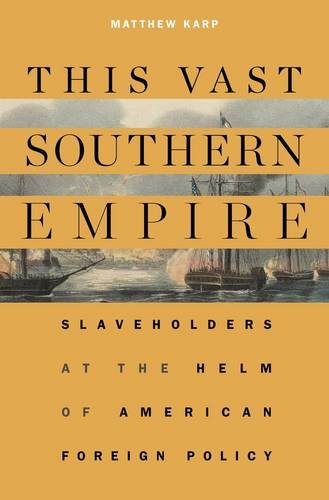 This isn’t your grandparents’ antebellum South. A generation ago it was common for historians to talk about the “regressing” southern states in the decades preceding Civil War. The advent of democracy, the spread of enlightenment, and the triumph of free labor left slaveholders reeling and the slave institution crumbling. Secession, this narrative emphasized, was the last-ditch effort of a flailing boxer on the ropes. But scholarship from the past couple decades have put that myth to rest. Michael O’Brien demonstrated that southerners were intellectuals who contemplated the most sophisticated issues of modernity. Edward Baptist showed how the slave institution increased in strength as the financial staple in America’s capitalistic order. Walter Johnson and Sven Beckert displayed how slaveholders were at the forefront of an increasingly global economy. These and many other works all point to the same crucial revision: slaveholding southerners were “modern,” and their ideas and actions cannot be merely dismissed as remnants of an antiquated age. Continue reading
The Strange Death(?) of Political History
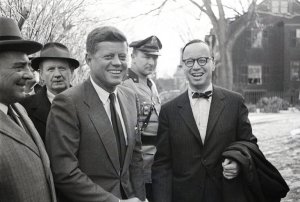
The glory days of American political history?
Historians are back in the news, this time not as a scolds (“this bit of history in popular culture isn’t historical enough”) but as Cassandras. Recently Fredrik Logevall and Kenneth Osgood, writing under the New York Times print edition headline “The End of Political History?,” bemoan the collapse political history as an area fit for study by professional historians.[1] Jobs in political history have dried up, fewer courses in the subject are offered in universities, few people are entering graduate school to specialize in the subject and hence “the study of America’s political past is being marginalized.” To Logevall and Osgood this marginalization has two tragic effects. Firstly, it denies American citizens’ access to the intellectual tools necessary to historicize our contemporary politics and “serve as an antidote to the misuse of history by our leaders and save us from being bamboozled by analogies, by the easy ‘lessons of the past.’” It also denies historians access to political power, the ability to influence policy and policymakers in the mode of C. Vann Woodward and Arthur Schlesinger Jr. Continue reading
Seeking Sabbatical Advice
 It’s a fun time for me to be a Juntoist. I joined the blog while I was ABD, on the brink of defending my dissertation. I had thoughts about research and writing, many untested theories about teaching, and opinions about where historians needed to eat when visiting archives in different cities. This was a blog for junior early Americanists, and I didn’t think too much about how the blog would grow and evolve over the next several (!) years. Definitions of junior scholars (“early career researchers” here in the United Kingdom) vary across the UK. The Arts and Humanities Research Council’s definition is someone within eight years of the PhD or within six years of their first academic appointment. Within my faculty, ECRs include “level 4” staff within four years of being hired or recently hired. Thus when I passed my probation, was promoted to level 5, and became a permanent member of staff, I became a non-ECR by my faculty’s definition but still eligible to apply for AHRC ECR funding and funding from other schemes.[1] All this is a long way of saying that I’m a Not So Early Early Career Researcher™ about to embark on her first sabbatical, and would like your advice about how to approach this period of leave. Continue reading
Autumn Reads
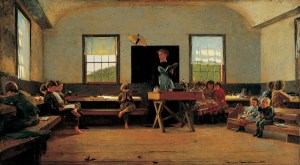
Winslow Homer, “The Country School,” 1871
Looks like #VastEarlyAmerica just got even vaster—and that’s a good thing. Here’s our fall preview of new titles. Please share your books/finds in the comments! Continue reading
Dissertating with Scrivener
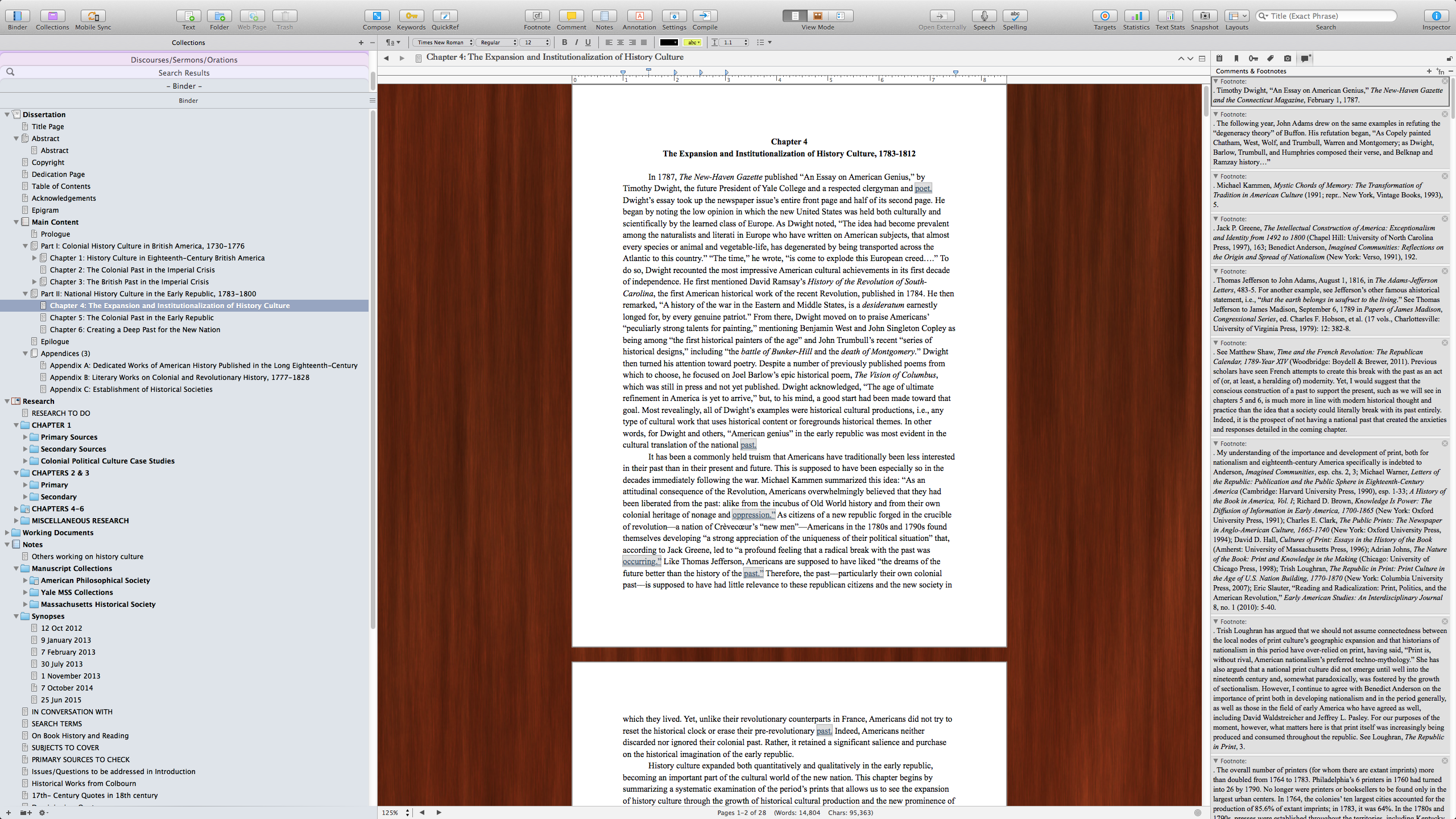 A few years ago as a pre-ABD graduate student, I wrote a post for the blog that has proved to have a longer shelf-life than most. That post, “Digital Workflow for Historians,” laid out how I used two programs, Papers and Scrivener, to manage my research and writing process. At the end of that post, I offered to share my project template and Chicago-style Compile (or export) preset. Over three years later, I still get emails on a monthly basis asking for those files. Following a discussion on Twitter last week about using Scrivener, it seemed the time was right to revisit the topic and to show how I ended up using Scrivener throughout the dissertation process, from organizing my research to producing drafts and revisions of chapters. Continue reading
A Tale of Two Bounties: The Christian Brothers, Mutinies, and Potential Piracies

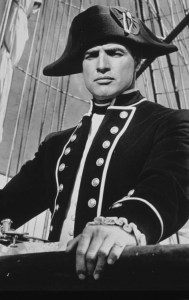 A few years ago, I was delivering my first lecture to a hall full of well over one hundred students. Thinking I would impress them with my popular culture knowledge, I included a reference to Captain Jack Sparrow as an example of the type of piracy I did not research, and one of the many forms of piracy in which they should not participate. Crickets ensued. Thankfully, my follow-up joke about the crickets landed better, but this left me all the more surprised when a student exiting the lecture swung by the front desk and made a quick reference to Marlon Brandon being a better sailor than Johnny Depp. Embarrassed though I am to admit, it was a reference I did not understand until about a month ago. Continue reading
Doing Digital History 2016: A Recap
 The NEH Doing Digital History Institute took place at the George Mason University School of Law, over two weeks in July. The primary instructors, Sharon Leon and Sheila Brennan conceptualized the Institute as a means to aide mid-career scholars to learn digital tools both to serve as “ambassadors” for DH, and also because digital tools can allow historians to ask new research questions of sources. [1] This Institute in part, answers calls made by William Cronon, Cameron Blevins, and others.[2] Even as the interest in Digital History grows, there still remains the challenge of accessing digital history training for those outside of elite research universities. There is also a need to expand the number of historians who are qualified to peer review digital projects and to assess them in tenure portfolios. [3] Continue reading
 The Junto