John M. Dixon, The Enlightenment of Cadwallader Colden: Empire, Science, and Intellectual Culture in British New York (Ithaca: Cornell University Press, 2016).
 On December 8, 1747, Gov. George Clinton (1686–1761) told a British statesman that the Assembly of New York “treated the person of the Governor with such contempt of his authority & such disrespect to the noble family where he had his birth that must be of most pernicious example.” He thought he might have to “give it [i.e., his position] up to a Faction.” The extant copy of this letter, held within Clinton’s papers at the William L. Clements Library in Michigan, was written by his most trusted advisor and ally—Cadwallader Colden, the subject of John M. Dixon’s first book, The Enlightenment of Cadwallader Colden: Empire, Science, and Intellectual Culture in British New York, published in 2016 by Cornell University Press.[1]
 A Workshop in Canadian International History
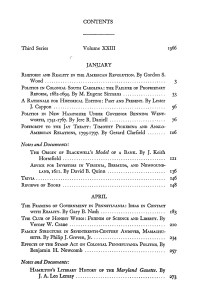 1966 was a transformative year in popular music. The Beatles released Revolver; Dylan put out Blonde on Blonde; and the Beach Boys dropped Pet Sounds. Even fifty years later, those three albums sit atop many respectable lists of the best all time albums. 1966 was also a transformative year in early American history. Fifty years later, it gets my vote for one of the top 5 most historiographically innovative years the field ever had.

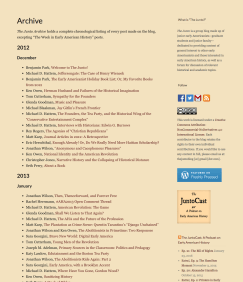 Since the blog first launched in December 2012, we have published 794 posts. That is somewhere between 500,000 and 1,000,000 words of original content on early American history posted on the blog in less than 4 years. And since new readers find the blog regularly and our longtime readers may often have missed posts for various reasons, I want to use today’s post to simply make our readers aware of our back catalog and highlight the resources the blog has for accessing and making better use of it.
  The Junto