Socializing, Speculating, and Speaking French in François Furstenberg’s Philadelphia

François Furstenberg. When the United States Spoke French: Five Refugees Who Shaped a Nation. New York: Penguin, 2014.

Furstenberg CoverOn the Fourth of July, 1794, two former members of France’s Constituent Assembly gazed from a window across New York’s Bowling Green. Both had arrived in the United States just that year. Back in 1789, they had helped to launch a revolutionary movement for liberal and constitutional reforms. But as the Revolution grew ever more violent and threatened to destroy them, they fled France. The United States, they thought, would be a suitable refuge: the republican spawn of the British government whose constitution they so admired, the new nation whose Enlightenment principles would guard them from the threats of the Parisian mob. They must have been unnerved to see “a host of pro-French radicals” marching towards them that day, the rabble-rousing Girondin ambassador Edmond-Charles Genet at the fore, “singing the Marseillaise and other republican songs,” and hurling insults up to the windows where the émigrés stood watching (80). Continue reading

Guest Post: Diplomacy, Slavery, Quids, and Much More in the Latest Volume of the Papers of James Monroe

Cassandra Good is the Associate Editor of The Papers of James Monroe. She received her PhD from the University of Pennsylvania and her first book Founding Friendships: Friendships between Men and Women in the Early American Republic is forthcoming from Oxford University Press in January 2015. 

frontcoverFrom the Louisiana Purchase to reflections on travels in Spain to debates on slavery, the latest volume of The Papers of James Monroe will be a great resource for scholars of the early republic. Whether or not you have ever read anything by or about Monroe, it’s likely that there will be documents of interest in this volume. It spans from 1803, when Monroe was sent to France to help negotiate for Louisiana, to April 1811, just before he became secretary of state.  Continue reading

Decoding Diplomacy

JA Steady 2

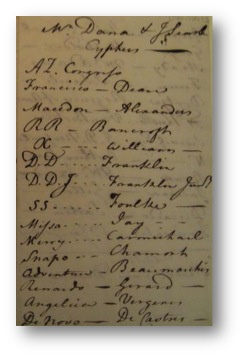
John Adams, Codename: “Steady”

Ciphers, codes, and keys—plus reflections on how to encrypt sensitive developments in early American diplomacy—run through the papers of two generations in the Adams family’s saga of public service. So how did they use secrecy in statecraft? Continue reading

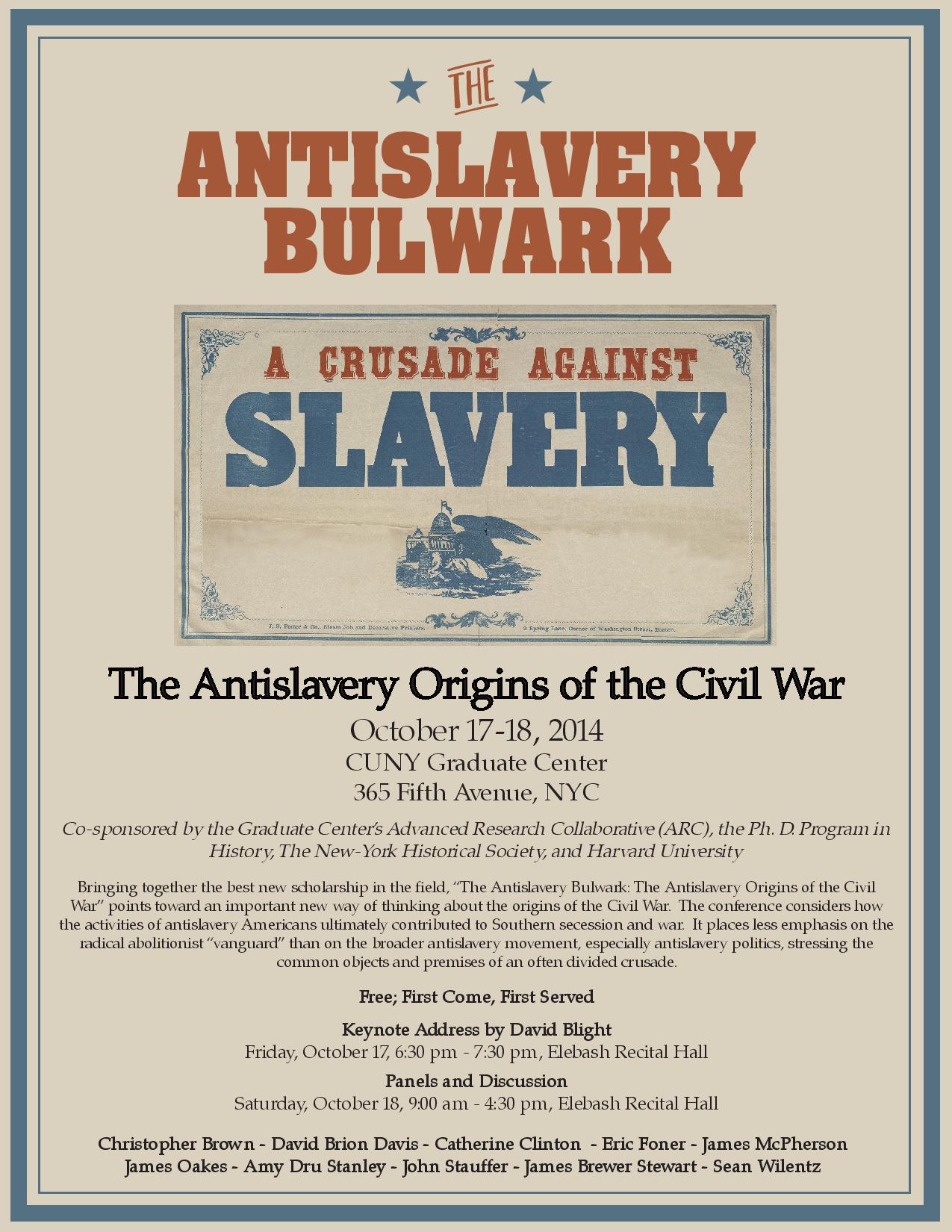
Conference: The Antislavery Bulwark: The Antislavery Origins of the Civil War

Antislavery Bulwark Conference FlierIn two weeks the CUNY Graduate Center will be hosting an all-star conference “The Antislavery Bulwark: The Antislavery Origins of the Civil War.”[1] This conference, co-organized by the Graduate Center, Harvard University, and the New York Historical Society, seeks to trace origins of the antislavery political movement from the eighteenth century to its apotheosis in the thirteenth and fourteenth amendments to the Constitution. Continue reading

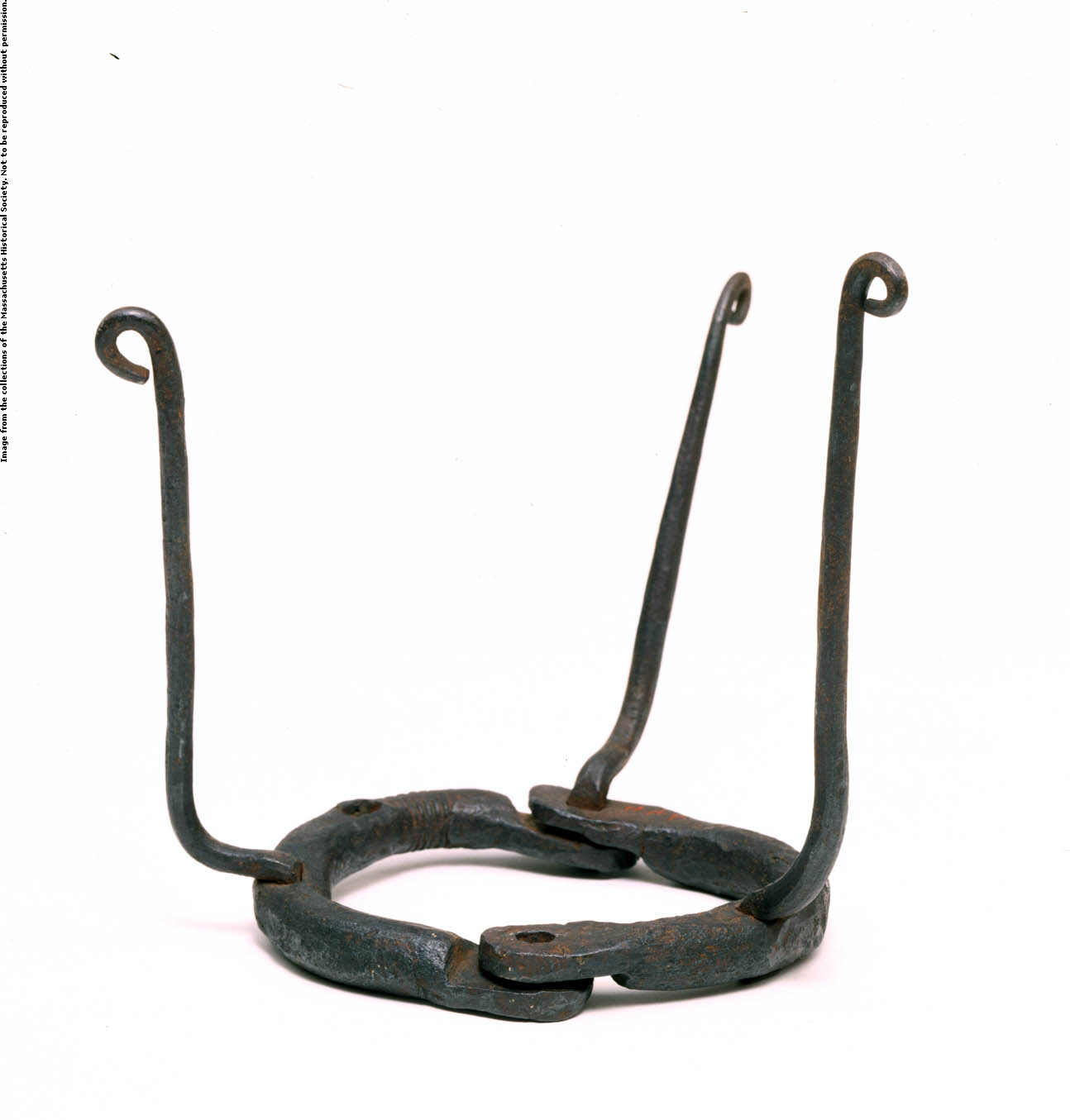
Object Lessons

Iron Yoke Slave Collar John A. Andrew Artifact Collection, MHS

Iron Yoke Slave Collar
John A. Andrew Artifact Collection, MHS

Questions first ignited in a comprehensive exam room have an electric way of rippling through your whole career, whether you’re teaching in a university classroom and/or in the realms of public history. Take, for example, a standard query about nineteenth-century material culture: How would you tell a history of the American Civil War in five objects?

Continue reading

The JuntoCast, Episode 12: Bailyn’s Ideological Origins of the American Revolution

The JuntoCastAfter our summer hiatus, “The JuntoCast” is back with a new type of episode. Continue reading

The Week in Early American History

TWEAHWelcome to your weekly roundup of early American headline news. To the links! Continue reading

Making the Adams Papers

acornNearly a quarter of a million manuscript pages, and almost fifty volumes to show for it: As we mark the 60th anniversary of production at the Adams Papers editorial project, here’s an inside look at our process, from manuscript to volume. Continue reading

Commodifying Labour, Commodifying People

cotton millThis post is part of an ongoing exploration of the edges of capitalism that I’ve been conducting in the pages of the Junto, most recently here. One element of that exploration, and something that’s been highly visible in the discussion lately—especially with things like the furore over The Economist‘s review of Ed Baptist’s book, The Half Has Never Been Told (we posted our own review)—is the relationship between slavery and capitalism. Today I want to focus on just one element of that relationship: the distinction between commodifying labour and commodifying people. Continue reading

Guest Post: Researching en Français: French Archives, and Why They’re Worth It for All Early Americanists

Hannah Bailey, a PhD candidate in History at the College of William & Mary, studies the interconnectivity between developing notions of race and the expansion of the African slave trade in the early modern French Atlantic. She graduated with honors from the University of Wisconsin-Madison in 2010, with degrees in History and French, and a minor in Gender and Women’s Studies. Her master’s thesis focused on how women like Eliza Jaquelin Ambler Brent Carrington remembered, defined, and recorded their experiences during the American Revolution for her master’s thesis. Her dissertation uses histories of West Africa written by individuals like Jean-Baptiste Labat to help explain why, in early eighteenth-century accounts of the region, the fiction of African inferiority began to supersede the fact of African political and economic dominance on the West African coast.

ANOMI never learned the verb “rebobiner” in any of my nine years’ worth of French courses. I don’t blame my French teachers or professors for this. Neither they nor I had any idea that it would one day become an integral part of my vocabulary as I commenced my dissertation research in the Archives Nationales d’Outre-mer in Aix-en-Provence, France. As it happens, “rebobiner” means “to rewind the bobbin of microfilm that you spent twelve minutes learning how to load onto the microfilm reader, because microfilm is always complicated and is triply so when the directions are in a foreign language,” or…something like that. Despite my attempts to prepare myself for my time in the French archives, I experienced more “trials by fire” than I might care to admit. All of my listening to French radio, reading complex French secondary sources, and frantic scouring of French online archival inventories only got me so far. Despite the best efforts of the kindest and most helpful archival staff I’ve yet encountered, I often had to learn by doing, and that wasn’t always easy. It was, however, always worth it. Continue reading