Craig Gallagher is a PhD candidate in History at Boston College. His dissertation analyzes Scots and their religious and economic networks in the late seventeenth century British Atlantic World.
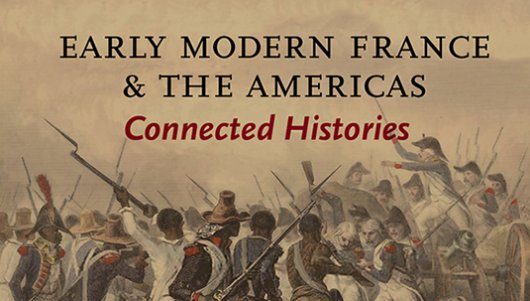 Atlantic history has always had at its heart a simple enough goal: to connect the histories of Europe, Africa, and the Americas so that historians can better understand each in relation to the others. Scholars have disagreed about how best to realize this goal, and about whether it is a goal worth realizing at all, but few have denied that Atlantic history as a pursuit has enriched our understanding of the early modern world. Although this has been particularly true for historians of the British and Spanish empires in the Americas, it is a more recent development among scholars of the French empire. By convening the “Early Modern France and the Americas: Connected Histories” Symposium (Program; #FrenchAtlantic on Twitter) at Boston College on May 2-3 – an event co-sponsored by the Institut des Amériques – the organizers, Owen Stanwood (Boston College) and Bertrand van Ruymbeke (Université de Paris VIII), sought to showcase those historians of France and French North America whose work, either in print or in progress, has extended an Atlantic perspective to the history of France and its early modern empire in the Americas.
 Back in December, the Dean of Undergraduate Education at Harvard was
 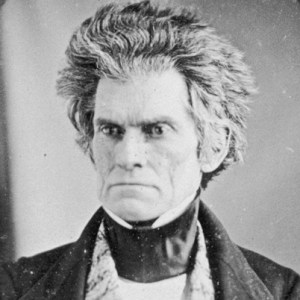 Ever since Richard Hofstadter called John C. Calhoun the “
 How did the particular formation of democratic politics, a
  Happy Mother’s Day! Consider our gift to the mothers amongst our readership to be the following links, links, and more links…
  In the first episode of HBO’s John Adams miniseries there’s
  This is commencement season in the United States. On weekend mornings, college towns around the country are being beset by billowing clouds of begowned bachelors, trailing various family members and friends in their newly distinguished wakes. University neighborhoods are full of rented trucks and vans. Sidewalks are littered with furniture. People are swarming into auditoriums, sports stadiums, gymnasiums, or (as in the case of some of my Texas cousins) livestock arenas to hear more or less famous people dispense advice for adulthood. And to me, it’s all very, very exciting.
 After a brief hiatus, “The JuntoCast” returns with its tenth episode, this time covering gender in early America.
  During my first year as a Teaching Fellow, I’ve done a number of pedagogy-related posts, covering
  The Junto