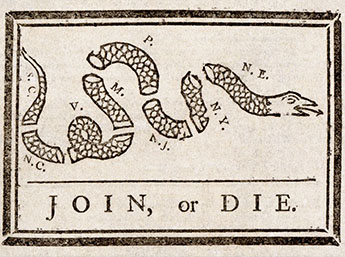
 Last summer, Philadelphia witnessed a gathering of many delegates who discussed British tyranny and American liberty. Though none of the resulting documents may be as influential as Thomas Jefferson’s Declaration of Independence, the proceedings of “The American Revolution Reborn: New Perspectives for the Twenty-First Century” should at least instigate some debate. The conference itself was a product of generosity from Frank Fox, the American Philosophical Society, the David Library of the American Revolution, the McNeil Center for Early American Studies, Samuel Adams® (the beer, who aptly supplied refreshments for the reception), and the Museum of the American Revolution (who provided an expansive—and sweltering!—location for the closing activities). A good number of Juntoists were in attendance—there is even photographic evidence!—and the excellent speakers sparked good discussion. Patrick Spero and Michael Zuckerman should be commended for organizing the event. Continue reading
Summer Reads
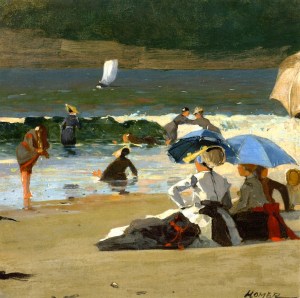
Herewith, some new releases for your spring/summer reading list—share your finds in the comments! Continue reading
The Trouble with Global: Early Thoughts from an Early Americanist
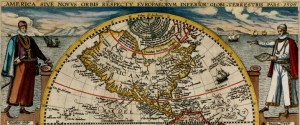 This week, I’m wrapping up my survey course on modern global history (1500 to the present). It’s the first time I’ve taught this course. So I have opinions.
Let me just put this right out there: I had long been skeptical about global history as a standard survey course. It seemed too unwieldy, too shallow or spotty in coverage, and way too vulnerable to political ax-grinding. I assumed this course would reinforce old stereotypes: that history is an endless parade of random facts and dates and battles and names of elite men. Or else it would turn into pure theory, and thus an exercise in polemic. Either way, it would have little of the texture of lived experience, which is what I reckon makes history compelling to ordinary powerless students.
A Rumination on “Perhaps”: Demos, Editing, and First Book Projects
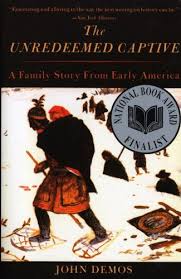 Confession: I hated John Demos’s The Unredeemed Captive when I read it in graduate school. So much so that whenever my future roommate and I became frustrated by the vagaries of our PhD experience, we’d lapse into extended wailing cries of “EUNICE!” that stretched across apartments, parking lots, and doubtless a library lobby or two. I’m not sure why it seemed so funny to us, but then, comprehensive exams do strange things to graduate students’ psyches. Continue reading
The Week in Early American History

Let’s kick another weekly roundup of early American history links off with this fascinating and fun look at Revolutionary-era pronunciations of the word “Huzza(h)!” over at Journal of the American Revolution (hint: it rhymes with “fray”). Continuing with the general theme of historical language and pronunciation, Sam Sack’s New Yorker review of Ben Tarnoff’s newly-released, The Bohemians: Mark Twain and the San Francisco Writers who Reinvented American Literature, includes some reflections on Twain’s use of “unrefined idiomatic English” and “how America learned to hear itself talk.” Continue reading
Turn, Turn, TURИ
 I had the opportunity, over the course of Passover-Easter break, to watch the first three episodes of AMC’s new series Turn (transcribed as TURИ on subway ads).[1] The show is very much in the vein of the recent spate of high-serious historical (Mad Men) or faux-historical (Game of Thrones) dramas airing on the finer cable networks (AMC, IFC, HBO). Turn, like its sister-shows, features excellent acting and wonderful set and costume design. Unlike these other shows, however, it adapts for television a historical event that gets a lot of coverage on this blog–the American Revolution.[2] For the series AMC has turned Alexander Rose’s Washington’s Spies: The Story of America’s First Spy Ring into a tale of conflicted loyalties, love, betrayal, and waterboarding fit, some ways, for our new Golden Age of television. At the same time, much is lost in the adaptation process.
For the more spoiler–phobic among our community, this essay will contain spoilers for the pilot episode of Turn.
Museum Miles
 One of the serendipitous joys of warm-weather research is (occasionally) fleeing the archive to sample a new city’s eateries, museums, and sites. As you research your way across America (and beyond) this spring/summer, here are a few exhibits worth pausing for—feel free to add more in the comments. Continue reading
How Did Democracy Become a Good Thing?
 I spent yesterday afternoon at “a celebration and critical evaluation” of the work of political theorist and historian Mark Philp. My role was to talk about his involvement in a big, ongoing project being done here at Oxford—and around the world—called Re-imagining Democracy. That project has already produced one book, Re-imagining Democracy in the Age of Revolutions: America, France, Britain, Ireland 1750-1850 (OUP, 2013), with contributions on the early American republic by Seth Cotlar, Adam I. P. Smith, and Laura Edwards. It’s a book that may not yet be well known among American historians, but it should be, because the question it’s trying to answer is a very interesting and difficult one: how did “democracy” go from something feared and reviled even as late as the 1780s, to something very different by the mid-nineteenth century, and even to become the quintessential value of American politics that we know today? Continue reading
The History Carousel, Episode 3: Teaching Across the Pond
 Today’s episode, “Teaching Across the Pond,” features Tom Cutterham, Ken Owen, Ben Park, and Rachel Herrmann discussing historical teachers, and debating the merits and pitfalls of teaching in the United States compared to the United Kingdom. Come for the boat race jokes; stay for the pedagogy! Continue reading
The Week in Early American History
Hello and welcome to another exciting week in early American history! Continue reading
 The Junto