The Week in Early American History

TWEAH

Happy New Year, dear readers! Hope you had a merry Christmas. Did you watch the ball drop in Times Square? The technology dates back to the early 19th Century, when the Royal Navy ruled the waves and captains needed a way to periodically recalibrate their ships’ chronometers. In the New Netherlands, Dutch colonists spent New Year’s Day going over to each other’s houses for nieuwjaarskoeken. We here at The Junto, meanwhile, have been busy collecting all the links of note you may have missed over the holidays. Continue reading
On Counting: A Reflection on Quantitative Research

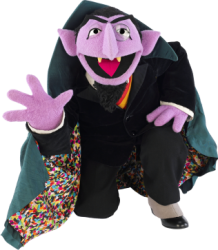
Count_von_CountThis summer, I counted. My dissertation, as my Contributor page at The Junto helpfully notes, includes both qualitative and quantitative analysis. And so, to enrich the latter portion of my project, I spent July at the archives, counting. Perhaps more so than most other forms of archival work, counting is an exercise in delayed gratification, the overall picture springing into focus only once the research and subsequent analysis are complete. This meant I had plenty of time to reflect on my methodology as I scanned through microfilm, paged through record books, examined case files, and counted, and counted, and counted. Continue reading

Collecting Pennsylvania

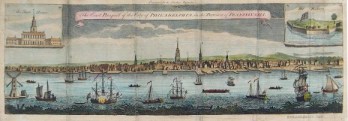
How is digital scholarship charting new prospects for our view of early America? Cathleen Lu, Digital Conversion & Bibliographic Specialist and Dana Dorman, Digital Projects Manager, at the Historical Society of Pennsylvania, kindly described how HSP produces and presents new digital content that’s open for research (along with the library) while renovations continue at 1300 Locust Street throughout early autumn 2013. Continue reading

“It is now translated to America”: British Hymns in the Revolutionary Era

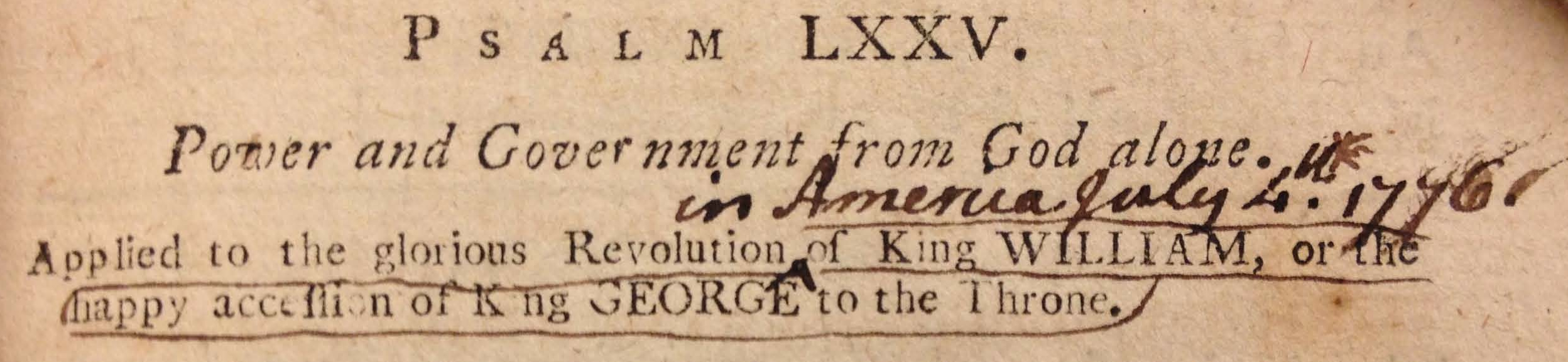
Ps. 75 titleThe Watkinson Library at Trinity College has an impressive collection of manuscript music from the late eighteenth century. Thanks to a grant from the Bibliographical Society of America, I spent a few weeks in June on a research road trip in New England, and Trinity was my first stop. Although I was focusing on musical commonplace books and copybooks, at the suggestion of librarian Sally Dickinson I also worked with their collection of annotated hymnals. It was while perusing these volumes that I came across something I hadn’t seen before: a hymnal in which every reference to Britain had been crossed out and replaced with the word “America” or related terms (New England, Western States, United States, etc.) As the assiduous penman noted at the bottom of one page, the entire volume had been “translated to America.”

Continue reading

The Week in Early American History

TWEAHIt’s that time of the week and it’s my turn to do the roundup, so let’s just get started with some links from the past week or soContinue reading

Historians and Documentary Editing

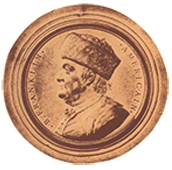
PBFOn this—the 223rd anniversary of the death of Benjamin Franklin—I thought I would use this space to say a few words about my experience over the last year working at the Papers of Benjamin Franklin here at Yale University from the perspective of a graduate student. Last June, I was fortunate enough to be given a regular (part-time) position at the Franklin Papers. Officially, I am a Research Assistant and have done a number of small research projects designed to provide the editors with reference materials on Pennsylvania in the 1780s as they finish up the volumes covering Franklin’s stay in Paris. I have also been given the opportunity to tackle more editorial-type duties including fact-checking, drafting annotations, and proofreading transcriptions. Through these experiences and my innumerable conversations with the chief Editor, Ellen Cohn, I have gotten an inside look at scholarly editing, which often goes either unnoticed or under-appreciated by academic historians. Continue reading

The Historian’s Lunch

Congratulations, readers: you’ve made it to spring break! This post is written for everyone about to embark on short archival research trips (but that doesn’t mean you have to skip over it if you’re stuck in one place). I’ve always found that while I’m researching, it’s nice to have an idea of what food places are nearby for those lunchtime moments when I emerge, ravenous, from manuscript rooms around the country. Continue reading

Forgotten Giant: Restoring Simms

"Washington Irving and His Literary Friends at Sunnyside." Simms stands, leaning against the chair, center left.

“Washington Irving and His Literary Friends at Sunnyside.” Simms is seated at the left end of the table, shown in full profile.
(Christian Schussele, Oil on canvas, National Portrait Gallery, Smithsonian Institution, 1864)

Meet a Southern man of letters, William Gilmore Simms, through his life’s work of literature—much of it now available in the form of free, digital editions thanks to the Simms Intitiatives at the University of South Carolina. A well-known editor, critic, poet and historian of Southern life and culture in his day, Simms (1806-1870) occupies a unique position in early American literature, and (re)introducing him to modern readers has presented new challenges for scholars. The Junto asked the Initiatives’ Todd Hagstette, Simms Curator, to talk about creating a digital portrait of  the author, and why Simms’s work belongs on the syllabus. Continue reading

Brave New World: Digital Early America

As settlers and explorers, early Americans navigated intricate webs of trade, created dynamic intellectual networks, and (often, thankfully) left us a paper trail of discoveries great and small. Presented with that past in the archive or on the screen, historians increasingly turn to digital resources for a new arc of insight. Thanks to digitized books and manuscripts, online reference tools like Google Books, amplified search methods, new digital libraries, and GIS mapping, there are plenty of opportunities for new research. We can follow foreign consuls, read a Southern man of letters, watch a Brooklyn family put down roots, or hear a podcast about Native American family life in Virginia. That’s just a small sample of the many digital projects transforming what we know of American history. The wave of new media has benefitted professional training, too. For digital scholars of all stages, there’s a welcoming set of training opportunities like THATCamps, summer institutes, and winter training sessions. Continue reading

About a Book

allen_bible_tp

Ceci n’est pas une book.

She was encased in stolen books, buried in them as if in dirt. The thought of the countless hundreds of thousands of names that surrounded her, vainly scrawled in top right-hand corners – the weight of all that ignored ink, the endless proclamations that this is mine this is mine, every one of them snubbed simply and imperiously….The ease with which those little commands were broken.

She felt as if all around her, morose ghosts were milling, unable to accept that the volumes were no longer theirs.

China Miéville, The Scar

So, on the heels of Christopher’s eloquent framing of the questions of historical distance, a material-texts take on the joys of negotiating that distance by using dead people’s books: Continue reading