This Colonial Couture post is by Zara Anishanslin, assistant professor of history and art history at the University of Delaware. Her latest book is Portrait of a Woman in Silk: Hidden Histories of the British Atlantic World (Yale University Press, 2016). Follow her @ZaraAnishanslin.
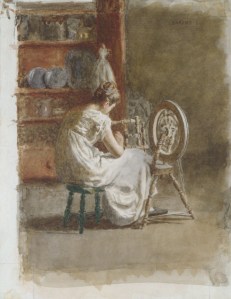
Homespun, Thomas Eakins, 1881, Metropolitan Museum of Art
“Please, sisters, back away from the pink.”
So women planning to attend the January 2017 Women’s Marches were urged by the writer of an opinion piece in The Washington Post. “Sorry knitters,” she continued, but making and wearing things like pink pussycat hats “undercuts the message that the march is trying to send….We need to be remembered for our passion and purpose, not our pink pussycat hats.” To back up her point, the author opined that “bra burning” dominated—and thus damaged—popular (mis)conceptions of women’s rights protests in the 1960s. Please, ladies, she exhorted, don’t repeat the mistakes we made in the ‘60s by bringing fashion into politics. Continue reading


 It’s been two and a half years since the new history of capitalism marked its arrival with the full red carpet treatment in the
 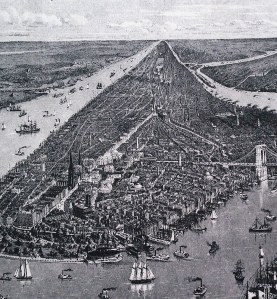 One of the central characteristics of the new history of capitalism has been its tendency to defer the question of just what “capitalism” is. The project’s enquiry starts with the question, not with a predetermined answer. But in order to know where to look, historians have to start with some idea about what makes a place and a time capitalist. As Tim Shenk points out in
  Savor summer’s finale

 The Junto