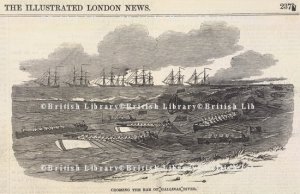
Crossing the bar of Gallinas River, near Sierra Leone and Liberia. During the 1820s and 1830s, slave ships stopped at the mouth of the Gallinas River, to collect slaves. Image taken from The illustrated London News. Originally published/produced in London, 1849. British Library Images Online, Shelfmark P.P.7611.237, filename 080997
This summer I started research for my second book project, which I will admit feels a bit ridiculous when my first book project is still in process. I’m blithely ignoring this problem at the moment. In brief, the project, currently-horribly-titled “Aquatic Foodways” asks two related questions: 1) Where, why, and how did people fight over food when crossing water in the early modern Atlantic, and 2) What happened when people disembarked and interacted with indigenous peoples as they searched for sustenance? After a month of preliminary research at the British Library this summer, I’m decidedly more interested in the second question, but have a sense that I’ll need to answer the first question before proceeding forward. Continue reading →
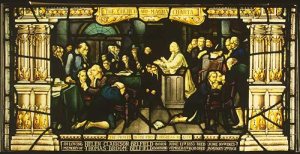 Joseph Yesurun Pinto, a 31 year-old Anglo-Dutch émigré in the autumn of 1760, had led New York’s
  Whether writing or grading term papers has kept you from all things early American, here’s a quick recap of some of the top news stories of the week(s)!

 Here’s your seasonal roundup of early American art on exhibit. Add your finds below!
 Here’s our fall preview of new titles—share your finds in the comments!
  The Junto