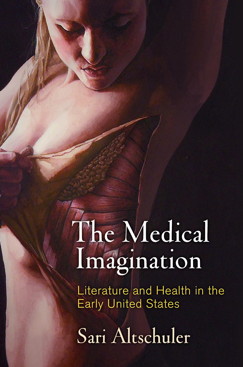
 Sari Altschuler, The Medical Imagination: Literature and Health in the Early United States (Philadelphia: University of Pennsylvania Press, 2018)
Today Laurel Daen reviews Sari Altschuler’s The Medical Imagination. Laurel Daen is the 2018-2020 NEH Postdoctoral Fellow at the Omohundro Institute of Early American History and Culture. Her current book project is about disability, authority, and the formation of the American nation state. Laurel received her PhD from William & Mary in 2016 and was an NEH Long-term Fellow at the Massachusetts Historical Society from 2017-2018.
In the early American republic, physicians wrote poetry to try out their medical theories, writers formulated concepts that made their way into medical texts, and everyday people viewed the disciplines of medicine and literature as fundamentally intertwined. Medicine and literature were mutually constitutive and reinforcing, Sari Altschuler explains in The Medical Imagination, and their relationship was seen as crucial to the production of medical knowledge. For example, medical educators urged their students to read and write fiction with the insistence that these practices would cultivate their “microscopic eye” or ability to detect and decipher disease (4). In addition, many doctors, writers, and doctor-writers used literary forms to conduct medical research, especially about topics that were difficult to test empirically. How, for instance, was one to evaluate the workings of sympathy, the universal force commonly understood to link body part to body part in a functioning human body and person to person in a functioning society? It was through literature that early national physicians and writers engaged with these types of questions, cultivating their skills in “imaginative experimentation”—or use of the imagination to craft and assess models of health (8). Continue reading

 I’ve had a blog, in one place or another, since 2002, and thus the distinction between “a blog” and “a blog post” is a hill on which I am willing to die. But before Ben Park approached me to be one of The Junto’s founding members, I hadn’t blogged extensively about history. Five years later, I still want to write about other topics in addition to history, but I firmly believe that my history teaching and history scholarship have benefitted from my membership here. That said, I think my role as a blogger for The Junto has changed since 2012, and will continue to transform in the future. Today, I want to reflect on some of these changes.
 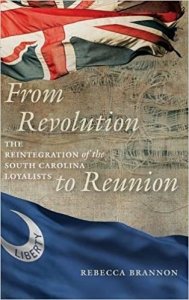 In her award-winning
  I thought going to Worcester for the OIEAHC
  “Historians treat theory the way rattlesnakes approach small mammals. They either strike to kill or swallow whole. The latter often amounts to death by citation.”[1] David Waldstreicher’s statement on the problematic status of critical theory in Early American Studies appeared in a 2005 WMQ forum reconsidering the public sphere as a category for analysis. Must historians always view theoretical work through an antagonistic empiricism, or, just as unreflectively, swallow theory whole? Perhaps the tide is turning towards new theoretical engagements, as historians and literary scholars recognize that theories are themselves continually subject to refinement in relation to historical research. A recent conference at the McNeil Center for Early American Studies, entitled
 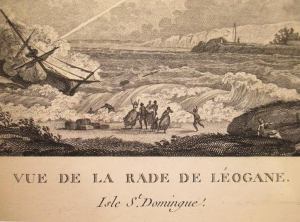 More than 30 scholars from three continents gathered at the Williamsburg Inn from October 16th through the 18th to present


 The Junto