An Interview with Ted O’Reilly, New-York Historical Society

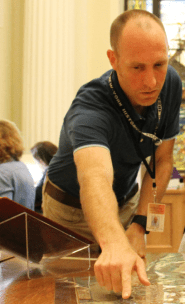
Ted at Work

Ted O’Reilly is Head of the Manuscript Department at the New-York Historical Society, where he has worked since 2004. He holds a B.A. in history from the College of the Holy Cross, an M.A. in Irish Studies from the National University of Ireland, Galway, and an M.L.S. from the Palmer School, Long Island University. Today he speaks with The Junto about the New-York Historical Society’s accessioning of a new collection—its own Institutional Archive.

Continue reading

Guest Post: How We Love to Hate Puritan New England

Guest poster Mark Mulligan is a graduate student in history at the College of William and Mary. His research interests include American religious history, the history of the British Atlantic, and colonial New England history. This post also contains some mild plot spoilers.

images

It appears that as an early Americanist and a horror fan, I am in good company. News of the push back of a sequel to The Ring franchise from April to October recently devastated me. Admittedly, a Halloween release will fare better at the box office, but Paramount Pictures turned my comps carrot into a prospectus carrot.[1] But the genre offered compensation in the form of a horror film that takes place in seventeenth-century New England, where I intend to locate my dissertation. As such, I am delighted that the Junto invited a conversation on the film The Witch. Continue reading

Guest Post: Discovering Witches

Alexandra Montgomery is a PhD Candidate in history at the University of Pennsylvania. She studies Indigenous and European boundary-setting and colonization schemes in the far northeast during the late seventeenth and eighteenth centuries. The following review contains some very mild thematic spoilers.

imagesAs both a horror nerd and an Early American historian, I have been excited about writer/direct Robert Eggers’ debut feature The Witch for quite some time. Excited might be a bit of an understatement: the first time I saw a poster in a theatre I shrieked, and I have been faithfully following the strangely endearing and decidedly bizarre Twitter of the film’s sometimes-antagonist goat, Black Philip, for several months. So, naturally, I was thrilled when my friend and fellow Early Americanist Lori Daggar offered to take me and Kelsey Salvesen to a press screening of the film (the film will be released officially on February 19). Continue reading

Sailors, States, and the Bureaucracy of Revolution

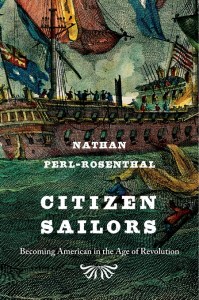
Nathan Perl-Rosenthal, Citizen Sailors: Becoming American in the Age of Revolution (Cambridge: The Belknap Press of Harvard University Press, 2015).

9780674286153-lgTransatlantic commerce was the defining feature of the eighteenth century’s imperial economy. The ocean was the conduit by which goods, labour, and capital circulated—goods that included sugar and tobacco, labour that included enslaved men and women, capital that included the remarkable oceangoing ships themselves. On transatlantic circulation hung the wealth and fate of empires, and that in turn depended upon ships and those who sailed them. Nathan Perl-Rosenthal’s new book, Citizen Sailors: Becoming American in the Age of Revolution (which Ben posted about a few weeks ago), does not tell those sailors’ story. Instead, it gives an account of the crucial relationship between sailors and states, and its remaking in the era of Revolution. As the empires and new republics of the North Atlantic world struggled to hold or wrest the reins of commerce, they had to invent new forms of power and identity—forms of power vested, like so much else we could call modern, in paper. Continue reading

Guest Post: Native American History & the Explanatory Potential of Settler Colonialism

Today’s post comes from Bryan Rindfleisch, Assistant Professor of History at Marquette University. Bryan received his Ph.D. from the University of Oklahoma in 2014.  He is currently working on a book that examines the intersections of colonial, Native, imperial, and Atlantic histories, peoples, and places in eighteenth-century North America. This is his second post for The Junto. The first can be found here.
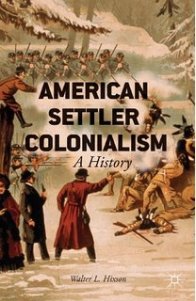
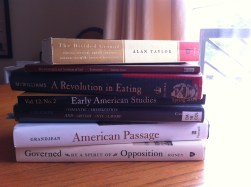
51auvvdbpil-_ac_ul320_sr208320_One of the trending themes in Native American history is “Settler Colonialism.” From Patrick Wolfe’s foundational essay, to recent works by historians and literary scholars—Bethel Saler, Jodi Byrd, Gregory Smithers, David Preston, and Lisa Ford, for instance—this theoretical model has attracted significant attention within the field.[1]

In fact, I’ve deployed this concept as the framework for my upper-division class, “A History of Native America, 1491–Present,” at Marquette. But over the past several weeks it has become evident that settler colonialism is a bit of a minefield. Nevertheless, I find it to be an apt, if not critical, theory for researching and teaching Native American history. But it must be understood, and it must be used responsibly. Continue reading

“Early America” in The Open Syllabus Project

Screen Shot 2016-02-08 at 9.39.43 AMThe Open Syllabus Project (@opensyllabus) has collected “over 1 million syllabi” in the hopes of determining “how often texts are taught” and “what’s taught with what.” They hope their project will provide “a promising means of exploring the history of fields, curricular change, and differences in teaching across institutions, states, and countries.” The OSP has released a beta version of their “Syllabus Explorer,” which “makes curricula visible and navigable in ways that we think can become valuable to authors, teachers, researchers, administrators, publishers, and students.” Intrigued that the project claims to have catalogued the assigned readings from 460,760 History syllabi, I went through the list to find the most assigned works of early American history. Continue reading

Promoting Your Book

HistoriographyHistorian Thomas Kidd recently published some suggestions on the dos and don’ts of promoting your academic book. His recommendations, which included suggestions of not joining social media just for the purpose of promoting your book was good. My aim here is not to repudiate Kidd, but rather to add my own thoughts. Since the content of The Junto is written primarily by early career scholars, I thought I might also contribute some points that may be self-evident to more senior historians, but perhaps less obvious to those who are newer to the field. This advice is also mainly geared towards those who publish with academic presses. Trade publishers function differently.

Continue reading