Andrew Johnson (@dajohnsonii) is a doctoral candidate in history at Rice University. His work explores the social and cultural intersections stemming from the trades in captive peoples, both Native American and trans-Atlantic, who happened to find themselves in colonial South Carolina and situates enslaved Native Americans in the more-studied development of slavery in the colony.
 I thought going to Worcester for the OIEAHC 22nd Annual Conference was going to be a reprieve from the oppressive heat and humidity of the Houston summer. New England thankfully came through on the weather front, but I also found my long overdue first trip to the conference to be an almost nonstop barrage of intellectual engagement. My work received much more feedback than I had expected and I found myself thinking through every talk and Q&A I heard, which in my experience isn’t always how conferences typically work out. The luck of having my presentation in the first panel meant I was able to get presenting out of the way, giving those attending I didn’t know something to talk with me about for the rest of the conference, and allowing me to concentrate on thinking about other scholars’ work. Continue reading
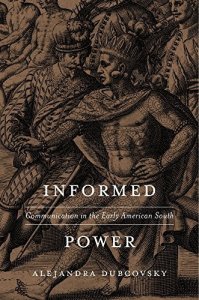 Alejandra Dubcovsky’s
 Casey Schmitt kicked off the week with a discussion of doing research in
  Historian Thomas Kidd recently published

 Three years ago, founder Ben Park
  In his now classic study of early nationalism, historian Benedict Anderson wrote “I propose the following definition of the nation: it is an imagined political community—and imagined as both inherently limited and sovereign. It is imagined because the members of even the smallest nation will never know most of their fellow-members, meet them, or even hear of them, yet in the minds of each lives the image of their communion…. Communities are to be distinguished, not by their falsity/genuineness, but by the style in which they are imagined….”[1] While Puritan society was not a “nation” in the sense that Anderson meant it, his reflections nonetheless are evident in Ric Burns’ documentary, The Pilgrims. Burns seeks not to merely retell the Thanksgiving story, but to understand why Plimouth Rock and the popular Thanksgiving story (much of which is inaccurate) is such a pervasive part of the American origins story.
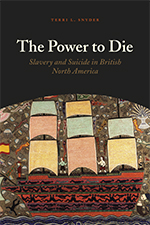 Terri Snyder is Professor of American Studies at California State University at Fullerton who specializes in slavery and gender. She received her PhD in 1992 from the University of Iowa. In 2003, Cornell University Press published her first book,
  The Junto