 Last week, I attended the annual conference for the Society of United States Intellectual History, this year held in Irvine, CA. It was a fun time, and I learned enough and met enough people to consider the conference a success (and worth the 12 hour flight from London!). Yet one thing struck me the entire weekend, and was reinforced by Mark Peterson who gave words to my thoughts during his session response: why is there a paucity of work on early America within the recent surge of interest in US intellectual history? Or, to ask a different, but still related, question, why do so few historians of early America do work on intellectual history, or self-identify as intellectual historians? Continue reading
Category Archives: Academia
Mid-Semester Evaluations . . . Of You!
 We’re barreling toward the end of the semester, which always feels closer once Thanksgiving’s over. As the Brits don’t celebrate Thanksgiving here, I’m in the midst of doing mid-semester evaluations with students this week A) To remind them that the semester really is more than half over and B) To try to suss out what is and isn’t working in our class.
Today at The Junto, we’d like to ask you, our readers, to reflect on your teaching so far this semester, and to encourage people to use the comments to share ideas and troubleshoot.
Notes from #BrANCH13
 This last weekend I visited Cambridge’s lovely Madingly Hall to attend the conference for British American Nineteenth Century Historians, or BrANCH. I teach Fridays, so I missed Pekka Hämäläinen’s plenary lecture on Indians, empires, and states in North America. People who attended thought it provided a very nice, sweeping overview of questions in Native American history, and I wish that I’d caught it. Due to “signalling problems” I didn’t make it to the Saturday morning panels, either—so what follows is a reflection on the sessions I attended.[1] Continue reading
Sounds of Silence: Managing Student Preparation
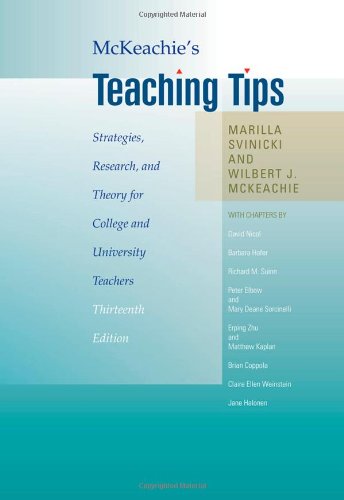 In all the teaching orientations and training manuals I’ve encountered, they all advise instructors not to be afraid of silence. The average student, they say, takes up to 8 seconds to mentally prepare an answer to an analytical query. But what happens when the silence isn’t because students are choosing which of their brilliant thoughts to share with the class but because most of them failed to do the reading? I suspect every college teacher has had a class session in which most questions were met with complete silence. What can we, as the instructors, do in such situations? And how can we better incentivize students to take their assigned reading seriously? Continue reading
A Conversation with Early American Studies
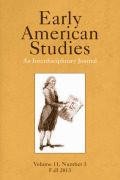 Last Wednesday, the Brown Bag series at the McNeil Center for Early American Studies hosted a conversation with Dallett Hemphill, the current editor of Early American Studies. For those who were not able to attend, we at The Junto wanted to summarize the discussion and invite you to participate.
Guest Post: An Academic Bridge Across the Atlantic
Today’s guest post comes from Lauric Henneton, Associate Professor at the Université de Versailles Saint-Quentin and Vice Président of the Réseau pour le Développement Européen de l’Histoire de la Jeune Amérique (REDEHJA). Junto readers: Have you attended the Summer Academy of Atlantic History? Please share your reflections in the comments.
Pondering the Future of Academic Journals
 Being a graduate student means that I am very much interested in the future of the profession. And being part of this blog and its podcast makes me aware, to some degree, of the impending and inevitable digitization of the profession. Recent online discussions have included the policy of embargoing the immediate and unrestricted digitization dissertations. But, in addition to changes regarding the university press monograph, there is an equally radical change to come for academic journals. Continue reading
Guest Post: Pauline Maier and the History of Women in History
Sara Damiano is a Ph.D. candidate at Johns Hopkins University. Her dissertation is entitled, “Gender, Law, and the Culture of Credit in New England, 1730-1790.”
 How should we choose to remember the lives and works of historians, and what do these choices say about our profession? The recent deaths of Edmund Morgan and Pauline Maier have led me to ponder these questions. I have watched with interest as historians have taken to social media—blogs, H-Net listservs, Twitter, and Facebook—to celebrate the lives of Morgan and Maier and to critique commemorations in the national press.
A PhD Student’s Case for Embargoes
Note: I welcome this opportunity to expound more fully on a few quotes from me in a New York Times piece about the AHA statement. You can find my Storify of the debates on Twitter and in the blogosphere related to the statement here. It is also worth reminding readers that the opinions in our pieces are those of the author and not of the blog as a whole.
 A recent policy recommendation by the AHA on the embargoing of dissertations—i.e., limiting online access and distribution for a specified period of time—has created quite a stir in the blogosphere and on Twitter. Many are criticizing the AHA for a reactionary policy that concedes the status quo, i.e., the undue influence and interest of university presses in hiring and tenure decisions and the profession’s overall laxity in adapting to the digital revolution.
Let me be clear from the outset: I am not defending the AHA’s statement, per se. It does indeed ignore the broader issue of what the AHA intends to do about the long-term, systemic problem of the profession’s transition into the digital era, more generally. I am, however, going to defend the policy of allowing students the option to embargo. Continue reading
The Language Question
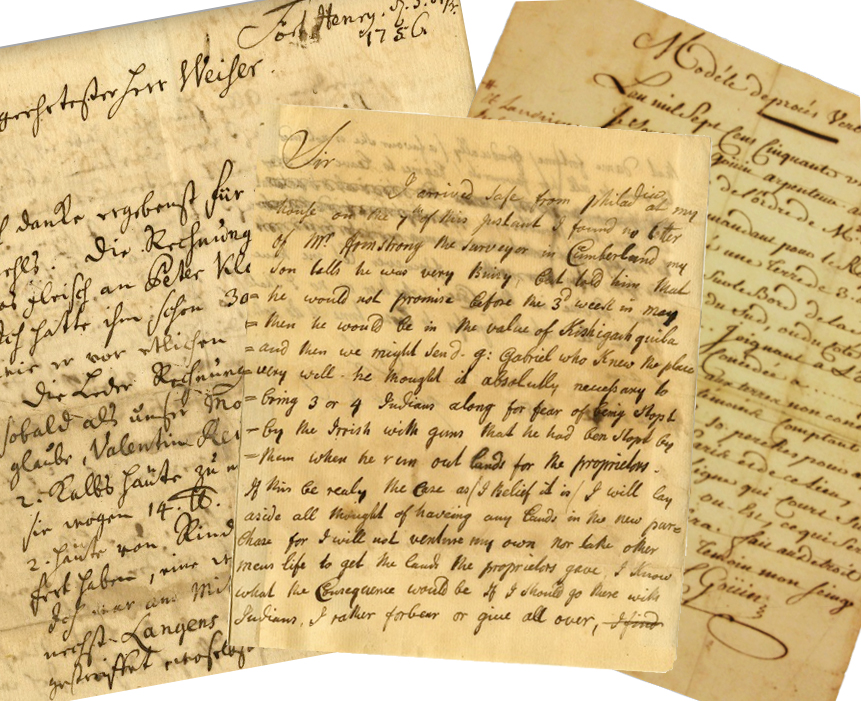 What is the current state of early American language training, what is its future, and why aren’t we more concerned?
A quick survey of more than a dozen graduate programs (all known for their strengths in colonial and early American history) reveals that three quarters of these departments require only one foreign language for early Americanists. To put this into context, the guidelines for European historians at all but one of these same institutions—guidelines often broken down by Early Modern, Western, and British subfields—require at least two foreign languages (yes, even in British history). Yet the issue is not simply the number of languages required of Americanists, but rather what constitutes proficiency. While language guidelines surely vary some from school to school, if the “proficiency” exams and reading courses across History programs even vaguely resemble ones that I’ve encountered, then even these lenient requirements themselves mean very little.
I suspect the numbers and realities of language training surprise very few. But even if we’re not surprised, maybe we should be a little worried. Continue reading
 The Junto