 Of course I cannot speak (or type) for everyone, but in the past six years, one specific word has never been far from the forefront of my mind: copyright. While I think that copyright is an incredibly fascinating and complex historical subject —and thus why wouldn’t everyone be talking about it all the time—it is probably because intellectual property was the subject of my dissertation that I spent so much time thinking, reading, and writing about it. I’m now in an exciting, strange, and surreal moment where I’ve defended my dissertation and am conceiving of what the manuscript will look like. And in this window two other words have come up: Austen and de Staël. Continue reading
Category Archives: Academia
Every Historian Her Own Adventurer
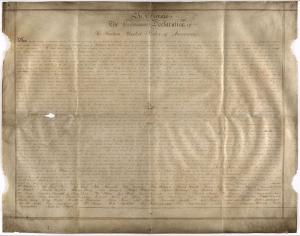 This spring, early Americanists were abuzz about “a bit of real-life archival drama,” as Harvard scholars Danielle Allen and Emily Sneff announced that they had discovered something pretty amazing: an unknown, manuscript, parchment copy of the Declaration of Independence. As friend-of-the-field Jennifer Schuessler playfully reported in the New York Times, it was all a little National Treasure. The apparently random order of the signatures on this manuscript, compared to other versions, points towards some interesting implications, involving Philadelphia Federalist James Wilson and attempts to build a unified American nationhood in the new republic. But reactions to Allen and Sneff’s announcement also, I think, tell us something about how knowledge of the past is structured, presented, and consumed. Continue reading
Guest Post: Finding an Agent
Jennifer Goloboy is a literary agent at Red Sofa Literary in St. Paul, MN. She has a PhD in the history of American civilization from Harvard University, and has published articles on merchants and the early American middle class. Her book, Charleston and the Emergence of Middle-Class Culture in the Revolutionary Era, was published by University of Georgia Press on October 10.
 As an agent and historian, I’m here to explain the process of finding an agent. Don’t worry—you can do this!
Before you initiate contact with agents, you need to collect the materials that an agent will likely request. If you’ve written a novel, you need to have the manuscript completely finished. Many agents will also want to read a synopsis of the novel. On the other hand, if you’ve written a work of non-fiction, all you’ll need are a book proposal and the first three chapters. The book proposal will compare your book to other books in the field, explain your plans for marketing the book, and outline the full manuscript. (You might consider writing a proposal for your novel, too—it never hurts to have a well-thought-out plan for publicizing your book.) Continue reading
SPECIAL WEEKEND EDITION: Guest Post, The Influence of the Scottish Highlands on the British Army in early America
Today’s SPECIAL WEEKEND EDITION comes from Nicola Martin, a third-year, AHRC-funded Ph.D. candidate at the University of Dundee and the University of Stirling. Nicola holds a B.A. and MSc. from the University of Strathclyde, and is currently working with Colin Nicolson and Matthew Ward. Her dissertation is tentatively titled “The Cultural Paradigms of British Imperialism in the Militarisation of Scotland and North America, 1715–1776.” Her research investigates how warfare and pacification affected eighteenth-century British imperialism, and she can be found @NicolaMartin14. This is her first post for The Junto, a fitting occasion—it commemorates the Battle of Culloden (April 16, 1745).
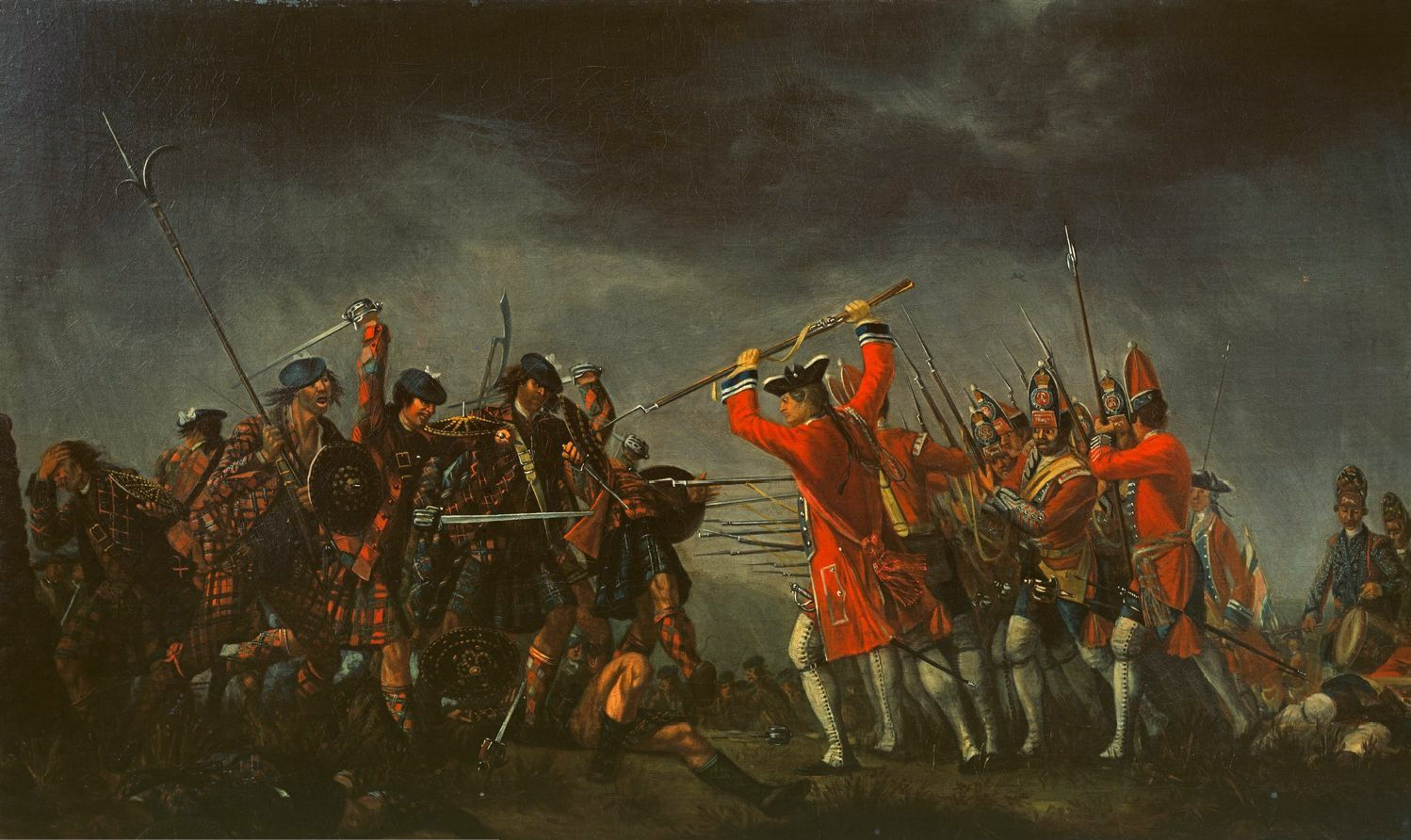
“An incident in the rebellion of 1745,” by David Morier
On April 16, 1746, the British army defeated its much smaller Jacobite counterpart in a battle on Culloden Moor, Scotland. The conflict lasted less than half an hour, but it left over 1,500 Jacobites dead. In the days and weeks following the battle, hundreds of Highlanders were killed as the British army, under the orders of the Duke of Cumberland, implemented draconian measures to punish those who they held responsible for the rising. Shortly thereafter, the British imperial elite embarked on a systematic pacification of the region that lasted for decades and evolved over time from punishment toward measures designed to civilize the “barbarous” Highlanders and assimilate them more closely within the British state and empire. Continue reading
Guide to Studying for Comps
 Comps, orals, qualifying exams…no matter what you call them, they are a source of angst for many (US) PhD students. Expectations can vary from one department to the next. Some programs have set reading lists, and a process that takes much of the guess work out of preparing for these exams. Other programs expect the student examinee to take a more proactive role. The advice herein is not exhaustive, but is geared primarily towards students who in this later situation. As you prepare, remember that thousands of PhDs have successfully passed through this process, and you can too. You just need to put in the work. Continue reading
Digital Identity in Graduate School

Last week, the Arts & Sciences Graduate Center at William and Mary hosted a Digital Identity Roundtable to discuss the benefits, pitfalls, and protocols for graduate students who currently use social media for networking and scholarship, and for those who would like to start. As a contributing editor for The Junto, I was invited to participate in that discussion. Only after agreeing did I realize that mine would be the only graduate student voice among a group of highly accomplished professors from across the college. Being a typical graduate student, the thought of speaking with any “expertise” caused a brief panic and I turned to my fellow Junto editors for their tips and suggestions for graduate students and early career scholars about managing a digital identity. My query (really a plea for help), elicited such a big and generous response from my fellow editors that we decided to share that advice here. Hopefully, this can start a wider conversation about how graduate students should confront an increasingly vital part of our professional development. Continue reading
Guest Post: “Growing Your Wolf Pack: Why Collaboration is ‘Worth It’ in Historical Scholarship”
Guest poster Neil Oatsvall is a History and Social Science Instructor at the Arkansas School for Mathematics, Sciences and the Arts. His work has appeared, or is forthcoming, in Environment and History, Agricultural History, Essays in History, and the edited collection Proving Grounds (University of Washington Press, 2015). His book manuscript, “Atomic Environments: Nuclear Technologies, the Natural World, and Policymaking, 1945-1960,” is under advanced contract with the NEXUS series of the University of Alabama Press. His Twitter handle is @DctrNO.
Return guest poster Vaughn Scribner is an Assistant Professor of Early American History at the University of Central Arkansas. His work has appeared, or is forthcoming, in Atlantic Studies: Global Currents, the Journal of Early American History, Early American Studies, the Journal of Social History, Urban History, Agricultural History, and the edited volume, Order and Civility in the Early Modern Chesapeake. His Twitter handle is @VScrib86.
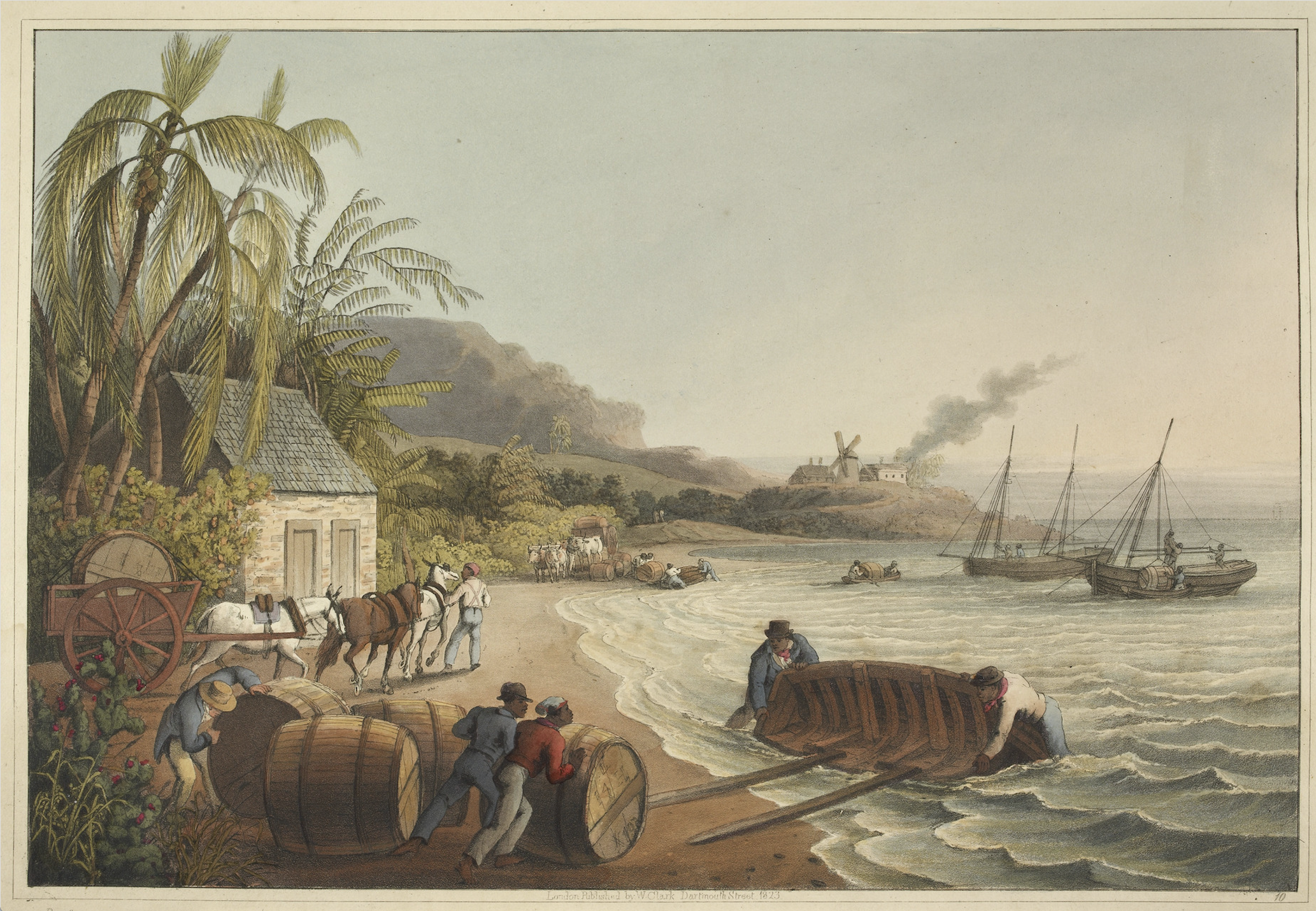
“Shipping the Sugar,” from William Clark, Ten Views in the Island of Antigua, in which are Represented the Process of Sugar Making…From Drawings Made by William Clark, During a Residence of Three Years in the West Indies (London, 1823).
While co-authoring in the sciences or social sciences is the norm (and often expected), many scholars in the humanities tend to practice the Lone Wolf strategy. We huddle in our den, surrounded by piles of books, cultivating the nagging fear that someone might be researching something too similar to us. But maybe it’s time to move on from our seclusion. Maybe, in the words of Alan Garner from The Hangover, it’s time to grow your wolf pack (link might be slightly NSFW, as it’s from a rated R film). Continue reading
Reminder to join the conversation “Where Historians Work: A View from Early America”

Do you hold a PhD  in early American history/literature/architectural history/art history/etc. or a related field, and have you chosen a career outside of the professoriate? The Junto wants to hear from you! There’s still time to participate in our conversation, “Where Historians Work: A View from Early America.”
Leave your stories in the comments of this post. Or, if you would prefer a less public forum, you may email The Junto (thejuntoblog@gmail.com) with the subject line “Career Diversity.” Please post comments or email by Friday, February 17. Continue reading
Where Historians Work: A View from Early America
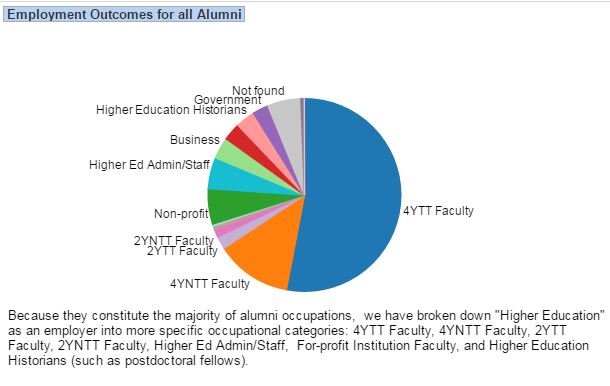 Recently the American Historical Association published Where Historians Work: An Interactive Database of History PhD Career Outcomes, “the only interactive, discipline-specific, and cross-institutional database of career outcomes for PhDs.” Using data collected from AHA directories and on the web, “Where Historians Work” presents a robust statistical overview of the varied employment sought by History PhDs from more than 30 degree-granting intuitions. For those historians who have long held positions outside of the academy, the database, part of the AHA’s broader Career Diversity for Historians initiative, is a welcome acknowledgement of what many have known anecdotally for years: History PhDs can—and do!—work in an array of fields.
Writing History As If It Matters (to Lots of People)
 In a series of classic science fiction stories, Isaac Asimov imagined a scientific discipline called “psychohistory”: a way to predict the future of an interstellar empire. Psychohistory could not foresee individual choices, but it could supposedly predict collective behavior over the course of millennia. At one point in the Foundation series, however, a charismatic figure named the Mule threatened to upend psychohistory’s predictions: he was a mutant, acting in ways the original model could not anticipate. In the universe Asimov imagined, the Mule alone seemed to possess true individual agency. Resisting a powerful model of human behavior, he offered instead a story about a person.
 The Junto