
On October 16, Farrar, Straus and Giroux published Henry Wiencek’s third book, Master of the Mountain: Thomas Jefferson and His Slaves. His previous works both dealt with slavery, most notably his well-received An Imperfect God: George Washington, His Slaves, and the Creation of America. By contrast, his latest work has come under fire from leading Jefferson scholars around the country. Within days of the book’s release, highly critical reviews by academics appeared in online magazines. These reviews started online exchanges that have played out over the last two months and continue to do so.
Historians much more up to the task than myself—including Annette Gordon-Reed, Jan Lewis, and Lucia (Cinder) Stanton—have called into question Wiencek’s use of sources (both primary and secondary), his overall interpretation, and his motives. Therefore, I will not recapitulate all of them here. I have included a chronology with links to all the relevant articles below, with J.L. Bell’s posts at Boston 1775 providing excellent summaries of the most contentious points. Instead, I want to touch on two things: the main part of Wiencek’s argument and how it reflects his broader approach to history and the effects of Wiencek’s treatment of the historiography, both having to do with the larger relationship between popular and academic history. Continue reading →

 Public history can take many forms. We, here at The Junto, are committed to engaging with and covering public history regarding early America. The
  Every sub-field has its classic books. It should not take long for most of us to rattle off a couple of titles. In my field of church-state relations in the early American republic (particularly in the upper South), few books tower over the field more than Thomas E. Buckley’s Church and State in Revolutionary Virginia, 1776-1787.[1] Despite being published thirty-six years ago references to this classic litter the footnotes of subsequent books from fellow classic histories like Rhys Isaac’s Transformation of Virginia to more recent works such as David Sehat’s Myth of American Religious Freedom.[2] Anyone grappling with the politics of religion in early national Virginia, that overheated cauldron of disestablishment, must grapple with Buckley’s work. But this great historian did not stop there; in a series of articles Buckley expanded his analysis to include much of the evolution of religious freedom in the Old Dominion over the nineteenth century.[3]
  My interests in the late colonial and revolutionary periods include print culture and history of the book. Ever since I was an undergraduate and first accessed a Readex database, I have been fascinated with colonial newspapers and not just the content but with the mechanics, logistics, and persons involved. Every major research project I have undertaken has made significant use of newspapers and pamphlets. In that time, I have come to understand and appreciate the centrality and importance of newspapers to colonial life, particularly in but not limited to urban areas. Indeed, I have always felt quite privileged to have access to such primary sources and perhaps it is part of the standard vanity of the historian but I also always suspected that general readers—the kind who buy books about the Revolution by the truckload—would be just as interested in seeing and just as excited by these primary sources as I continue to be. Todd Andrlik thought the same thing and his book,
 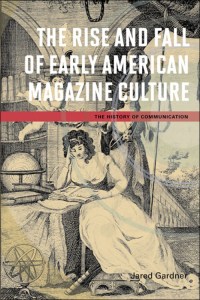 Almost by definition, studying communications media means examining the nature of rationality and the meaning of citizenship. So literary historians generally see the novel, which privileges dialogue and individual subjectivity, as helping to constitute a liberal social order, while political historians see newspapers as essential to various expressions of republicanism and democracy. In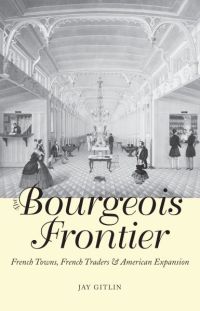
 (Placing any of these books on your holiday book list, of course, assumes that you have already purchased this year’s “must have” gift for early Americanists, the
  The Junto