Jessica Choppin Roney, Governed by a Spirit of Opposition: The Origins of American Political Practice in Colonial Philadelphia (Baltimore: Johns Hopkins University Press, 2014).
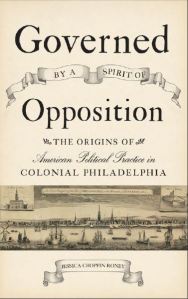 In recent years, early American political history has received considerable attention. A range of historians have enriched our understanding of how Americans participated in and contributed to politics in the early republic.[1] Popular politics during the colonial period has received less attention.[2] But in Governed by a Spirit of Opposition, part of Studies in Early American Economy and Society from the Library Company of Philadelphia, Jessica Choppin Roney focuses on politics in Philadelphia prior to the American Revolution. In so doing, she makes an important contribution to the field of early American history. Continue reading

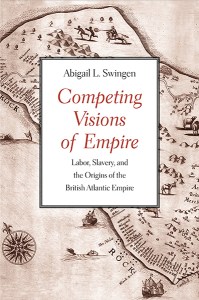 There have been some fantastic new contributions of late that explore connections between slavery, economics, and empire. In his 2008

 At the beginning of February, Wake Forest University
 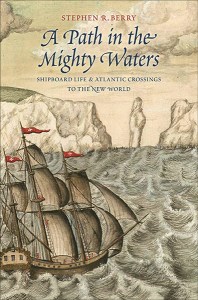 When colonial Georgia was founded in 1732, it carved out a brand new space in the New World. The founders’ intentions were in part for it to serve as a charitable colony, where Britons from overcrowded debtor’s prisons could start anew. It also carved out an English space to serve as a geographic barrier between wealthy South Carolina and rival Spanish Florida. But, as Stephen R. Berry demonstrates in this highly original new study, colonies were not the only spaces that were created and negotiated as the Atlantic World expanded. The ocean, and indeed the ships that carried passengers to and from the New World should also be viewed as spaces in their own right.
 Bernard Bailyn’s contribution to our understanding of early American history is so vast that it’s easy to forget he’s still publishing books. His writings on the American Revolution, begun in the 1960s, remain required reading for any doctoral student studying for orals. And even since retiring from Harvard a quarter century ago, he’s continued to influence the field, perhaps nowhere more than through his promotion of Atlantic history.
 The Junto