 Following on from last week’s post by Michael Blaakman, in which he reflected on his experiences preparing for oral exams and their practical value, I would like to take this opportunity to reflect on another aspect of graduate education. Today—two years, four semesters, twelve courses, a couple hundred books, two research papers, and a dissertation prospectus draft later—I am attending the last seminar session of my coursework. Now, it’s nowhere near the equivalent of reaching ABD, but it is something of a milestone, for me at least. I was a non-traditional student who began my undergraduate work at the age of 32 and went straight from undergrad to a PhD program. So today marks the end of what was effectively six years of coursework.
Category Archives: Commentary
Twitter as an Agent of Change
“It’s only about what people eat for breakfast.”
“It caused the Arab Spring, you know.”
“It’s nothing but Justin Bieber fans writing gobbledygook.”
“I saw someone do a wonderful live-tweet of a conference last week.”
“I hate when people livetweet conferences.”
What good is Twitter, anyway? And why should you use it? Inspired by the defense of academic blogging offered in this space last month by Ken Owen, I want to offer a few thoughts on using Twitter as a professional historian. Over the past few months, I’ve had several discussions, both in-person and online, in which I’ve been called on to defend Twitter (it seems that others see me as either an effective or at least irrepressible user). After over three years on the service (@jmadelman, if you’re curious), I’ve certainly developed a theory of Twitter for myself. I would not offer it as universal, but I do think it’s important to highlight what’s good about it, and perhaps one or two things that I don’t like.
The Comprehensive Exam: A Reflection, with Qualifiers
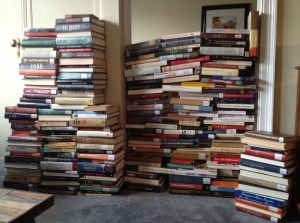 The three or four minutes between when my qualifying exam ended and when I found out I had passed rank among the weirdest of my life. Not because I feared I had failed. In fact, immediately following the exam, which I took last Tuesday and which consisted solely of a two-hour oral interrogation, I encountered a calm and a confidence that I hadn’t known in months. Instead, the moment’s weirdness stemmed from a sort of whiplash. Ideas, arguments, and anxieties had been cramming themselves into every corner of my brain for over a year. Suddenly, they were free—unleashed and dissipated in the space a two-hour conversation. It felt more than a bit anticlimactic. A disappointing question seemed to cloud out any sense of accomplishment or pride: “That was it?” A week later, I’m feeling prouder—and still celebrating—but the question remains. Continue reading
Gaming In The Classroom: Washington’s War
 One of the key difficulties of teaching the American Revolution is the seeming inevitability of it all. Why did Britain even bother pursuing its bothersome colonists? After all, the patriot cause was so noble and glorious that there was surely no way that such perfidious villains as the redcoats could possibly have triumphed. And yet within that myth, there is a persistent paradox: the patriot cause is often “proven” by the victory of such an inferior force against the strongest military power in the world in the late 18th century. But for this narrative to make any sense at all, there must have been a real risk of defeat; unless Britain could realistically have defeated their colonists, why would the morality of the patriots be of any consequence whatsoever? Continue reading
Junto March Madness: Some Reflections

Colonial historians celebrating Morgan’s victory.
The final outcome of the Junto March Madness wasn’t really a surprise. Edmund Morgan’s American Slavery: American Freedom was the most heavily nominated book when we compiled the bracket, and no challenger really came close to defeating it as it stormed through the tournament like a juggernaut. Morgan’s easy victory invites reflection on why the book remains such a well-loved classic. Today, I am going to offer a few preliminary thoughts as to what we can can learn from the tournament, with all usual caveats about the unscientific nature of the process still in force. Continue reading
Policy and Constitutional Principle
As a Brit teaching early American history in the US, I’m often asked how I came to be fascinated by the American Revolution. My answer is generally some version of the following: I’m fascinated by the American Revolution because there are so many reasons why it shouldn’t have ended with the creation of an American republic. Not only was the notion of independence from Britain a daring and risky move, but there were many reasons why the North American colonies could not cohere once they had broken with the mother country. Investigating the ways in which Americans tried to bridge the many gaps between themselves to create powerful and lasting governmental structures is one of the key themes of my research.
A large part of the answer to that conundrum, at least once historical focus shifts to the early republic, is the Constitution. Though, as I have written elsewhere, the mechanics of writing and ratifying the Constitution were scarcely the pristine and perfect process of popular imagination, the longevity of the Constitution must rank as one of the most significant achievements of the revolutionary era. Yet a close look at pretty much any period of American history sees the Constitution wielded as a partisan weapon as often as it is venerated as a ligature holding the separate states together. That is a curious paradox, for there is an implicit and serious criticism in describing a governmental act as “unconstitutional.” It suggests a lack of patriotism and a lack of common feeling; it implies mistrust, rather than emphasizing shared responsibility. Continue reading
A Report from Savannah
 This last weekend Juntoist Glenda Goodman and I attended the Society of Early Americanists’ biennial conference in Savannah.
First things first: have you been to Savannah? It’s lovely, and you should go immediately if you haven’t made it there yet. It’s eminently walkable, and everywhere you ramble you find pretty squares with statues, intersecting streets overhung with Spanish moss.
The walkability factor helped a lot, as there were quite a lot of great panels to capture my attention during the run of the conference; it was nice to be able to pop out for lunch, and to get back (mostly) in time for afternoon panels. Continue reading
Alexander Hamilton’s Originalism
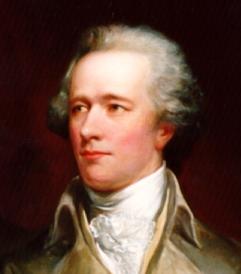
We should read each legal document according to the plain sense of the text: the sense that was understood by its authors, or perhaps by the people by whose authority it became law. The task of interpretation is, in essence, a historical one. It should be concerned with past realities, not present conjectures. That is as compelling a definition of originalism as I can muster.
I’m not going to get into originalism deeply here. I just wanted to share a few lines from the pen of Alexander Hamilton. There’s a point where the argument for originalism folds in upon itself logically: the point where originalist historians and lawyers want to show that the authors or ratifiers of the original text intended or understood it to be interpreted according to its original intent or meaning. Originalist historiography then becomes a historiography of originalism itself. Lawyers, in my small experience, tend to like this, because they like doing the history of other lawyers. Continue reading
With Malice Toward None: An Academic Blogging Manifesto
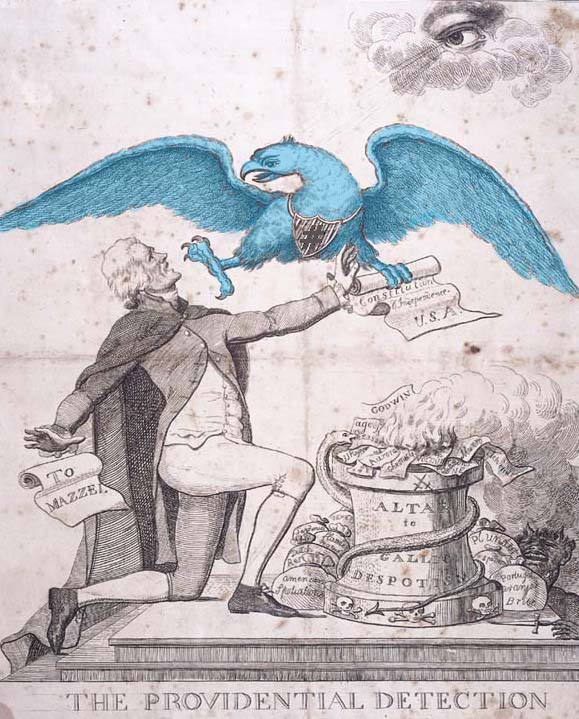 One of the reasons I am so enthusiastic about being a member of The Junto is that I have long thought blogging provides an excellent opportunity for the development of academic writing. While the typical forms of academic writing are highly formal, blogging (and other forms of digital media) provide a semi-formal arena in which historians can discuss and develop their ideas, taking advantage of an extended virtual community whilst simultaneously providing some structure and order to their thoughts.
Of course, it’s scarcely original to ponder the virtues and values of digital media within the academy. Nor would I want to be prescriptive about what sorts of blogging work and don’t work. After all, even in our own field of early American history, we have a variety of examples of how to blog—from John Fea’s diary-keeping style, to Historiann’s more political content, to J.L. Bell’s treasure trove of research notes. Indeed, it’s the informality and immediacy of blogging that provide the greatest opportunities for enterprising historians. Continue reading
Make your Mark

Some friends asked me last week how I felt, as an historian, about the current assault on the teaching of cursive in public schools, and I had to admit that I didn’t know this was a thing. Long story short, with classroom time always at a premium, many school districts have replaced instruction in cursive writing with instruction in typing, the latter seemingly more relevant to our times. Apparently, concern over students’ resulting inability to read or write script has been growing for a while, but a Wall Street Journal story at the end of January brought the issue new prominence. Many people seem to think that continuing to teach students to write in cursive is important, and a handful of state legislatures have introduced bills to rectify the situation.
The question has a neat resonance with the history of education: writing may go back to being thought of pedagogically as a craft, just as it was before the nineteenth century, when it was something that boys learned while girls learned to sew. (See, in particular, E. Jennifer Monaghan’s work on this history). Beyond that, though, two central pieces of the “save cursive” argument resonate with historical questions. Continue reading
 The Junto