If “The American Revolution Reborn” conference proved anything, it’s that the Revolution is in no danger of getting old. So much is still left to be told. Topics that few Revolutionary narratives have fully considered—ambivalence, religious dissent, hindsight connections to Scotland’s union with England in 1707, and future links to the Latin Americas—beg for further research. And those are only the issues that were discussed on the first day.
Category Archives: Conferences
#RevReborn, Periodization, and the American Revolution
Two weeks ago, anticipating the McNeil Center’s “The American Revolution Reborn” conference, I wrote a post about my own thoughts on the place (and future) of the American Revolution in the historiography of early America. In that piece, I pointed out that issues relating to causality had gone largely unexplored for a few decades now as attention in the field shifted to the early republic. Both during and after the conference, there has been a substantial amount of internet chatter, from live-tweeting the conference to storifying those tweets to in-depth, panel-by-panel blog recaps. Off the top of my head, I cannot think of another theme-specific historical conference that has gotten this level of internet coverage, though I’m sure some have done. But almost all of the coverage has been about recounting the ideas and themes that came out of the conference, with not much attention given to commenting on them. In this piece, I’d like to comment on one of the most fundamental themes that hung in the air over the entire conference: periodization. Continue reading
Pre-Conference Highlights for #SHEAR13
The Junto is pleased to announce that we will be cross-posting some of the pre-conference highlights for the Society for Historians of the Early American Republic’s (SHEAR’s) upcoming July conference in Saint Louis. Continue reading
Junto Social at the “Revolution Reborn”: Friday, May 31
As Michael Hattem noted in his post on Monday, the McNeil Center for Early American Studies, along with a handful of other prestigious organizations, is hosting what promises to be a monumental conference on the American Revolution this weekend in Philadelphia. Titled, “The American Revolution Reborn: New Perspectives for the Twenty-First Century,” it is a combination of roundtable discussions with prominent historians as well as pre-circulated papers from up and coming scholars. (I’m about halfway through the papers, and they are terrific.) There will certainly be lots of important ideas to discuss, and we’ll have several followups (including a post and a podcast) to help digest what went down. Continue reading
The Return of the American Revolution
 Looking forward to attending one of the largest conferences on the American Revolution in a generation this week in Philadelphia, I thought I would take a moment to reflect on the title of the conference—”The American Revolution Reborn“—and its historiographical purchase.
Charles Beard: A Conference Recap
 In spite of the unrestful Beardian ghost recently invoked by Saul Cornell, with which I introduced the topic of the Charles Beard, Economic Interpretation and History Conference here a few months ago, not every participant was convinced, going in, that Beard was really worth the trouble of a two-day international conference. By the end, we were able to say that whatever we thought of Beard himself, his work could certainly provoke plenty of insight and discussion. It would be wrong to say the event was a celebration of Beard, or held in his honour. Instead, like his vision of history, it was characterised more by conflict than consensus–at least, if friendly scholarly disagreement really counts as conflict. Continue reading
Pulling a “Butler”: Reflections on “Historiographical Heresy: A Conference on the Legacy of Jon Butler”
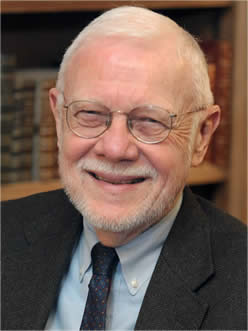 Last saturday, I woke up at an ungodly hour (especially for a weekend!) in order to make the 2 1/2 hour drive down to New Haven in time for the start of “Historiographical Heresy: A Conference on the Legacy of Jon Butler” (program here). The brainchild of James Bennett and Amy Koehlinger, and spearheaded on the ground by Kathryn Lofton, the one-day event commemorated the retirement of one of American religious history’s major figures. All participants were in some way students of Butler–some claimed him as their dissertation adviser, others as one of their committee members, and at least one as just an informal advisor; it was stated that this was more of a “family reunion” than a conference. Though I have zero attachment to Yale and no direct connection to Butler (besides being strongly influenced by his writing), I was warmly welcomed as an outsider and thoroughly enjoyed both the stimulating papers and discussions as well as the comraderie. Continue reading
Guest Post: Things Colloquial: Material Culture at the 2013 Conference of the Society of Early Americanists
Today’s guest poster, Zara Anishanslin, is Assistant Professor of History at the College of Staten Island/City University of New York. She received her PhD in the History of American Civilization at the University of Delaware in 2009, and from 2009-2010 was the Patrick Henry Postdoctoral Fellow in the Department of History at Johns Hopkins University. She’s at work on her first book, Embedded Empire: Hidden Histories of Labor, Landscape, and Luxury in the British Atlantic World (Yale University Press, forthcoming). Embedded Empire uses a single object—the portrait of a woman in a silk dress—and the four people who made it (the textile designer, the silk weaver, the colonial merchant’s wife, and the painter), to tell transatlantic material histories that challenge traditional narratives of emulative consumption. She also serves as Co-Chair of the Seminar in Early American History and Culture at Columbia University.
 Savannah is one of those southern cities where historic atmosphere and charm drape over everything like Spanish moss on live oaks. But amidst all this atmospheric charm, one of the sights I remember most was a distinctly uncharming thing: the desiccated body of a dead squirrel on a tray, tucked away in the attic of the Davenport House. I visited iconic Davenport House because it was the site of the Material Culture Colloquium at this year’s Society of Early Americanists’ conference. (For a report on the conference, see Rachel Herrmann’s blog post).
A Report from Savannah
 This last weekend Juntoist Glenda Goodman and I attended the Society of Early Americanists’ biennial conference in Savannah.
First things first: have you been to Savannah? It’s lovely, and you should go immediately if you haven’t made it there yet. It’s eminently walkable, and everywhere you ramble you find pretty squares with statues, intersecting streets overhung with Spanish moss.
The walkability factor helped a lot, as there were quite a lot of great panels to capture my attention during the run of the conference; it was nice to be able to pop out for lunch, and to get back (mostly) in time for afternoon panels. Continue reading
Charles Beard, Economic Interpretation, and History
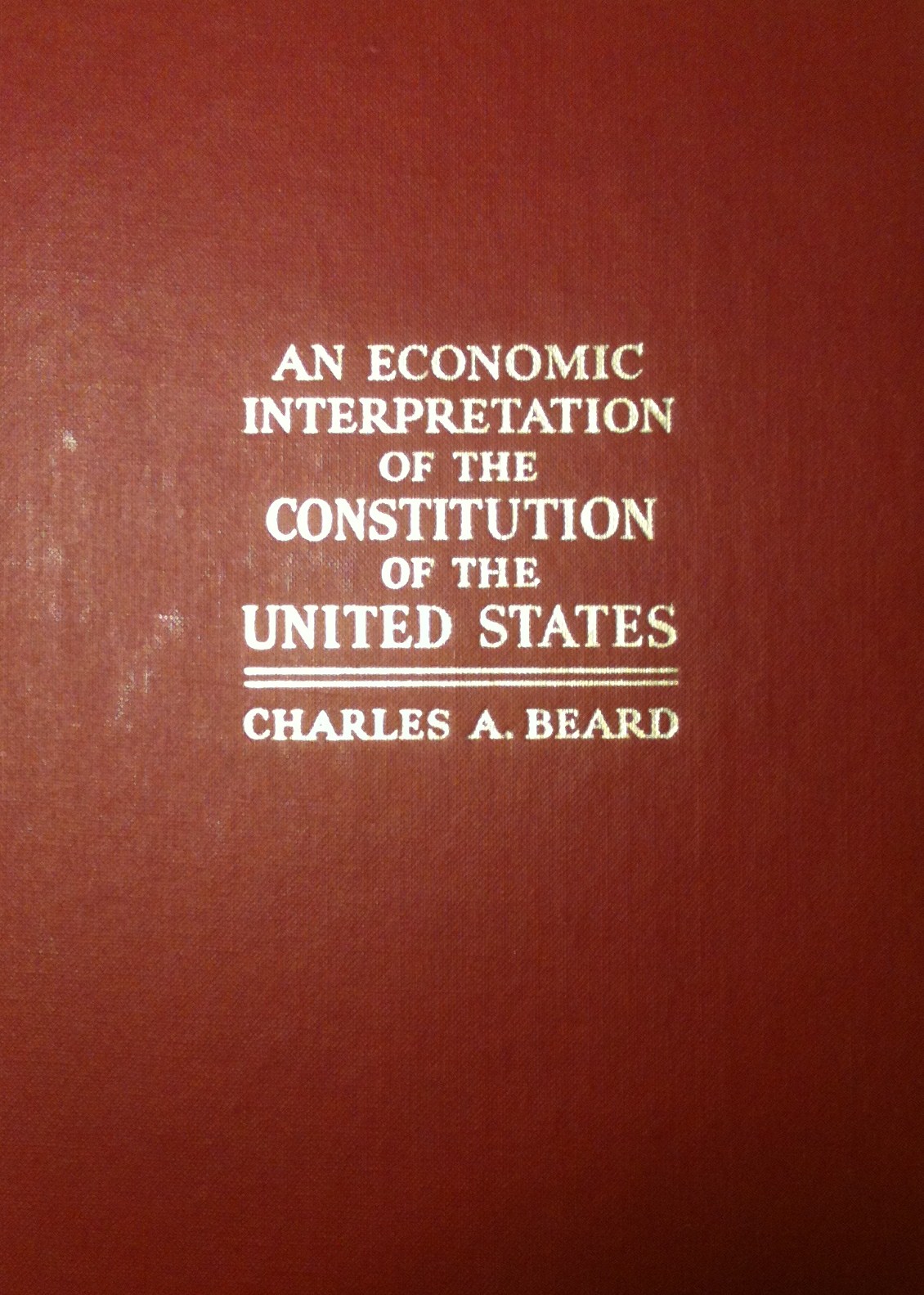 It’s been a century since Charles Beard published An Economic Interpretation of the Constitution of the United States. That book has a central role in more or less every overview of the historiography of the constitution and the founding. Just what that role is, though, is still open to debate. That Pauline Maier’s Ratification (2010) has no listing for Charles Beard in the index might have been taken as a sign that scholars no longer have to deal directly with his towering legacy. But that Seth Cotlar called her out on it in a recent William & Mary Quarterly forum, and took her to task for the “absence of any direct engagement” with Beardian, “conflict-oriented” interpretations of the period, reminds us just the opposite. As Saul Cornell put it, in light of powerful and varied strands of contemporary neo-Beardian scholarship, from Robert McGuire to Woody Holton and Terry Bouton, “one wonders if we have fully laid the ghost of Charles Beard to rest.” Well, if you have to wonder… Continue reading
 The Junto