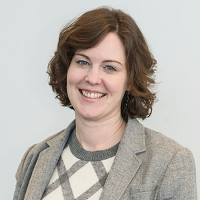
 Welcome to the first installment of our “Where Historians Work: The View from Early America” series. Today, The Junto features a Q&A between Katy Lasdow and Dr. Emily Swafford, Manager of Academic Affairs for the American Historical Association in Washington, D.C.[1] Emily shares her experiences seeking out varied career options after graduate school. She also provides AHA resources for readers who wish to become more involved in the conversation about career diversity, whether as part of their own job searches, or within their graduate history departments.
Continue reading
Category Archives: Public History
Where Historians Work: The View from Early America — Welcome to the Series!
 In February 2017, The Junto sent out a call to historians working outside the professoriate to join us in a conversation about career diversity for early American history PhDs.[1] The response was exciting and full of interesting conversations with curators, scholars, archivists, librarians, and public historians who have chosen to pursue their passion for research, writing, and teaching in a variety of settings and occupations.
Starting tomorrow, and over the coming weeks, The Junto will feature Q&A’s between Columbia University PhD candidate and Public Historian Katy Lasdow, and a range of participants.
Good Wives, Nasty Wenches, Jamestown Women
I haven’t yet had the opportunity to watch the new TV series, Jamestown, that recently premiered in the UK. But the television critic Mark Lawson has. Last week he wrote a column that criticised the show, and other recent British period drama, for featuring female characters who were, in his own words, “feisty, cheeky and rebellious.” In the name of historical accuracy, Lawson called out the makers of Jamestown for pandering to 21st-century sensibilities. Apparently, he believes women four hundred years ago raised neither hand nor voice against the patriarchy. Instead, they “willingly accept[ed] sexual and social submission.”
Guest Post: Review of the National Museum of African-American History and Culture
Guest poster Evelyne Martial is a retired attorney. She received her JD from the Cincinnati College of Law. She is currently enrolled in the Gender and Cultural Studies Program at Simmons College.
E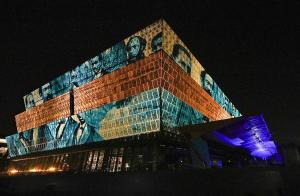 arly on a cold, frigid morning in Washington, D.C., my husband and I stood at the tail end of a long, winding line to get into the Museum of African American History and Culture. It was too cold to walk around to view the architecture so we hustled over to the entry line as soon as we exited the cab. As we waited, clutching our prized full-page sized passes, we watched a line of yellow school buses deposit kids from elementary, middle, and high schools into the bright frigid air. Their peals of laughter and rambunctious playfulness resisted the cold air. Their faces, hues of browns and tans bundled in colorful puff jackets, were filled with excitement. In line, a group of about six or seven women of African descent stood behind us. This group was from Los Angeles, California and had centered their annual get together around the visit to the Museum. They also were uncomfortably cold yet visibly excited about being here, particularly at this moment of our political lives. I wanted to find out more about them, but because it was so cold or the line was already so long at 10:00 a.m., the Museum staff diverted half of our line to another entryway. We lost contact with them and the children as we sped down the plaza to a much shorter line and before we knew it we were inside the Museum. Continue reading
Reminder to join the conversation “Where Historians Work: A View from Early America”
Do you hold a PhD 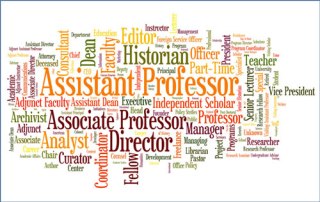 in early American history/literature/architectural history/art history/etc. or a related field, and have you chosen a career outside of the professoriate? The Junto wants to hear from you! There’s still time to participate in our conversation, “Where Historians Work: A View from Early America.”
Leave your stories in the comments of this post. Or, if you would prefer a less public forum, you may email The Junto (thejuntoblog@gmail.com) with the subject line “Career Diversity.” Please post comments or email by Friday, February 17. Continue reading
Where Historians Work: A View from Early America
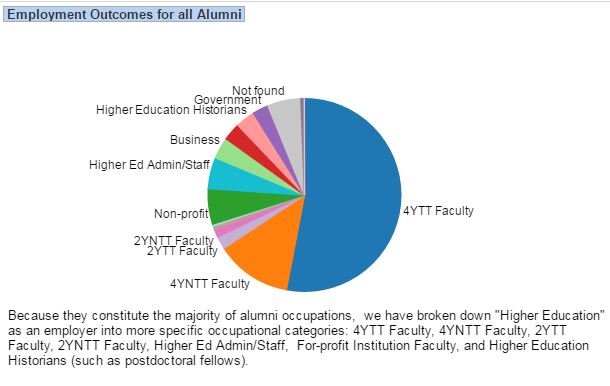 Recently the American Historical Association published Where Historians Work: An Interactive Database of History PhD Career Outcomes, “the only interactive, discipline-specific, and cross-institutional database of career outcomes for PhDs.” Using data collected from AHA directories and on the web, “Where Historians Work” presents a robust statistical overview of the varied employment sought by History PhDs from more than 30 degree-granting intuitions. For those historians who have long held positions outside of the academy, the database, part of the AHA’s broader Career Diversity for Historians initiative, is a welcome acknowledgement of what many have known anecdotally for years: History PhDs can—and do!—work in an array of fields.
Guest Post: New England Beginnings
Francis J. Bremer is Professor Emeritus of History at Millersville University of Pennsylvania and has been a visiting scholar at Oxford and Cambridge universities in England, and Trinity College in Dublin, among other institutions. He has published numerous books and articles on puritanism in the Atlantic World, most notably John Winthrop: America’s Forgotten Founding Father (Oxford, 2003); Building a New Jerusalem: John Davenport, a Puritan in Three Worlds (Yale, 2012); and Lay Empowerment and the Development of Puritanism (Macmillan, 2015). He is editor of the Winthrop Papers for the Massachusetts Historical Society and Coordinator of New England Beginnings, a partnership to commemorate the cultures that shaped New England.
 New England Beginnings is a partnership of New England historical organizations and museums, ancestry organizations, and participating scholars formed in 2015 to plan efforts to commemorate the cultures that shaped New England on the occasion of the four hundredth anniversaries of events such as the founding of Plymouth and the settlement of Massachusetts. The goals of the partnership are to 1) tell the stories of the region in the seventeenth century to a wide, general public audience and 2) to enhance accessibility of resources for future scholarship in the field. The website identifies the partners; offers narrative of what was happening “400 Year Ago;” provides information on events, programs, opportunities; podcasts and videos; and a bibliography.
While this is early days for the partnership, which is working to produce programs for 2020, some initiatives have come to fruition:
Programs to Facilitate scholarship:
The Massachusetts Historical Society has put an electronic, searchable edition of the first four published volumes of the Winthrop Papers online on their website. This will eventually be followed by the remaining published volumes, further correspondence, a collection of Winthrop religious writings, and an edition of John Winthrop Jr.’s medical notebook.
The Commonwealth Library has the manuscript of William Bradford’s Of Plymouth Plantation online. With the support of the Colonial Society a team has been put together to produce a new transcript and annotation reflecting both the Pilgrim and native points of view with Jeremy Bangs of the Leiden American Pilgrim Museum and Francis J. Bremer providing the former, and Paula Peters of the Wampanoag tribe providing the native perspective. A grant request for NEH funding is pending.
Programs to educate a wide public audience:
The Congregational Library and Archives has produced “Puritan Boston Tests Democracy,” a free app for phones and tablets. The app can be used anywhere to learn the basic history of the people, places, and events that shaped early Boston, but can also be used with its GPS feature to do a self-guided tour of those sites.
Participating scholars have agreed to offer talks and/or discussion to high school and university classes, as well as church and civic groups via tele-conference, Skype, FaceTime or similar technology. The scholars will donate a modest fee (probably $100) to New England Beginnings to cover partnership costs moving forward.
On Christmas Day the Associated Press released a story (“Scholars Team Up to Dispel 400 Year Old ‘Fake News’ About US”) which was picked up by well over a hundred media outlets in this country and abroad. The reaction by those who bothered to use online TV and newspaper “comment” opportunities was overwhelmingly hostile. Typical comments included:
- “’Leading scholars from around the globe are teaming up to shed more light on how America got its start.’ Translate to: We are coming to rewrite your history for you, U.N. style!”
- “Liberal army assault continues unabated. The only way to stop liberals from their agenda is to treat this as a war and they are the enemy.”
- “Any time I hear ‘scholars say …’ I take it with not just a grain of salt but a whole spoonful.”
- “President Trump is a very wise man. ‘Common Core’ will be, in fact, rescinded. History will once again be taught in our schools. ‘Angry White Men’ know history. Liberal professors and liberal public teachers will now be held accountable for truth. ‘Indoctrination’ of our young will leave with the Obama legacy. State-run schools will now have the power to keep education unblemished from liberal trash.”
- “The story will be, no doubt, shedding ‘new’ light on how White People screwed over everybody. It started with Columbus, and will no doubt end when liberals get tired of crapping on White People.”
- “Suggestion, read Rush Limbaugh’s book ‘The Brave Pilgrims.’ It will enlighten most ‘scholars,’ were that possible.
Some will be quick to discount such comments as coming from the same element of the population that are Biblical literalists denying evolution, those who reject climate change, and groups promoting white nationalism. But these comments come from citizens, and citizens who are a significant enough element in our society to help explain the election of Donald Trump. If our goal as educators is to develop in our students an ability to evaluate things with open and reflective minds and our task as historians to explain the complexities of the past—painting the picture with the warts, but not only focusing on the warts—we have clearly failed with this segment of the population. The adherence of these commentators (and rest assured, many who didn’t bother to write) to the old black hat (natives)/ white hat (settlers) story speaks to the need for us to do a better job of explaining the past. But in doing so we should recognize that many scholars have fallen into a comparable paradigm whereby puritans are simplistically depicted as black hats (intolerant, misogynist, religious fanatics, racist—in other words warts only) and natives as white hats (victims, proto-environmentalists, etc.).
What is necessary, and what the goal of New England Beginnings is, is to develop nuanced appreciations of all the cultures that shaped New England scholars that rejects all faith as fanaticism and judges too much of the past by modern values. Challenging as this will be, what makes success even more problematic is the widespread rejection of expertise by many of our fellow citizens. How can we persuade people who reject our claim that years of studying the sources gives us a greater insight into the past? The identification of the scholarly community as something that needs to be discarded and its members purged (Professor Watch Lists) threatens us individually but more than that threatens the integrity of academe. One can laugh at the idea of learning about the Pilgrims from a children’s book written by Rush Limbaugh, but it is in its own way the same as people turning to and relying on only the news outlets that reinforce their existing beliefs.
Guest Post: HBO’s Westworld and the Realities of Living History
Cam Shriver is a Post-Doctoral Research Associate with the Miami Tribe of Oklahoma, working in the Myaamia Center at Miami University. He has a PhD from Ohio State University, and his research focuses on surveillance among Native and European communities in early North America.
 When I began watching episode one of HBO’s new show Westworld, I was prepared for something in the Western genre. I had seen a trailer that included horses, Indians, and a stereotypical Old West landscape. I was pleasantly surprised. Not only is Westworld in the mold of previously-successful HBO projects, it also forced me to think about the prospects of living history. “Living history” simulates and interprets the past. Attractions assert history-as-entertainment. In that vein, successful museums must constantly keep exhibits fresh, introduce new initiatives, storylines, and characters, and generally give visitors a reason to return. The same problem faces the Westworld theme park, as technicians and writers strive to provide an ever-more entertaining and realistic experience. The show raises a perplexing question: how “real” should we get? Continue reading
Interview with Carolle R. Morini, Boston Athenæum
T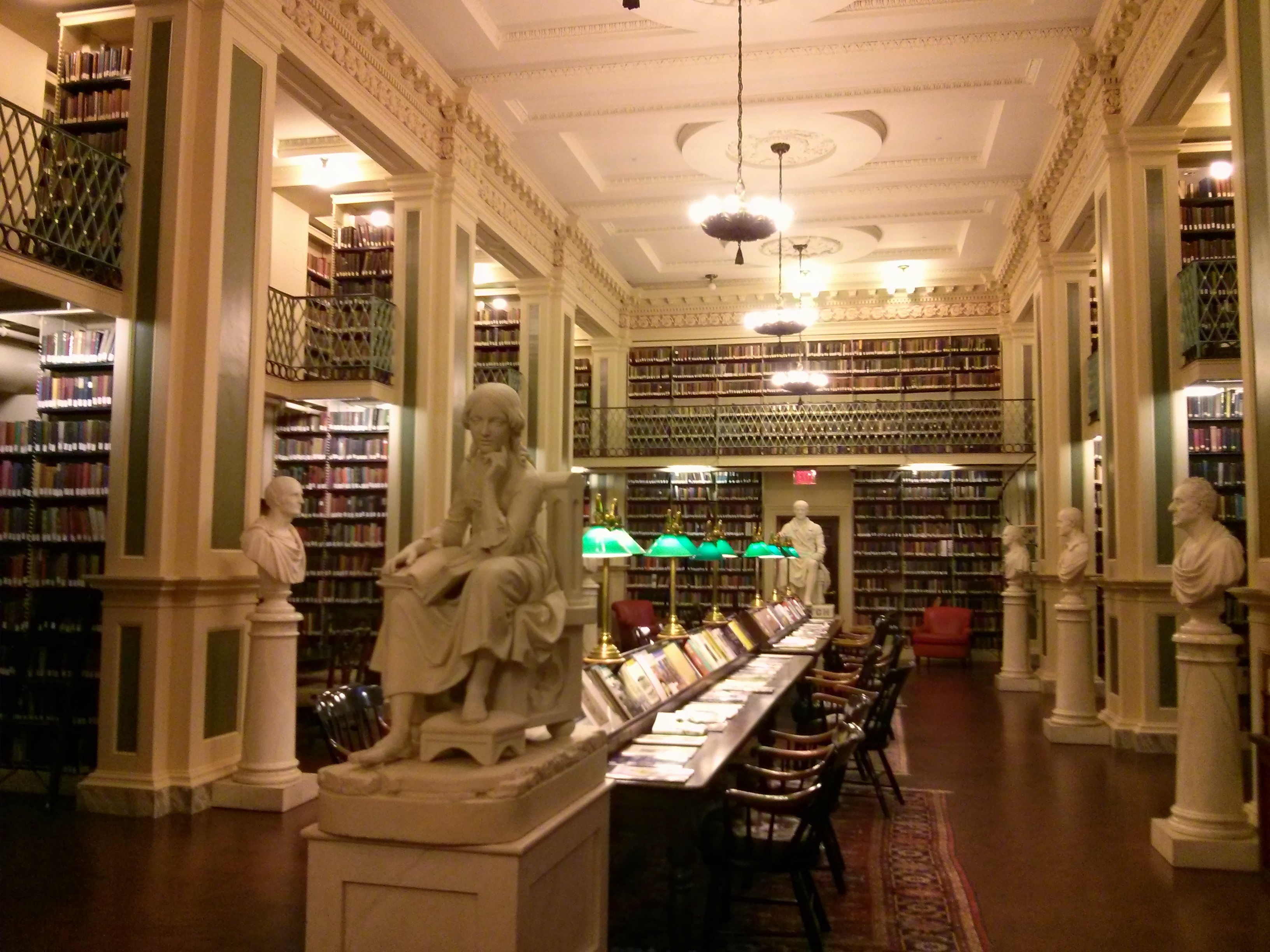 oday’s post is an interview with Carolle R. Morini, Caroline D. Bain Archivist, Reference Librarian, at the Boston Athenæum. Carolle holds a BFA in Photography from the Montserrat College of Art and an MA in History and an MLS in Archives Management from Simmons College.
13 Revolutions +1

Diego Rivera and Bertram D. Wolfe, “Portrait of America,” 1934
When John Adams looked back on the American Revolution (something he liked to do), he reflected that, “The Revolution was in the Minds and Hearts of the People.” The colonists’ drive to independence marked a new era of American history, Adams thought, when “Thirteen Clocks were made to Strike together; a perfection of Mechanism which no Artist had ever before effected.” Scholars have struggled to frame the experience of the Revolution in picture and on the page. How can we use digital tools to curate collections of revolutionary culture and #vastearlyamerica for use in the classroom?
Today, The Junto chats with Darren Milligan, Senior Digital Strategist at the Smithsonian Center for Learning and Digital Access, about the Smithsonian Learning Lab, which encourages us to make, use, and share new galleries of history. Continue reading
 The Junto