Over at Slate last week, our Junto colleague Eric Herschthal reviewed some of the latest popular histories of revolutionary America, including two new studies of the years around 1776 by Richard Beeman and Joseph Ellis. Eric takes a very critical view of the analytical stance of the books–arguing that they are too in thrall to outdated and invalidated historical techniques; focusing too much on elites and ‘leadership’ at the expense of more recent trends in scholarship, such as the new emphasis on those who stayed (or tried to stay) neutral during the Revolutionary War.
Perhaps the most provocative part of the review is this statement:
“If you bought a popular book on science, one that came with a similar sheen of intellectual prestige, and learned that it essentially ignored years’ worth of scholarship, you’d demand your money back. Why should history be any different?”
To me, the answer seems self-evident. Continue reading
 On a cold and wet May Friday in London, I decided to take refuge from the weather by stepping back into the eighteenth century. While serving as agent for the colony of Pennsylvania (and others), Benjamin Franklin lodged in a small dwelling on Craven Street, now just behind Charing Cross station and a short walk from Parliament. Though Franklin’s lodgings were originally misidentified (to the extent that a commemorative plaque was placed on the wrong house!), the original building still stands. Now the only surviving Franklin home in the world, the house is the home of the “
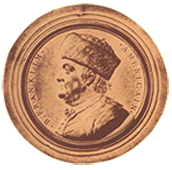 On this—the 223rd anniversary of the death of Benjamin Franklin—I thought I would use this space to say a few words about my experience over the last year working at the
 Savannah is one of those southern cities where historic atmosphere and charm drape over everything like Spanish moss on live oaks. But amidst all this atmospheric charm, one of the sights I remember most was a distinctly uncharming thing: the desiccated body of a dead squirrel on a tray, tucked away in the attic of the
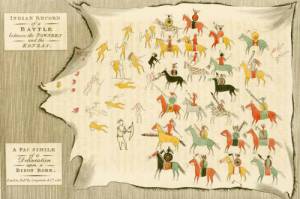
 When more than 10,000 early American documents find new life in the digital world, we at The Junto want to know more about the challenges and opportunities of the project. Thomas Lannon, Assistant Curator of the Manuscripts and Archives Division at the New York Public Library, kindly took our questions on Thomas Addis Emmet’s extra-illustrated archive.
  The Junto