
 This week’s roundtable began with a reference to Kurt Newman’s confession, earlier this summer, of feeling “anxiety” about a defining medium of historical scholarship: the book-length narrative. Writing for the USIH Blog in July, Kurt charged that narrative tends to conceal the historian’s assumptions and methods. More specifically, he observed, any narrative will be constructed around an ideological telos. Therefore, the book-length narrative is a dubious vehicle for a scholarly argument.
In our roundtable, we have responded to this useful provocation primarily by assuming its truth. Narrative is a powerful means of ideological initiation; its power is what makes it so valuable to historians-as-artists when they try to communicate with a reading public. On that basis, we and our commenters have been discussing the various ways narratives can exert power. Sara Georgini explored the ways Henry Adams adapted medieval narrative strategies. Jessica Parr described using stories of George Whitefield’s life as a convenient, though dangerous, structure on which to hang an argument about his public image. In the comments, similarly, J. L. Bell observed that Alan Taylor’s book William Cooper’s Town usefully subverts the very expectations its narrative structure inspires in readers.
As we wrap up today, however, I want to return to Kurt’s perceptive critique. I am not sure our response so far is adequate.

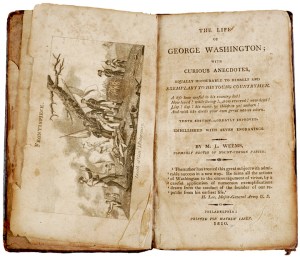 Shortly after the publication of

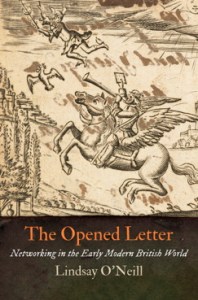 Yesterday, Jessica Parr
 The annual British Group of Early Americanists Conference was held from September 3-6 at the University of Sheffield in Sheffield, England and drew a wide variety of scholars from the United Kingdom, the United States and France. In keeping with BGEAH traditions, there were many excellent papers, a key note address on Thursday night, a book club discussion on Friday and a conference dinner on Saturday, while newer traditions were started with some panels providing pre-circulated papers.
 Data. Before postmodernism, or environmental history, or the cultural turn, or the geographic turn, and even before the character on the old Star Trek series, historians began to gather and analyze quantitative evidence to understand the past. As computers became common during the 1970s and 1980s, scholars responded by painstakingly compiling and analyzing datasets, using that evidence to propose powerful new historical interpretations. Today, much of that information (as well as data compiled since) is in danger of disappearing. For that and other reasons, we have developed a website designed to preserve and share the datasets permanently (or at least until aliens destroy our planet). We appeal to all early American historians (not only the mature ones from earlier decades) to take the time both to preserve and to share their statistical evidence with present and future scholars. It will not only be a legacy to the profession but also will encourage historians to share their data more openly and to provide a foundation on which scholars can build.
  The Junto