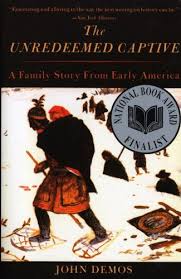
 Confession: I hated John Demos’s The Unredeemed Captive when I read it in graduate school. So much so that whenever my future roommate and I became frustrated by the vagaries of our PhD experience, we’d lapse into extended wailing cries of “EUNICE!” that stretched across apartments, parking lots, and doubtless a library lobby or two. I’m not sure why it seemed so funny to us, but then, comprehensive exams do strange things to graduate students’ psyches. Continue reading
Category Archives: Special Features
Guest Post: Dramaturging The Tower: A Historian’s Cannibalistic Adventures in Theater
Today’s guest post come from Maya Rook, a writer and artist living in Brooklyn, New York. She is pursuing her PhD in American Cultural History at Drew University. Collaborating on The Tower has inspired her to write her dissertation about the Donner Party. If she were to eat a piece of human flesh, it would likely be from the belly or rear—braised until the meat is tender and then broiled so the skin reaches crispy perfection. Check out her food blog and personal website.
 Just over a year ago, I was at a celebration with friends and overheard someone talking about the Donner Party. My interest was piqued, as it isn’t everyday you hear people casually chatting about this group of California emigrants who resorted to cannibalism during the winter of 1846-47. I’d always been fascinated by the topic and was soon deep in a conversation with Adam Scott Mazer about his plans to write a play called The Tower based on the history and mythology of the Donner Party. Strangely enough, I’d recently wanted to get involved in theater but didn’t know how, so the timing seemed quite auspicious. When Adam discovered I was a PhD student in American Cultural History we decided to work together on the project and I was brought on board as the dramaturg. Continue reading
These Aren’t the Docs You’re Looking For
Rachel Herrmann concludes our roundtable on James Merrell’s article, “‘Exactly as they appear’: Another Look at the Notes of a 1766 Treason Trial in Poughkeepsie, New York, with Some Musings on the Documentary Foundations of Early American History” from the most recent issue of Early American Studies.

You know the feeling: that moment when, in the midst of crafting a sentence, you realize that the notes you made in the archive are…incomplete. I’m a transcriber, and not one to take digital photographs. I just know myself well enough to recognize the fact that transcribed words are more useful for my writing than image after image of manuscript pages that I will procrastinate from analyzing. This preference, however, means that I’ve encountered more than a few errors in my transcriptions of manuscript sources and secondary works alike. I catch my mistakes from the latter when I’m proofing a piece of writing before I submit it; I’ll go back to the book or article, read it and my quotes side by side, and discover that I’ve left out a “the,” or transposed two words, or typed part of the same sentence twice. Preventing all of my blunders on manuscript transcriptions is another matter entirely, and it is to manuscript research that I’d like to turn in my response to James Merrell’s article in Early American Studies. Continue reading
A Long Time Ago in an Archive Far, Far Away
Michael D. Hattem continues our roundtable on James Merrell’s article, “‘Exactly as they appear’: Another Look at the Notes of a 1766 Treason Trial in Poughkeepsie, New York, with Some Musings on the Documentary Foundations of Early American History” from the most recent issue of Early American Studies.
Some of our (very) regular readers will know that I have a penchant for occasionally adopting a bit of the role of contrarian. For me, it serves as a way to shake myself into thinking differently about something, and I would hope it does the same for the reader. For this roundtable, it could have been quite easy to sing the praises of Dr. Merrell’s excellent article, and go on a 500-word rant about why historians should always seek out the manuscript sources over older published collections. However, I think my slot in this roundtable is an excellent opportunity to try to approach the article differently, one that attempts to historicize its meta-argument from a documentary editing perspective. Continue reading
Roundtable: James Merrell’s “Exactly as they appear” and Published Editions of Manuscript Sources
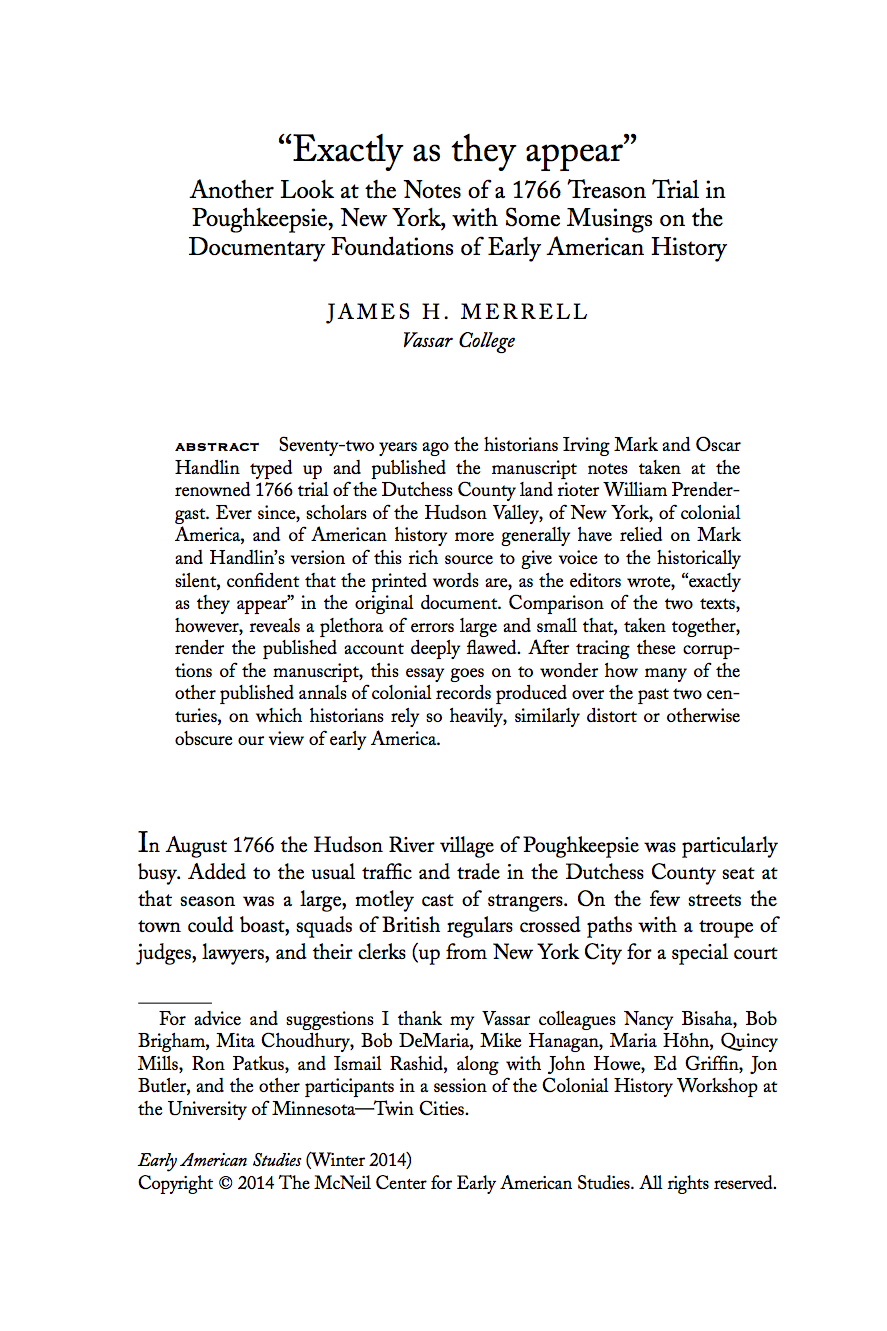 Many of us have been there. Sitting in front of our computers, we fret over how we will find the time and funding to examine important manuscript sources at faraway archives. And then, a few keystrokes later, we find that those sources are available in published form. Relief floods over us, replacing anxiety. But should we really be so relieved?
James H. Merrell’s recent article in Early American Studies asks exactly this question. Entitled “‘Exactly as they appear’: Another Look at the Notes of a 1766 Treason Trial in Poughkeepsie, New York, with Some Musings on the Documentary Foundations of Early American History,” it suggests that we should not be so quick to assume that published versions of manuscript sources faithfully reproduce the originals. [1]
Guest Post: “X” Marks the History: Plundering the Past in Assassin’s Creed IV
Robert Whitaker is a doctoral candidate in History at the University of Texas at Austin. His dissertation, “Policing Globalization: The Imperial Origins of International Police Cooperation, 1918-1960” studies the relationship between the British Empire and international police organizations, such as Interpol. He serves as an Assistant General Editor for the journal Britain and the World, and is the creator of the YouTube series History Respawned. Bryan S. Glass teaches the history of Britain’s interactions with the World at Texas State University. He is the founding member and General Editor of The British Scholar Society and serves as an Editor of the Britain and the World book series (Palgrave Macmillan). His publications include an article in the Journal of Imperial and Commonwealth History, The Scottish Nation at Empire’s End (Palgrave Macmillan, forthcoming), and a co-edited volume with John MacKenzie entitled Scotland, Empire and Decolonisation in the Twentieth Century (Manchester University Press, forthcoming).
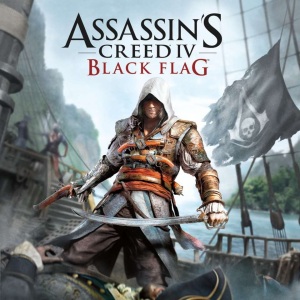
French game company Ubisoft has turned early American history into an age of booty. Over the past two years, the company has used early American history as the backdrop for three successive and successful titles in their Assassin’s Creed franchise: Assassin’s Creed III, Assassin’s Creed III: Liberation, and Assassin’s Creed IV: Black Flag. The most recent of these titles, Black Flag, is set in the Golden Age of Piracy during the early eighteenth century, and is easily the most profitable and well received of the three. Critics and players have praised Black Flag for its gameplay, graphics, and music—or rather, sea shanties.[1] But the biggest reason why this game has garnered accolades and high sales is because of its use, or misuse, of history. More than any other Assassin’s Creed game, Black Flag plays fast and loose with the historical record. It skews away from accuracy in favor of fun at almost every turn. Yet even as Black Flag thumbs its nose at the concerns of academic history, it nevertheless succeeds, perhaps better than any previous title in the series, in giving players a sensibility of the age. Continue reading
Guest Post: “Libraries in the Atlantic World” Conference Recap
Today’s guest poster, Aaron M. Brunmeier, recaps the recent conference in Liverpool, England. He is a Ph.D. student at Loyola University-Chicago, where he studies print culture, gender, and the public sphere in revolutionary New York City. He is the social media assistant for the Community Libraries Network.

Last week, I finished my minor field exams, lesson-planned for my substitute teacher, and then hopped on a plane headed toward Liverpool for a conference on library history. It was the first of three colloquia organized by the Community Libraries Network and funded by the AHRC. This colloquium, “Libraries in the Atlantic World,” brought scholars of different disciplines from all around the world to share their research and discuss the newest trends in the field at the University of Liverpool, 24-25 Jan. 2014.
Guest Post: Sir James Wright and Jenny, his free “black servant”
Today’s guest poster is Greg Brooking (PhD, Georgia State University). His dissertation on Sir James Wright, royal governor of Georgia, is entitled, “‘My zeal for the real happiness of both Great Britain and the colonies’: The Conflicting Imperial Career of Sir James Wright.” He is the recipient of two fellowships from the David Library of the American Revolution and authored a chapter in General Nathanael Greene and the American Revolution in the South (University of South Carolina Press, 2012). He currently teaches at Kennesaw State University and Southern New Hampshire University. This is his first guest post for The Junto.
 I’ve just begun the arduous task of transforming my recently completed dissertation about colonial and revolutionary Georgia into a work worthy of an academic press. Part of this process, for me at least, has been to re-examine my notecards (actually an enormous Excel spreadsheet), seeking new gems, ideas, and angles. In so doing, I’ve rediscovered a tidbit that I want to further develop during the manuscript process and I humbly submit this post as a solicitation to the blog’s readers, seeking their varied and expert insights. Specifically, this tidbit relates to a caveat in the final will and testament of Sir James Wright (1716-1785), which calls for an annuity for his free “black servant,” Jenny. Continue reading
Guest Post: Working on The Papers of Francis Bernard
Christopher F. Minty (University of Stirling) recently completed his dissertation on the social and cultural origins of Loyalism in New York during the imperial crisis. He is the recipient of numerous fellowships, including the British Library, the Huntington Library, the David Library of the American Revolution, Colonial Williamsburg Foundation, and Houghton Library at Harvard University. This is his second guest post for The Junto.

In early 2013, Michael D. Hattem offered some thoughts on his role as a Research Assistant on the Papers of Benjamin Franklin. Since then, a variety of other online databases have established themselves as essential go-to sources for students and scholars of colonial British America, the American Revolution and the early Republic. With the launch of Founders Online, it has complemented a stream of other online resources that have given us an unparalleled insight into the lives of George Washington, Alexander Hamilton, Thomas Jefferson, James and Dolley Madison, the Adams family as well as documentary histories of the ratification of the Constitution and, well, “People of the Founding Era.” Continue reading
Interviews with Historians: Carol Berkin
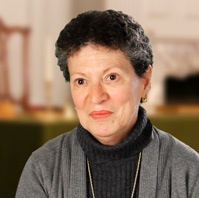 Carol Berkin is Presidential Professor Emerita at Baruch College and the CUNY Graduate Center. She received her bachelor’s degree at Barnard College. In 1972, she received her PhD at Columbia University, where she also worked on the Papers of John Jay and Alexander Hamilton. Her dissertation on Jonathan Sewall won the Bancroft Award for Outstanding Dissertation and the subsequent book, Jonathan Sewall: Odyssey of an American Loyalist, was nominated for the Pulitzer Prize in 1974. She then spent her entire teaching career at Baruch College and the CUNY Graduate Center. Her most popular works include A Brilliant Solution (2002), which has been translated into Polish and Chinese, First Generations: Women in Colonial America (1996), Revolutionary Mothers: Women in the Struggle for American Independence (2005), and Civil War Wives (2009). She is a pioneer in early American women’s history and also the author and editor of numerous textbooks, readers, and teaching guides for women’s history including Women of America (1980), Women’s Voices, Women’s Lives: Documents in Early American History (1998), In the Words of Women: The Revolutionary War and the Birth of the Nation, 1765 – 1799 (2011), and Clio in the Classroom: A Guide to Teaching Women’s History (2009). She is also the editor of History Now, an online magazine published by the Gilder Lehrman Institute of American History. She has appeared in numerous television documentaries, including Founding Brothers and Founding Fathers on the History Channel and Ric Burns’ New York on PBS. Continue reading
 The Junto