IOTAR 50: Ideology, Power, and Thrill

Today, we conclude “The Ideological Origins of the American Revolution at 50″ roundtable with a guest post from Eran Zelnik. Zelnik is a PhD candidate at UC-Davis where he is writing “The Comical Style in America: Humor, Settler Colonialism, and the Making of a White Man’s Democracy, 1740-1840,” a dissertation that traces the rise of common white men to cultural dominance in early America.

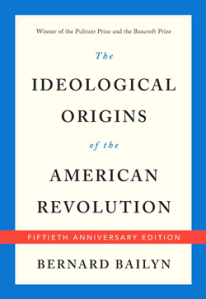
In his classic study, The Great Cat Massacre, Robert Darnton captured what to me has always seemed as the moment when cultural or intellectual history becomes truly thrilling: “when you realize that you are not getting something—a joke, a proverb, a ceremony—that is particularly meaningful to the natives, you can see where to grasp a foreign system of meaning in order to unravel its meaning.” Fifty years later, Bernard Bailyn’s classic The Ideological Origins of the American Revolution still stands out in my mind as one of the prime examples of such a moment in the historiography of early America. His writing in that piece exudes the intellectual rush Bailyn and many of his students felt as they fleshed out a new promising analysis of what later came to be known as “republican” thought. Leafing through the book one can still feel the sense of excitement Bailyn shares with the reader as he explores the significance of hitherto little-understood intellectual traditions. It might seem counter intuitive for a junior historian with unambiguous leftist tendencies, but it is one of those few books that keep reminding me that history can be exciting. Continue reading

IOTAR50: Intellectual History from the Undistinguished

IOTAR50: Intellectual History from the Undistinguished

We continue “The Ideological Origins of the American Revolution at 50,” our joint roundtable with the S-USIH blog. Today’s post is by Jonathan Wilson, an adjunct faculty member at the University of Scranton and Marywood University. He studies ways that intellectuals—elite and otherwise—articulated American national identity in eastern cities during the early nineteenth century.

8d2eb-6a00d8341d17e553ef01b7c8eeecd7970b-600wi

Upon first reading The Ideological Origins of the American Revolution, I found it liberating. (That places me alongside Michael and Sara more than Ken this week.) True, Bernard Bailyn’s book was yet another attempt to credit elite white men for an idealistic national founding. From my perspective at the time, however, it modeled a way to study the ideas of relatively ordinary people. Bailyn depicted revolutionary thoughts as the work of communities, not individuals. He showed me that the life of the mind can encompass the inarticulate, the half-said, even the irrational, in ways that historians can analyze. This was powerful.

Continue reading

IOTAR50: Teaching Bailyn’s Ideological Origins

Today, we continue “The Ideological Origins of the American Revolution at 50,” our joint roundtable with the S-USIH blog with a post by Kenneth Owen, an Assistant Professor of Early American History at the University of Illinois Springfield, whose research interests focus on political mobilization and organization in the revolutionary and early national eras.

It took me a long time to warm to The Ideological Origins of the American Revolution. I don’t think this is an uncommon experience for an early Americanist. Fifty years after its publication, Bailyn’s seminal work still features prominently on graduate and undergraduate reading lists. Yet it is hard to say that the book is beloved. Often, simply mentioning Bailyn’s name can be a pejorative shorthand—an outmoded view of the past that celebrates elites at the expense of the darker underbelly of the Revolution. As an undergraduate, I too railed against the book. How far, I asked with youthful bluster, were minutemen really inspired by the cautionary tale of seventeenth-century Denmark? And yet, like the profession itself, I have found it hard to shake Bailyn’s shadow. How is it that a book that is often only grudgingly admired still occupies such a large part of the field’s mental imagination? Continue reading

IOTAR50: Paper Politics

French Pamphlets, Newberry Library

All praise to the humble pamphlet, upon which *may* rest the ideological origins of the American Revolution. Frequently buried by history as loose “Bundells of Pamphlets in quarto,” it’s a genre that almost shouldn’t be. Printed on flimsy paper and easily battered by salt spray or avid readers, the popular pamphlet became a clutch genre for British and American revolutionaries to send ideas around the Atlantic World. These publications, along with newsbooks, hardened into the “paper bullets,” that, according to scholar Joad Raymond, flew on and off the page in early modern England’s press.

Even as the genre evolved into weekly newspapers, he writes, “readers recognized the rules of the form.” Pamphlet culture, a dynamic arena for anonymous critics to take an eloquent swipe at matters of church and state, quickly blossomed abroad. Unbound and unfettered, pamphlets seeded colonists with a new political consciousness. Whether 10 pages or 50, these slim booklets amplified republican politics and revolutionary prose. Pamphlets, as Robert G. Parkinson observes, became the “lifeblood” of the American Revolution. “They instructed the colonial public that political and personal liberty were in jeopardy because British imperial reformers sought to strip them of their natural rights, especially the right to consent to a government that could hear and understand them,” he writes. Today, let’s look at that instructional aspect of pamphlet culture, and how Bernard Bailyn’s interpretation of revolutionary tracts has reshaped what we do in public history. Continue reading

IOTAR50: Considering Ideological Origins at 50

This week The Junto is co-sponsoring, “The Ideological Origins of the American Revolution at  50,” a weeklong roundtable on Bernard Bailyn’s seminal work with the Society for U.S. Intellectual History (S-USIH) blog. Each of the five posts will appear on both blogs concurrently. For readers unfamiliar with the book (or looking for a refresher), please see Episode 12 of The JuntoCast.

Throughout the winter of 2016-17, I helped organize “Ideological Origins at 50,” a conference jointly sponsored by the USC-EMSI and Yale’s CHESS to honor the fiftieth anniversary of the publication of Bernard Bailyn’s seminal work, The Ideological Origins of the American Revolution. The conference papers, presentations, and discussion were quite lively, as was Bailyn himself who delivered a 75-minute talk on the opening evening. Since then, other tributes to the book and its long-term influence and impact have appeared online. However, all of these have had one thing in common; they have been almost solely the product of senior historians who perceptively discussed the book’s long-term impact and the debates that surrounded it, both around its publication and in the immediate decades afterward. This Junto roundtable, “The Ideological Origins of the American Revolution at 50″ (#IOTAR50), aims to offer junior scholars a chance to reflect on this book’s impact on them and, by extension, its continuing significance and influence on the newest generation of early American historians. After all, perhaps the most impressive achievement of Ideological Origins is that fifty years after its publication it is still being read, assigned, and reckoned with by a new generation of scholars. Therefore, rather than rehashing what the book meant when it was published or what it has meant to historians living with it for decades, this roundtable is dedicated to exploring what the book means now. Continue reading

Roundtable: Q & A with Laurie Halse Anderson

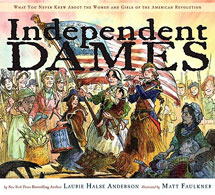
Thanks to all of our contributors and commentators who have participated in #FoundingFiction, a series revisiting children’s and young adult literature about early America. Today, Sara Georgini wraps up the roundtable by chatting with Laurie Halse Anderson, prize-winning author of Independent Dames, Fever 1793, Chains, Forge, Ashes, and more. Continue reading
Roundtable: A Proud Taste for Alex & Eliza

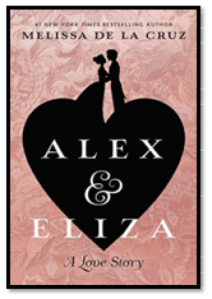
Hilary Mantel recently gave the annual BBC Reith Lecture in which she described why she became a historical novelist. Printed in The Guardian, Mantel argued that culture and genes, history and science, put “our small lives in context.” Mantel’s work is of course separated from the theme of this roundtable by two degrees, as she is neither a writer of YA nor of Early America, but the broader question I think she was trying to answer—why we write about what we do—resonate in a conversation on #FoundingFiction. Continue reading

#VastEarlyAmerica(n) Girl Doll Books: Reflections of a Father and Historian

When Sara first pitched the idea of The Junto hosting a roundtable dedicated to children’s and young adult fiction focused on early America, I was excited. But unlike others, I was excited not because Johnny Tremain was my favorite childhood read or because my own trajectory toward becoming a historian could be traced to the Dear America series or the young adult fiction of Ann Rinaldi. While I vaguely remember reading Johnny Tremain in elementary school, along with other books of early American historical fiction during my childhood and teenage years, my own interest in history was a later development in life. My excitement about this proposed roundtable came rather because I’m a father of three young children who love to read and be read to, and because I’m adamant about ensuring that they’re raised as historically-aware and -literate individuals. Continue reading

Roundtable: Johnny Tremain and Me

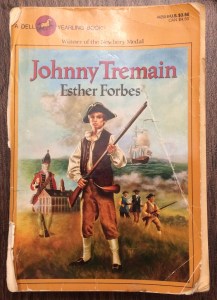
johnnytremain.jpgMore than anything else, people remember the hand. Bring up Johnny Tremain in a group of adults, and for those who read it, they’re most likely to remember the disfigurement that serves as the hinge for much of the novel’s plot, the story within the story of the coming of the Revolution in Boston. A few people have told me that the hand by itself made the book unpalatable; for my part, it always served as a matter of fascination. And it’s one of two things that most stand out for me about the novel (the other being that it was the first place I heard that Biblical injunction that “pride goeth before fall;” make of that what you will). Continue reading
Roundtable: A Letter to Dear America

Today’s Founding Fiction post is by Lindsay M. Chervinsky, a post-doctoral fellow at the Center for Presidential History at Southern Methodist University. Her manuscript is titled, “The President’s Cabinet: George Washington and the Creation of an American Institution.” Follow her @lmchervinsky.

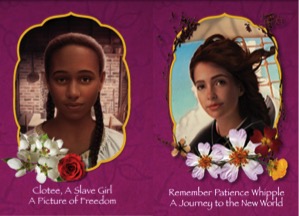
Each book in the Dear America series portrays a diary of a young fictional woman that explores her experience during one specific year in American history. The first-person account shares observations of well-known events or places, as well as the daily struggles of an “average” girl’s life. A number of these diaries take place in #VastEarlyAmerica. A few examples include A Journey to the New World: The Diary of Remember Patience Whipple, which tells the story of the Mayflower crossing in 1620; The Winter of Red Snow: The Revolutionary War Diary of Abigail Jane Stewart, which shares one woman’s experience in Valley Forge in 1777; and Look to the Hills: The Diary of Lozette Moreau, which examines the struggles of a French slave girl in the New York Colony in 1763. The series was discontinued in 2004, but Scholastic republished many of the originals in 2010 and continues to produce new volumes today. Continue reading