My wife is a knitter, and she’s explained to me the subtle difference observed, among those in her guild, when referring to someone’s work as “handmade” or “homemade.” Both acknowledge the difference between the sweater you spent months on and something mass-produced. The former, though, implies that for the piece in question that difference is measured in care and craftsmanship, while the latter measures it in imperfections. It’s the difference between, “You made that yourself?!” and “You made that yourself, huh?” Continue reading
The Week in Early American History
Happy Sunday! Let’s get right to the links.
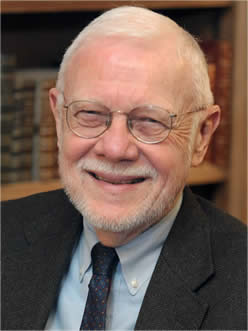
Pulling a “Butler”: Reflections on “Historiographical Heresy: A Conference on the Legacy of Jon Butler”
Last saturday, I woke up at an ungodly hour (especially for a weekend!) in order to make the 2 1/2 hour drive down to New Haven in time for the start of “Historiographical Heresy: A Conference on the Legacy of Jon Butler” (program here). The brainchild of James Bennett and Amy Koehlinger, and spearheaded on the ground by Kathryn Lofton, the one-day event commemorated the retirement of one of American religious history’s major figures. All participants were in some way students of Butler–some claimed him as their dissertation adviser, others as one of their committee members, and at least one as just an informal advisor; it was stated that this was more of a “family reunion” than a conference. Though I have zero attachment to Yale and no direct connection to Butler (besides being strongly influenced by his writing), I was warmly welcomed as an outsider and thoroughly enjoyed both the stimulating papers and discussions as well as the comraderie. Continue reading
Junto March Madness: Some Reflections

Colonial historians celebrating Morgan’s victory.
The final outcome of the Junto March Madness wasn’t really a surprise. Edmund Morgan’s American Slavery: American Freedom was the most heavily nominated book when we compiled the bracket, and no challenger really came close to defeating it as it stormed through the tournament like a juggernaut. Morgan’s easy victory invites reflection on why the book remains such a well-loved classic. Today, I am going to offer a few preliminary thoughts as to what we can can learn from the tournament, with all usual caveats about the unscientific nature of the process still in force. Continue reading
Your Junto March Madness Winner: Edmund Morgan!
Probably expected to most readers given the book’s performance thus far, we at The Junto are pleased to announce Edmund Morgan’s American Slavery, American Freedom to be the winner of the 2013 Early American History Tournament. Cronon put up a fight, but in the end Morgan pulled away with 65% of the vote. You could call this an end-to-end victory, since Morgan’s book received the most nominations, was never really challenged, and always seemed destined for the title. And this may be fitting: the book is magisterial in research, exquisitely written, and still relevant to any project on colonial history. (Not to mention it works great in the classroom!) It is a testament to its power that American Slavery is still en vogue three and a half decades after its release. Sure, there are problems, but the book still challenges and provokes any close reader, and that is one of scholarship’s true purposes. Continue reading
Junto March Madness: CHAMPIONSHIP GAME!!!
This is for all the marbles, folks. I’d like to thank everyone who has voted (nearly 250 unique IP addresses!), shared this on twitter or facebook, and participated in the comments. We at the Junto have had a lot of fun, and we hope to make some version of this tournament a yearly tradition. (We’ll of course mix up the topics, periods, etc.) As always, this is acknowledge to be an extremely silly and subjective game, with a primary purpose of promoting discussion.
We have had enough chatter over the last two weeks so, after a brief reminder of how we got here, let’s get to the voting. We can only hope this matchup will be as riveting as the Lousiville/Michigan game. Continue reading
Junto March Madness: Final Four Results
Once again, many thanks to all who voted–each matchup received around 180 votes. The winners are below. Voting for the championship will take place Wednesday.
_______________________________________________
Edumund Morgan, American Slavery, American Freedom 65%
Daniel Richter, Facing East from Indian Country: A Native History of Early America 35%
_______________________________________________
William Cronon, Changes in the Land: Indians, Colonists, and the Ecology of New England 54%
Walter Johnson, Soul by Soul: Life Inside the Slave Market 46%
Junto March Madness: Final Four
It is time. Our tournament, which began with over one hundred and fifty nominations are now down to a final four. If you want to see how we got here, look at the brackets on this previous post. Voting is open from now until midnight, eastern time. Winners will be announced tomorrow, and the final will take place on Wednesday. Below, you will find the final four books with their blurbs, a serious of questions answered by a few Juntoists, and finally the polls. Please chime in with your own answers or thoughts in the comments below. Continue reading
The Week in Early American History
A DC-based company with the email address coolhistory13@gmail.com has posted an open casting call for a “history based reality TV show.” What could go wrong?
Do you work on disability studies? Early American Literature is running a special issue, and calling for contributions from “historians, literary critics, art historians, musicologists, and other early American scholars.” Continue reading
Junto March Madness: Elite Eight Winners
Our Final Four is set! Make sure to take the weekend to digest these results, perhaps revisit the books, and come prepared for major commentary, discussion, and voting on Monday. Continue reading
