Wim Klooster, Revolutions in the Atlantic World: A Comparative History: New Edition (New York: New York University Press, 2018).
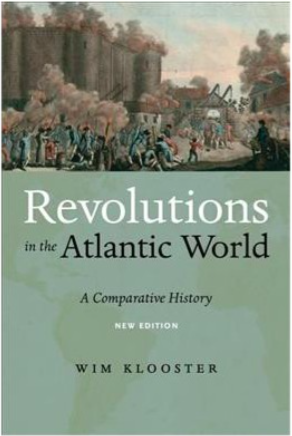 A few years ago, I found myself speaking briefly to a graduate student in another discipline who happened to share both my first and last names. He politely asked what I studied, and I vaguely explained that my dissertation related to the Age of Revolutions. Other Jordan considered this for a moment, and then asked “So what causes revolutions?” I’m embarrassed to say that this most straightforward of questions left me a bit flat footed. I could tell him what several historians thought about the particular revolutions they studied, but “revolutions” more generally? That was a big question. I think I muttered something about Arendt (as you do) and excused myself. Continue reading
 When
When  Working on material culture, my research has taken me to some interesting, if unexpected places. Last summer, it involved waiting outside Saint John’s Church in Portsmouth, New Hampshire, founded in 1732 as the Anglican Queen’s Chapel. I quickly ran inside to snap some pictures of a baptismal font between back-to-back Sunday services. The Saint John’s font is an impressive fixture, carved from marble in a Continental European baroque style. As a ritual object used in the sacrament of baptism, the font is hardly unusual, but its story is.
 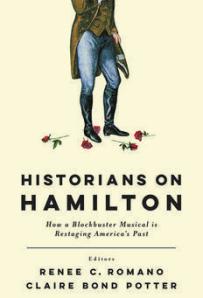 Early this morning, two hundred and fourteen years ago, Alexander Hamilton was shot in an infamous duel with rival Aaron Burr. Hamilton died the next day, Burr’s days as a legitimate political candidate were over, and both soon faded into relative historical obscurity. Some centuries later, their tale fell into the hands of Broadway force Lin Manuel Miranda, who was fresh off the success of his first full length production, In the Heights. Hamilton’s life and death were about to make an epic comeback, styled to powerhouse ballads, rap battles, and New York city fanfare.


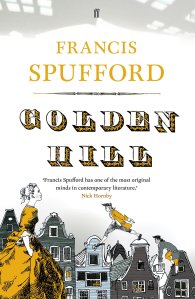 “Had a map been drawn . . . of Mr. Smith’s movements through the streets of New-York. . . a tangled hydra indeed would have been revealed,” begins the second chapter of Francis Spufford’s book Golden Hill (53). As my fellow Junto reviewers
 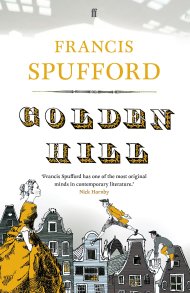 What a pleasure it is to wander around mid-eighteenth-century New York City with Francis Spufford, admiring the city’s homes with their “stepped Dutchwork eaves” (17) and their “blue-gray pediment[s] of Connecticut pine” (11). What a pleasure, too, to join him in pawing through the humbler artifacts of daily life in the colonial city. Pap (1). Milk punch (42). A bog-wig (2). Every page of Golden Hill overflows with weird stuff like this, and it’s just great.
