Welcome to Founding Fiction, The Junto’s first roundtable exploring how children’s literature and young adult fiction depicts early American history. Between posts, we’ll compile a shelf of favorites to (re)read. Tweet us at #FoundingFiction or comment with your recommendations for Very Early Americanists. Happy summer, let’s dive in!
Today’s post is by Laura Ansley, Ph.D. candidate in history at the College of William & Mary, and managing editor of the Nursing Clio blog. Her dissertation is titled, “Life Problems: Sex Education in the United States, 1890-1930.” Follow her @lmansley.

Phillis Wheatley and Abigail Adams and Peggy Shippen and Harriet Hemings: all early American women whom I learned about from Ann Rinaldi’s young adult fiction. I have been fascinated by history for as long as I can remember, but Rinaldi was one of many authors who helped me to better understand what the best kind of historical study is. While school classes covering the Civil War may have talked about generals and battles, Rinaldi introduced me to characters like Osceola, stepdaughter of Wilmer McLean, who moved his family away from Manassas when the war came to the quieter Appomattox Courthouse—meaning the war started and ended on their doorstep. With her focus on teenage heroines, Rinaldi showed that history wasn’t only about important men. Young women experienced these historical events too, and their stories were also worth telling.
Continue reading
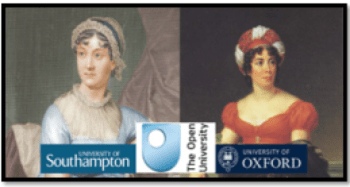 Of course I cannot speak (or type) for everyone, but in the past six years, one specific word has never been far from the forefront of my mind: copyright. While I think that copyright is an incredibly fascinating and complex historical subject —and thus why wouldn’t everyone be talking about it all the time—it is probably because intellectual property was the subject of my dissertation that I spent so much time thinking, reading, and writing about it. I’m now in an exciting, strange, and surreal moment where I’ve defended my dissertation and am conceiving of what the manuscript will look like. And in this window two other words have come up: Austen and de Staël.
  Welcome to the first installment of our “
 In February 2017, The Junto sent out a call to historians working outside the professoriate to join us in a conversation about career diversity for early American history PhDs.
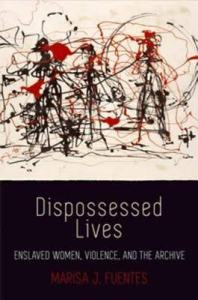 Marisa J. Fuentes is Associate Professor of Women’s and Gender Studies and History at Rutgers University, New Brunswick. Dispossessed Lives: Enslaved Women, Violence, and the Archives is her first book. Casey Schmitt previously reviewed