We continue “The Ideological Origins of the American Revolution at 50,” our joint roundtable with the S-USIH blog. Today’s post is by Jonathan Wilson, an adjunct faculty member at the University of Scranton and Marywood University. He studies ways that intellectuals—elite and otherwise—articulated American national identity in eastern cities during the early nineteenth century.

Upon first reading The Ideological Origins of the American Revolution, I found it liberating. (That places me alongside Michael and Sara more than Ken this week.) True, Bernard Bailyn’s book was yet another attempt to credit elite white men for an idealistic national founding. From my perspective at the time, however, it modeled a way to study the ideas of relatively ordinary people. Bailyn depicted revolutionary thoughts as the work of communities, not individuals. He showed me that the life of the mind can encompass the inarticulate, the half-said, even the irrational, in ways that historians can analyze. This was powerful.
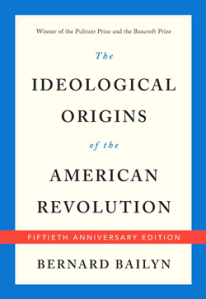 It took me a long time to warm to The Ideological Origins of the American Revolution. I don’t think this is an uncommon experience for an early Americanist. Fifty years after its publication, Bailyn’s seminal work still features prominently on graduate and undergraduate reading lists. Yet it is hard to say that the book is beloved. Often, simply mentioning Bailyn’s name can be a pejorative shorthand—an outmoded view of the past that celebrates elites at the expense of the darker underbelly of the Revolution. As an undergraduate, I too railed against the book. How far, I asked with youthful bluster, were minutemen really inspired by the cautionary tale of seventeenth-century Denmark? And yet, like the profession itself, I have found it hard to shake Bailyn’s shadow. How is it that a book that is often only grudgingly admired still occupies such a large part of the field’s mental imagination?

 Thanks to all of our contributors and commentators who have participated in
  Hilary Mantel recently gave the annual BBC Reith Lecture in which she described why she became a historical novelist. Printed in
 More than anything else, people remember the hand. Bring up