The following link comes from the Kinder Institute on Constitutional Democracy’s announcement. I was privileged to be a postdoc fellow with the Kinder Institute for the last two years and attended most of these MRSEAH meetings. They are phenomenal. Bonus: you get to hang out with our own Ken Owen!
 The Kinder Institute is currently inviting submissions for presenters at the 2016-17 meetings of the Missouri Regional Seminar on Early American History (MRSEAH), which will be held on October 7, 2016, and April 21, 2017, in Columbia, MO, and on November 4, 2016, and February 17, 2017, in St. Louis. We welcome work on all aspects of early American history, broadly defined to extend throughout the Americas geographically and forward in time through the 19th century, and we are especially eager for submissions relating to political development, political thought, constitutionalism, and democratization. All MRSEAH submissions will also automatically be considered for the Kinder Institute’s Friday History Colloquium Series, held on campus during the academic year. Please visit the link below for complete instructions on submitting a proposal to present at the MRSEAH. Continue reading
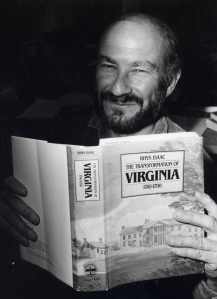 As a local representative of American Empire in Melbourne, Australia, and fifteen years after Michael McGerr and Ian Tyrrell’s spirited exchange in the pages of the American Historical Review, in which they wrestled with the potential gains and losses of a transnational American history, I thought it was time, in the spirit of Alistair Cooke, to send a “Letter to America,” checking in on the topic of American Exceptionalism and the viability of the transnational historical project in Oceania.
 Right after I agreed to review Sam Haselby’s The Origins of American Religious Nationalism for the
 Casey Schmitt kicked off the week with a discussion of doing research in
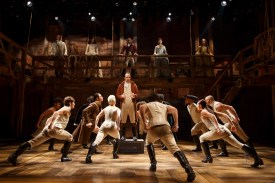 When I first listened to the Hamilton soundtrack last fall, the song “Farmer Refuted” caught my attention. The song stages a pamphlet war that began in November 1774 between Samuel Seabury, an Anglican minister in Westchester County, New York, and Alexander Hamilton, then an upstart New York college student. Their war of words over the First Continental Congress carried on for nearly four months and encompassed several tracts.[1]
  The Junto