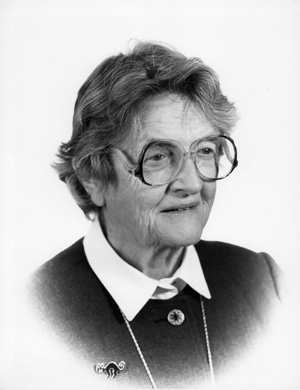
 Lois Green Carr was a pioneer in both social history and women’s history. Originally from an upper-class family from Massachusetts, Carr made her greatest impact in studying the history of women from the seventeenth-century Chesapeake. Carr’s mother, Constance McLaughlin Green, was a well-respected historian, who had received her PhD from Yale University. Carr attended Swarthmore College before enrolling in the graduate program at Harvard in 1943. Along the way, life happened. She got married in 1946, moved with her husband to New York in 1947, and had a child in 1952. In 1956, she accepted a job as a junior archivist at the Maryland Hall of Records. Family responsibilities and then difficulties at the end of the decade had rendered her progress toward completing her PhD quite slow. In fact, by that point, she said, “I had done no work for years on my PhD dissertation because I could not get to New England for needed research.”[1] Her solution was to switch her research focus to Maryland and find an advisor willing to take her on, which she did. In 1961, Bernard Bailyn became her advisor and by 1968 she had finally graduated, twenty-five years after starting graduate school. By the end of 1967, she had taken a job as the historian for the St. Mary’s City Commission. a post she would hold for nearly five decades. Continue reading
Post Removal
The Junto has removed the post on Hamilton: An American Musical, published July 17, 2015, at the request of the show’s producers and creative team. We apologize for any inconvenience this may cause.
Graphic Novels in the Classroom
 This week we’ve discussed the graphic novels as historical fiction, the strengths of using graphic novels to discuss fraught material, and complex process of adapting historical research to sequential art. We would like to end our roundtable discussing more broadly the possibilities of using graphic novels in the classroom.
The first strength of graphic novels is their novelty. Assigning works like Kyle Baker’s Nat Turner or Fetter-Vorm and Kelman’s Battle Lines is a surprise to most students. By not being another monograph or set of primary sources, graphic novels shake up a syllabus. This is good for students, who may be interested in exploring a subject in a more unconventional way, and for teachers, for it forces us to reconsider how to teach subjects we may have taught many, many times. This novelty also adds some additional accessibility for students who might be skeptical of reading more traditional assignments. Continue reading
Graphic Novels Roundtable Q & A: Ari Kelman, Battle Lines: a Graphic Novel of the Civil War
We continue day three of our graphic novels roundtable with an interview with historian Ari Kelman, who co-authored Battle Lines: a Graphic History of the Civil War. Previously Jessica Parr discussed using graphic novels to explore painful histories and Roy Rogers reviewed Rebels from Dark Horse Comics.
 Ari Kelman is the McCabe Greer Professor of History at Pennsylvania State University, specializing in the Civil War, Reconstruction, Memory Politics, and Environmental History. In addition to Battle Lines: a Graphic Novel of the Civil War, he is the author of two award-winning books. A Misplaced Massacre: Struggling Over the Memory of Sand Creek (Harvard, 2013) was the recipient of the Bancroft Prize, the Avery Craven Award, the the Tom Watson Brown Book Award, and the Robert M. Ultey Prize. A River and Its City: The Nature of Landscape in New Orleans (University of California Press, 2003) won the Abbott Lowell Cummings Prize. Continue reading
Teaching Trauma: Narrative and the Use of Graphic Novels in Discussing Difficult Pasts
Roy Rogers kicked off yesterday’s 4-day roundtable with a review of the graphic novel, Rebel. For day two of our roundtable on graphic novels and history, I will discuss the use of graphic novels in teaching traumatic histories.
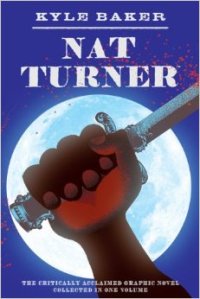 As anyone who has taught the history of slavery knows, it can be challenging. It is an important, but also emotionally loaded subject that can provoke spirited responses from students. Some students are resistant to discussing what they view as an ugly event in the past. Others may become defensive. And, for others, the history of slavery may be personal. The challenge becomes presenting the history in a thoughtful way that will engage students, but does not whitewashing history. Other traumatic events—genocide, war, etc.—can present similar pedagogical challenges.
The Writer Assumes All Responsibility
For the week of July 13-17, The Junto is hosting “Graphic History: Sequential Art & History,” a roundtable examination of relationship between history and graphic novels. We will explore graphic novels as historical fiction, as histories, and their uses in the classroom. For our first entry, Roy Rogers reviews a new comic book series about the American Revolution from award-winning writer Brian Wood.

What does a historical epic of the American Revolution look like in the twenty-first century? Continue reading
Remembering Christopher Schmidt-Nowara, 1966-2015
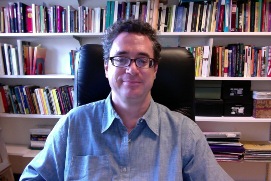 Historian Christopher Schmidt-Nowara passed away suddenly in Paris on Saturday, June 27th at the age of 48. Schmidt-Nowara was a prolific chronicler of the history of slavery and emancipation in the Hispanic world, as well as politics and ideas in the Spanish empire. He received his B.A. from Kenyon College in 1988. He completed his PhD from the University of Michigan in 1995, under the direction of Rebecca Scott, and taught at Fordham University in New York City for over a decade before joining the faculty at Tufts University in 2011. At the time of his death, he was Prince of Asturias Chair of Spanish Culture and Civilization at Tufts.
SHEAR 2015 Annual Meeting Preview
 The 37th annual meeting of the Society for Historians of the Early American Republic will take place in Raleigh next week (July 16-19). I could not be more excited. To help spread the conference cheer, I’m going to offer a brief preview of a few sessions that caught my eye. Continue reading
Personal Networks and a First Draft of the Literary Canon
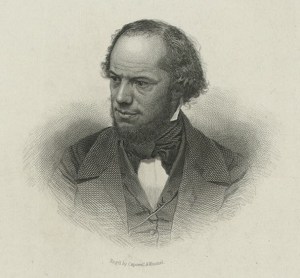 Antebellum editors were bulk retailers. Whatever else their business involved, it happened at scale, and I’m often astonished by how much prose a nineteenth-century newspaper or magazine editor could churn out in a day. Of course, most of that prose was recycled, and much of it was banal. As a forthcoming article by Ryan Cordell, based on research by the Viral Texts Project at Northeastern University, observes, the most-reprinted antebellum newspaper articles were pieces of “information literature”—not news, but scrapbookable things like an 1853 starch recipe or a clipping about the dietary value of tomatoes.[1] Apparently, antebellum readers welcomed such textual flotsam—but it was especially useful to editors, who needed a steady flood of context-free, easily resized gobbets of writing for their pages.
The bulk-retail principle applied to literary editors, too, and the difference between “literary” and other kinds of antebellum periodical work is hard to define. For the last couple of weeks, I’ve been thinking about what that meant for the formation of an American literary canon in the antebellum period.
Making the Most of Your Time in the Archives: Research Technology
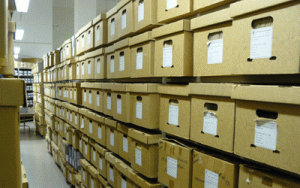 As funding budgets shrink, many historians face increased pressure to make the most of their time in distant archives. For a number of years now, a lot of researchers have favored a good digital camera, which (theoretically) allows for a faster gathering of primary source materials than traditional note-taking methods. Of course, as historian Larry Cebula humorously observed, failure to exercise good digital stewardship with your own personal archives can have disastrous consequences.
 The Junto