
Last week’s edition of our weekly roundup opened with our collective condolences to the family, friends, and colleagues of Christopher Schmidt-Nowara (Tufts University), who passed away on June 27th. Unfortunately, the early American historical profession has lost an additional two stalwarts this week: Lois Green Carr, the noted historian of colonial Chesapeake society, died on June 28, 2015. She was 93. And yesterday morning was met with the unfortunate announcement of Dallett Hemphill’s passing. In addition to her fine scholarship and responsibilities as editor of Early American Studies, Dr. Hemphill was a mentor, supporter, and friend to several junior scholars. Just two weeks ago, she authored a guest post here at The Junto on publishing journal articles. We’ve pinned that post at the top of our front page, and invite any who have not yet read it to do so. We extend our deepest condolences to the families, friends, and colleagues of both Dr. Carr and Dr. Hemphill. Continue reading



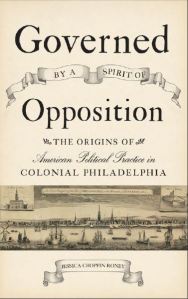 In recent years, early American political history has received considerable attention. A range of historians have enriched our understanding of how Americans participated in and contributed to politics in the early republic.
 I’m grateful to The Junto blog for inviting me to discuss how to publish a journal article. Although the views that follow are my own and the details of the process vary somewhat from journal to journal, I know from conversations with other editors that there is consensus on the essentials.
 For longer than I’ve been alive, our field in a structural sense has been organized through the efforts of the main institutions in the field, i.e., the Omohundro Institute of Early American History and Culture and, later, the McNeil Center for Early American Studies and the Society for Historians of the Early American Republic. From fellowships to seminars to conferences, these institutions gave to the field the significant sense of community it had. And I would argue that the new early American “digital world” is not changing that but expanding upon (or around) it. Social media and blogs are adding an additional layer of social infrastructure within the field itself, creating spaces that foster an even broader and more inclusive sense of community in the field, largely through the ability to include people who for whatever reason don’t have access to or are outside the immediate orbit of those institutions and the field’s traditional channels of community-building.
 The Junto